Key takeaways
Short answer: OEE and OLE share a structure but point at different resources. OEE. Overall Equipment Effectiveness, measures how effectively equipment is used, as the product of availability, performance, and quality. OLE.
Overall Labor Effectiveness, applies the same three-factor thinking to the workforce: the availability, performance, and quality contribution of labor. OEE is the machine lens; OLE is the people lens.
Which matters more depends on whether equipment or labor is the real constraint. For the foundational metric, see OEE for manufacturing.
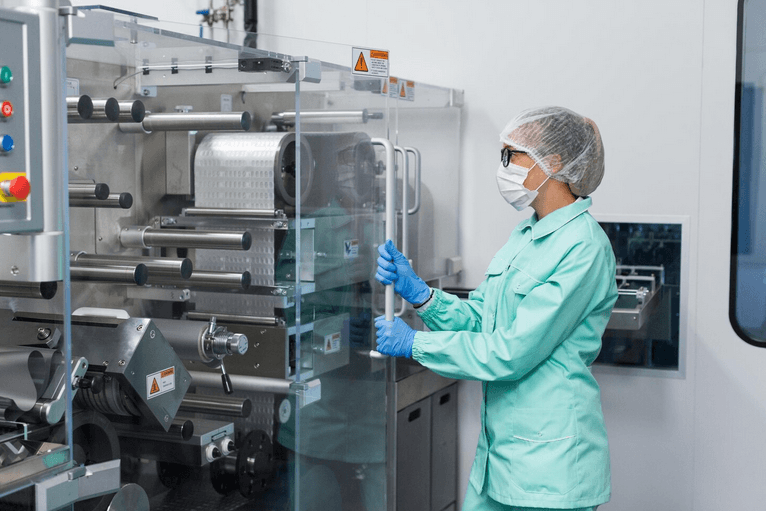
Overall Equipment Effectiveness measures how effectively a piece of equipment is used, relative to its full potential.
It is the product of three factors: availability (was the machine running when it should have been), performance (did it run at its rated speed), and quality (were the units it made good the first time).
Multiplied together, they express the share of truly productive time as a single percentage, and decompose underperformance into its causes.
OEE's subject is the machine: it answers how much of this equipment's potential are we actually converting into good output, and where are the losses.
It is the dominant effectiveness metric in equipment-intensive manufacturing, precisely because in those operations the machines are the constraint and the place where effectiveness is won or lost.
Overall Labor Effectiveness applies the same three-factor logic to the workforce instead of the equipment.
It combines the availability of labor (were people present and working when scheduled), their performance (did they work at the expected rate), and quality (was the work they produced right the first time) into an overall measure of how effectively labor is used.
OLE's subject is the people: it answers how much of the workforce's potential are we actually converting into good output, and where are the labor-side losses, absence, slow or interrupted work, errors.
OLE matters most where labor, not equipment, drives output: assembly, manual processes, and labor-intensive operations where a machine-focused OEE would miss the real constraint, which is how effectively people are deployed.
The distinction is simply the resource each measures. OEE focuses on equipment effectiveness; OLE focuses on labor effectiveness. They borrow the same elegant three-factor structure, availability, performance, quality, but apply it to different bottlenecks.
In a highly automated plant, the machines dominate output and OEE is the right lens; manual, labor-side losses are minor by comparison.
In a labor-intensive operation, people dominate output and OLE captures what OEE would miss, a line can have perfectly available equipment while labor availability or performance is the real loss.
The two are not in conflict; they answer the same question, how effective are we, about different resources. Choosing between them is really choosing which resource is your constraint.
Consider two operations. A bottling line is highly automated: machines do the work, and a handful of operators tend them.
Here OEE is what matters, if output falls short, it is almost certainly an equipment loss (downtime, slow running, scrap), and OLE would add little.
Now consider a manual assembly cell where output depends almost entirely on people: the equipment is simple and rarely the constraint, but output swings with how many assemblers are present, how fast they work, and how much they rework.
Here OLE is the revealing lens, labor availability, performance, and quality are where the losses live, and a machine-focused OEE would look fine while the real problem hid in the workforce. Same effectiveness question, different resource, different metric.
Use OEE when equipment is the constraint, automated and semi-automated operations where machine availability, speed, and quality determine output. It is the right tool for the majority of capital-intensive manufacturing.
Use OLE when labor is the constraint, manual or labor-intensive operations where workforce effectiveness drives output more than equipment does.
Many operations benefit from both, on different parts of the plant: OEE on the automated lines, OLE on the manual cells.
The mistake is applying only one universally, tracking OEE on a labor-driven assembly area can show healthy equipment numbers while missing the labor losses that are actually constraining output, and the reverse.
Match the metric to where effectiveness is genuinely won or lost.
OLE is essentially the labor-side sibling of OEE, sharing its availability-performance-quality structure, so the same discipline that makes OEE useful makes OLE useful: decompose effectiveness into its three causes and attack the biggest loss.
In many real plants the two interact, a labor shortage (an OLE availability loss) can idle a machine (showing as an OEE availability loss), so reading them together gives the truest picture of where output is really lost.
OEE remains the headline for equipment-intensive operations and connects to the six big losses; OLE extends the same loss-analysis mindset to the workforce where labor is the binding constraint.
Both are expressions of one idea: measure effectiveness, decompose it, and improve the dominant loss.
Fabrico is built around OEE, the equipment-effectiveness lens that drives output in most manufacturing operations, capturing availability, performance, and quality losses and turning them into a prioritised improvement queue.
For equipment-intensive plants, that is where the largest, most recoverable losses live. By making the machine-side losses precise and actionable, it addresses the constraint in the operations where equipment, not labor, governs output. Book a demo to see equipment effectiveness measured properly.
OEE (Overall Equipment Effectiveness) measures how effectively equipment is used, availability times performance times quality. OLE (Overall Labor Effectiveness) applies the same three factors to the workforce. OEE focuses on the machine; OLE focuses on the people.
Use OLE when labor, not equipment, is the constraint, manual or labor-intensive operations where workforce availability, performance, and quality drive output more than the machines do. A machine-focused OEE would miss the real losses there.
They share the same three-factor structure, availability, performance, and quality multiplied together, but apply it to different resources. OEE applies it to equipment; OLE applies it to labor. The logic is identical; the subject differs.
Yes. Many operations apply OEE to automated lines and OLE to manual cells, matching each metric to where effectiveness is won or lost. Because labor and equipment losses interact, reading them together can give the truest picture of where output is lost.
It depends on your constraint. In equipment-intensive operations, OEE is the headline because machines govern output. In labor-intensive operations, OLE captures what OEE would miss. Match the metric to the resource that actually limits your output.



















Programați o întâlnire individuală cu experții noștri sau înscrieți-vă direct în planul nostru gratuit.
Nu este nevoie de card de credit!






 Login
Login
 Blog
Blog