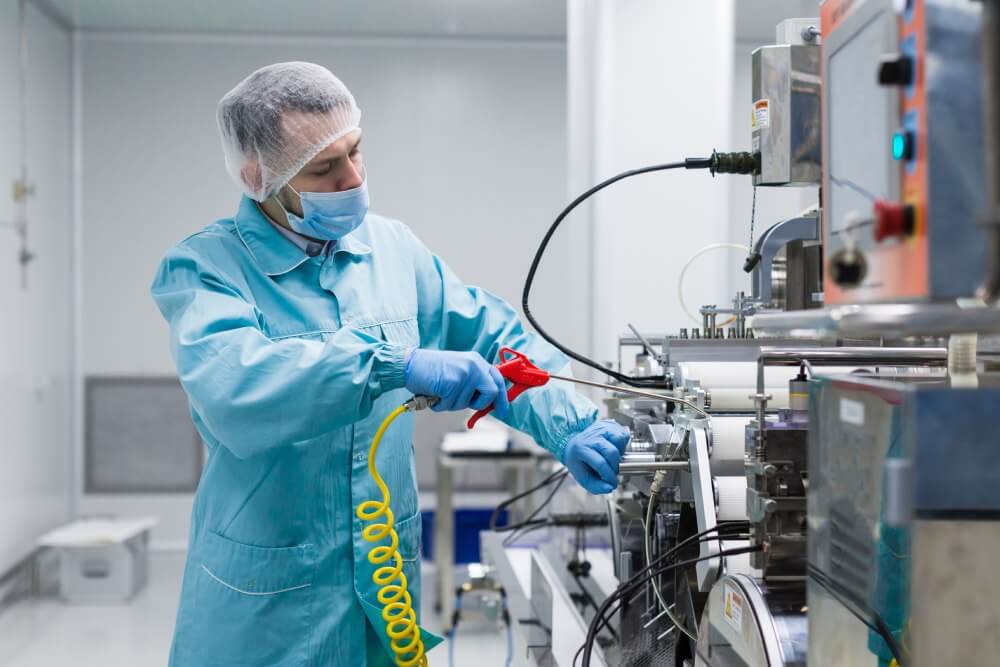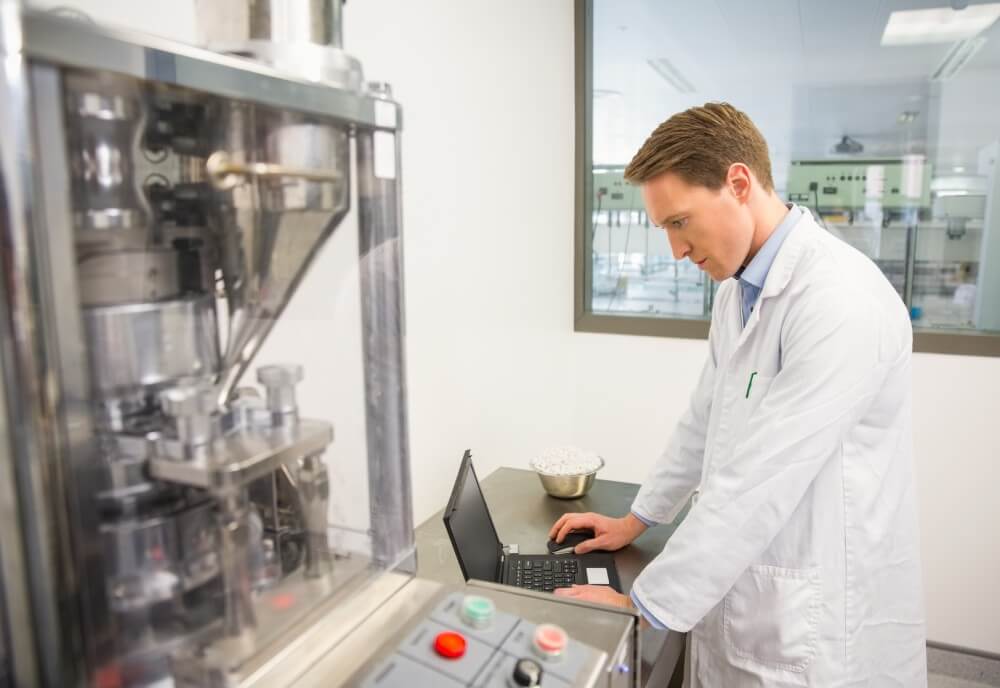

In pharmaceutical secondary packaging, overall equipment effectiveness (OEE) cannot be separated from serialization, line clearance and GMP documentation. Every stop on a blister line or cartoner is tied to a batch record, a reconciliation requirement or a serialization event. If these data sets live in different systems, you create gaps that auditors will notice and production teams will struggle with.
This article explains how to use OEE as a unifying layer for packaging performance, compliance and maintenance. It is written for MES and OEE buyers in pharma who need real time visibility into packaging lines, but who also live under GMP scrutiny and strict validation requirements.
Fabrico is a cloud based MES and OEE platform that captures production and downtime data directly from packaging equipment, prints and vision systems, then links each loss to both production actions and maintenance work, with built in CMMS capabilities as part of the platform. This creates a single operational view for packaging performance, quality and compliance related activities.
On a pharmaceutical packaging line, OEE still measures availability, performance and quality, but the constraints are different from typical CPG or discrete manufacturing. Short runs, frequent line clearance, high documentation load and strict serialization rules introduce new loss categories that classic OEE dashboards rarely handle well.
To be useful for you, OEE on pharma packaging lines has to treat these elements not as external compliance noise but as core production losses that can be analyzed and acted upon.
Pharma packaging teams often maintain separate data flows: OEE and downtime tracking in one tool, serialization in another, and GMP batch records in yet another system or on paper. This splits the same physical events across three or more data sets, which makes root cause analysis slow and validation more complex than it needs to be.
A better approach is to collect machine states, counters and event data once, then feed serialization, OEE and line clearance records from that unified source.
Fabrico is designed for this: it listens to packaging equipment, PLCs, coders, printers and vision systems in real time, and aggregates machine states, speed, counts and alarms in a single event log. Serialization events and performance events use the same production timeline, which in turn can be referenced in GMP related records.
For teams who also manage packaging assets across multiple plants or contract packers, this unified data model lets you compare OEE across different SKUs, artworks or markets without duplicating configuration. You can learn more about cross industry OEE considerations in this article on OEE for CPG manufacturing, then apply the same discipline to pharma packaging with serialization in mind.
Line clearance is usually managed as an SOP and checklist, not as a performance event. From an OEE perspective, however, every clearance is a structured availability loss with a specific cause, duration and owner. Treating it as such allows you to compare the impact of operations practices, SKUs and equipment configurations on line clearance time.
With Fabrico, you can model line clearance as an explicit state, captured automatically from PLC or from operator input, and tied to the relevant batch and SKU. The same event that triggers your clearance checklist and documentation also appears in OEE analytics as a loss category. Over time, you can answer questions such as:
This is where maintenance and operations need a shared view. If line clearance delays often relate to cleaning certain parts of a machine, or to repeated interventions by maintenance technicians, you want to link those OEE losses to maintenance tasks in the same platform.
Fabrico supports this directly: the same line clearance event that shows up as lost availability can also generate or reference a maintenance work order inside the built in CMMS portion of the platform, so packaging, quality and maintenance teams work from one factual record.
Request a demo
Serialization introduces its own loss modes in OEE. Vision rejects, print quality issues, data exchange problems with the Level 3 and 4 serialization layers and aggregation errors in case and pallet building can all stop or slow the line. These events are often logged in separate serialization servers or applications but do not make it into the OEE view in a structured way.
An effective pharma packaging OEE implementation must bring serialization related losses into the OEE model as first class citizens. Fabrico does this by:
Because these events share the same timeline and context as overall line status in Fabrico, you can see exactly how serialization alarms combine with downstream bottlenecks or upstream supply issues to shape final OEE. This is a key difference from stand alone serialization systems that produce detailed logs but do not connect to real time production performance analytics.
In regulated environments, a dashboard that highlights chronic downtime is not enough. You need a traceable path from repeated OEE losses to planned maintenance actions, and from maintenance back to improved performance and fewer deviations.
Fabrico integrates maintenance capabilities directly in the MES and OEE environment so you do not have to hand copy downtime codes from an OEE tool into a separate maintenance application.
When specific loss categories exceed your threshold, Fabrico can prompt the packaging or maintenance team to create a work order, inspection or lubrication task inside the platform. The link between the OEE history and the maintenance record remains visible for audits and for internal investigations.
This approach aligns with modern packaging maintenance strategies in other high speed sectors. You can explore some of these concepts in more detail in the guide on packaging maintenance strategy and then adapt them to pharma packaging with serialization and GMP constraints.
Batch records and line clearance documents in pharma are often created manually, even when equipment is highly automated. Operators fill in line status, start and stop times, cleaning confirmation, material reconciliation and deviation notes on paper or separate systems. This increases documentation effort and introduces the risk of misaligned timestamps or missing data.
By using unified OEE and MES data as the backbone for GMP documentation, you can reduce this burden and increase data integrity. In Fabrico, the same time stamped events that drive OEE dashboards and maintenance triggers are also available to support GMP records. For example:
This does not remove the need for validation or procedural controls. It does provide a single factual event history that supports your documentation processes and helps you answer auditor questions quickly, using the same data that operations and maintenance already rely on.
Many pharma plants run multiple packaging lines across different buildings, products and regulatory markets. Site leaders and operations directors need a consolidated view of OEE, while local supervisors need granular detail for each line. Fabrico is designed for these layered use cases.
From a central dashboard, you can compare packaging OEE by line, shift, SKU or market without losing the ability to drill into the detail of specific losses. At the same time, your maintenance and reliability teams see the same context, including where repeated microstops or short breakdowns are eroding performance across seemingly stable lines.
Lessons from other industries can support this approach. For example, food and beverage plants often focus strongly on microstops and packaging related maintenance to avoid leaks or recalls. The article on creating a zero leak factory in food and beverage provides concepts that are also relevant to pharma, where package integrity and code legibility are critical.
Request a demo
For MES and OEE buyers in pharma, any new platform has to fit into a validated, secure and change controlled environment. This has direct implications for how you plan and deploy a packaging OEE solution.
Key questions to address when evaluating a platform like Fabrico include:
Because Fabrico is cloud based, it can centralize management and updates while still respecting site specific needs and validation boundaries. For some customers, this means starting with a small number of packaging lines and gradually extending coverage as change control processes mature around the new data flows.
Ultimately, OEE on pharma packaging lines is only valuable if it changes the way you operate. This requires more than historical reports. It requires real time visibility and a habit of turning recurrent losses into structured actions, backed by both operations and maintenance.
Fabrico supports this in several ways:
For MES and OEE buyers in pharma, this unified approach is what turns line data into a strategic asset. Instead of juggling separate tools for OEE, maintenance and serialization, you can use Fabrico as the central operational layer for packaging performance improvement.
If you are planning an OEE or MES initiative for pharmaceutical secondary packaging, or if you want to extend an existing deployment to better cover serialization and line clearance, it helps to see how a unified approach works in practice on real lines.
Request a demo to explore how Fabrico can connect your packaging equipment, serialization infrastructure and GMP documentation processes around one set of production data.
You can also Contact us to discuss specific lines, plants or regulatory markets and to review integration and validation considerations with your team.
See how Fabrico unifies OEE and maintenance in one platform.
Request a demo







 Login
 Blog