

Most MES and OEE programs are excellent at telling you what happened yesterday. The challenge for plant leaders is different: you need to know if your lines will actually run next week, and where availability is at risk before the shift starts. Predictive availability uses the data you already capture in MES, OEE and maintenance history to answer a simple question: “Can this line reliably run the plan next week?”
For manufacturers that already track OEE availability, the next step is to move from reporting to foresight. Instead of reacting to downtime after it hits your schedule, you use condition data, event history and maintenance actions to predict when availability will drop and intervene early.
Predictive availability is a forward looking view of line uptime for a defined horizon, usually the next week. It combines three elements:
The result is a forecast of whether each line can realistically deliver its planned running time and output. Instead of a static schedule, planners and production managers see a risk informed schedule that highlights which lines are likely to fall short and why.
Predictive availability depends on linked production and maintenance data. MES and OEE platforms already sit at the intersection of machines, operators and maintenance, so they are naturally suited to this role.
When your MES does more than collect shift reports, it becomes the single place where you see:
This context allows you to move from “Hour 3 lost to mechanical downtime” to “This failure mode has occurred three times in the last two weeks on this format and is likely to hit again on the Tuesday night shift unless we intervene.” For continuous and process manufacturers, this is particularly important, as explained in depth in this guide for continuous process plants.
A practical predictive availability workflow typically includes five stages.
Accurate prediction starts with accurate sensing. A cloud based MES and OEE platform like Fabrico captures machine states and downtime directly from the equipment or PLCs, then combines that with manual inputs from operators only where needed.
Key practices at this stage:
If you are still evaluating ways to get a real time view of line uptime, this overview of real time availability tracking provides a useful reference.
The second step is to link every significant availability loss to a maintenance path. This is where a built in CMMS is valuable, because it avoids a disconnect between production data and maintenance workflows.
In Fabrico, when a downtime event crosses a configurable threshold, the platform can:
Over time, this creates a traceable history: for each type of loss on each asset and format, you know what maintenance was done and how long it held. That history is the core of predictive availability.
MES and OEE buyers often focus first on high level OEE scores. To forecast next week’s availability, you need to go deeper, and look at pattern based questions such as:
Fabrico uses the full stack of MES data, from state changes to work orders, to surface these patterns. For example, the platform can show that a particular filler has a growing rate of lubrication related microstops and that the last two preventive tasks were deferred. That combination signals a higher risk for unplanned downtime during next week’s long run.
Predictive availability is ultimately expressed in simple terms that planners and plant managers can use. At this stage, the platform brings together:
Fabrico then flags scenarios such as:
The output is not a theoretical model, it is a practical dashboard of availability risks for the coming week. This lets plant leaders adjust sequences, move SKUs, pull maintenance forward or add buffer time before problems appear on the shop floor.
The last step is to make those insights actionable in the same environment where teams already work. A cloud based MES and OEE platform with maintenance management built in can:
This turns predictive availability from a theoretical concept into a weekly operating rhythm. Every Friday, for example, plant managers can review next week’s plan through the lens of availability, agree on actions with production and maintenance, then lock the schedule with clear expectations.
Fabrico is a cloud based MES and OEE platform that brings production and maintenance data into one environment. It captures real time production and downtime data straight from machines, visualises OEE and losses, and turns each significant loss into suggested maintenance and production actions through its built in CMMS capabilities.
For predictive availability, this integrated approach means:
If you work in a continuous or batch process environment, Fabrico’s architecture is designed to handle long runs, complex recipes and 24/7 operations, as discussed in the detailed comparison of MES and OEE solutions for process plants in this article.
When you evaluate MES and OEE software, predictive availability should be a clear criterion. A platform that can deliver a reliable view of next week’s uptime directly from machine and maintenance data helps you:
Predictive availability also helps justify MES and OEE investment. Instead of positioning the platform as a reporting tool, you can show how it directly protects revenue and capacity by keeping lines running when the business needs them most.
You do not need a complete transformation to benefit from predictive availability. Many plants start with three concrete steps:
Over time, you can add more advanced analytics, condition based triggers and refined risk models, but these basic steps already move your plant from reactive to predictive behaviour.
Many MES and OEE programs stall at reporting and dashboards. Predictive availability offers a more direct route to business impact, using the same data to answer a question your organisation feels every day: “Will our lines run as planned next week?”
By combining real time availability tracking, integrated maintenance management and historical loss patterns, Fabrico gives plant managers, operations leaders and maintenance teams a shared, actionable view of future uptime. Instead of waiting for the next unplanned stop, you can anticipate it, prevent it, or at least schedule around it.
To see how predictive availability could work in your plants and lines, and how Fabrico supports it as part of a unified MES and OEE platform, you can Request a demo or Contact us.
See how Fabrico unifies OEE and maintenance in one platform.
Request a demo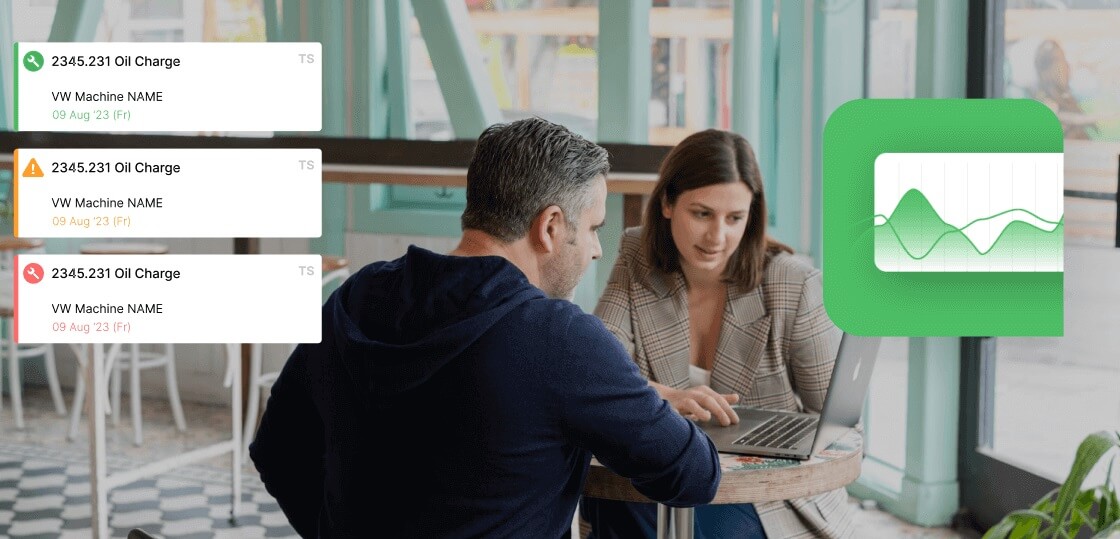


 Login
 Blog