
Key takeaways
Andon is a lean visual signaling system from the Toyota Production System that lets any operator instantly flag a problem, usually with a colored light, board, cord, or button, so the right person responds before a small abnormality becomes a defect or extended downtime. It is the visible expression of jidoka, or built-in quality.
On a busy line, the most expensive minutes are the silent ones: the gap between when something goes wrong and when anyone with the authority to fix it actually knows. Andon closes that gap. It is the lean visual signaling system that turns a quiet problem into a loud, unmissable call for help, and it remains one of the most cited tools in the entire Toyota Production System.
Andon is a visual signaling system that highlights where action is required on the production line. The term comes from the Japanese word for a paper lantern, and Toyota uses it to describe an illuminated signal that notifies others of a problem in the quality or production stream, according to Toyota UK's TPS guide.
The core idea is simple but radical: every team member has the authority to signal a problem the instant they see one . They do not wait for a supervisor to notice. They do not let a marginal part pass downstream. They raise the signal, and the system mobilizes a response.
That single behavior shift, from "keep the line moving at all costs" to "stop and fix it now," is what makes andon a culture tool as much as a hardware one.
Andon is tightly coupled with OEE, because every minute a line sits in an unsignaled fault is lost availability. If you are new to that metric, start with our primer on what OEE is and how availability is calculated.
Andon is the visible face of jidoka, one of the two pillars of the Toyota Production System. Jidoka is often translated as "automation with a human touch" or autonomation: the principle that a process should stop immediately when an abnormality is detected, so a defect is never built, passed on, or buried.
Toyota UK describes andon as the tool that applies the jidoka principle by highlighting a problem as it occurs so the team can immediately counter it and prevent recurrence. In other words, andon is how jidoka becomes visible on the floor. A machine that detects its own fault is jidoka in steel; an operator pulling a cord to flag a quality concern is, as practitioners put it, human jidoka.
The payoff is built-in quality. Instead of inspecting defects out at the end, andon stops the source of the defect at the moment it appears. That is why andon pairs naturally with broader reliability practices like Total Productive Maintenance and structured problem analysis such as FMEA.
Andon is a family of signals, not a single device. The right mix depends on line complexity, how many stations you supervise, and what information responders need. Per Vorne's andon reference, the common forms break down like this.
| Andon type | What it is | Best for |
|---|---|---|
| Andon cord | A physical rope or cable an operator pulls to raise an alert and, if unresolved, stop the line | Manual assembly lines where the operator is the first detector |
| Andon button | A press-button alternative to the cord, often built into a tower-light base | Stations where a cord is impractical or hygiene-sensitive |
| Stack / tower light | Three or four stacked colored lights showing live station status | Per-machine status visible at a glance from across the floor |
| Andon board | A central display showing the status of many lines or stations in a matrix | Supervisors and team leaders managing multiple lines |
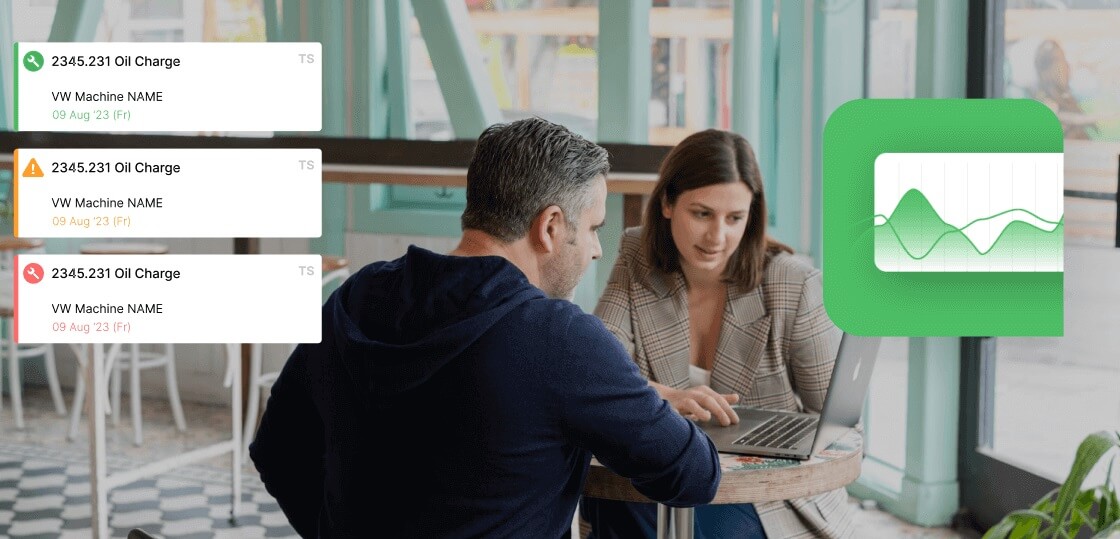
| Digital / IIoT andon | Software that captures signals, routes them to phones, and logs every event | Plants that want analytics, escalation rules, and audit trails |
Color is the language of andon, and the convention is widely shared. Based on the same Vorne reference, the standard scheme is:
The discipline that makes colors useful is consistency. If red means "stopped and urgent" everywhere in the plant, a glance at a tower light or board tells any responder exactly what they are walking into.
A good andon system runs a repeatable loop: signal, response, resolution, and capture. Each stage matters, and weak links anywhere break the system.
That fourth step is what separates a mature andon from a noisy alarm. The signal data becomes evidence. Over time it reveals which stations, shifts, or assets trigger the most stops, which is exactly the input you need to attack the six big losses and reduce unplanned downtime.
Andon attacks the single most controllable component of downtime: reaction time, the delay between a problem occurring and the right person acting on it. A machine can be stopped for two minutes or twenty for the same root fault; the difference is almost entirely how fast someone qualified arrives with the right parts and the right instructions.
Shrinking that reaction window directly protects availability , the first lever of OEE. It also prevents small abnormalities from cascading into major halts, which is where a large share of production loss hides. The financial stakes are not trivial.
The Siemens "True Cost of Downtime 2024" report estimates that unplanned downtime now costs the world's 500 largest companies around $1.4 trillion a year, equal to 11 percent of their revenues , up from 8 percent in 2019 and 2020.
Every minute andon shaves off reaction time is a direct claw-back against numbers like those.
Andon also strengthens the metrics maintenance teams live by. By summoning the responder faster and feeding clean event data, it supports better MTBF and MTTR tracking, and it helps a preventive maintenance program learn from the failures that slip through.
The classic andon depends on a human noticing the problem and choosing to signal it. That works, but it has two gaps: not every micro-stop gets flagged, and even when it does, the responder still has to diagnose the cause and gather parts before any real fix begins. A modern andon closes both gaps.
This is where Fabrico fits, as the MES and OEE platform that records the andon signal and acts on it. Fabrico logs machine stops as they happen, from the PLC, an IoT sensor or a camera, and on manual or hybrid lines computer vision recognizes when the line stands still. That makes the detection step automatic: the stop signals itself, instead of waiting for someone to pull a cord. The operator at the line then tags the cause on a tablet, so the stop carries a real reason rather than a generic "machine down" code.
From there, Fabrico does what a light or a board cannot. Maintenance management (CMMS) is part of the same platform, so a technician opens the work order from the stop itself and takes the job on a phone or tablet, wherever they are in the plant. Scanning the machine's QR code opens that machine in the app, and the repair time counts toward its MTTR and MTBF, so the machine's repair history is there the next time it stops.
In effect, the whole andon loop, signal, response, resolution and capture, runs in one system: every stop, its cause and the repair that followed sit on the same machine record, ready for the daily review. Fabrico is built in the EU and hosted on AWS in an EU region, which matters for plants with data sovereignty requirements.
Used together, a manual andon and an automatic one are complementary: the cord still empowers the operator's judgment, while vision-based detection catches the micro-stops and quality faults a busy human might miss.
Andon endures because it encodes a simple truth: problems are cheapest to fix at the moment and place they appear.
Whether you raise the alarm with a rope or a computer-vision model, the goal is the same, surface the abnormality instantly and route it to someone who can resolve it. If you want to see how Fabrico logs a machine stop, records its cause and lets maintenance open a work order from it, book a Fabrico demo.
Related reading: shop floor management software.
An andon cord is an input device: a rope or cable an operator pulls to raise an alert and, if the issue is not resolved in time, stop the line.
An andon board is an output device: a central display showing the live status of many stations or lines at once, usually as a color-coded matrix. The cord raises a single signal; the board aggregates and visualizes many signals so supervisors can see the whole floor at a glance.
No, but they are tightly linked. Jidoka is the lean principle of stopping a process the instant an abnormality is detected so defects are never built or passed on, often called automation with a human touch.
Andon is the visual signaling tool that puts jidoka into practice on the floor, highlighting the problem as it occurs so the team can respond immediately. Andon is the visible expression of jidoka and built-in quality.
The widely used convention is: green for normal operation, yellow for a non-critical issue that needs attention soon, red for a critical problem where the line is stopped and immediate help is needed, and blue for a planned stop such as a break or scheduled maintenance. Consistency matters most: when every red light means the same thing plant-wide, any responder instantly understands the situation.
Andon reduces downtime by cutting reaction time, the delay between a problem occurring and the right person acting on it. By signaling the issue the instant it appears and identifying the exact station, andon gets a qualified responder to the fault faster and stops small abnormalities from cascading into long halts. Faster reaction protects availability, the first lever of OEE, and prevents defects from escaping downstream.
Yes. A traditional andon relies on a person noticing and signaling the problem. An automated andon reads stops from machine signals, such as PLCs and sensors, or from computer vision, so every stop is logged the moment it happens, including the short ones nobody would report.
This closes the gaps a manual andon leaves: micro-stops that go unflagged, and the diagnosis-and-parts delay before a fix can begin. Manual and automatic andon are complementary.
Andon originated in the Toyota Production System. The term comes from the Japanese word for a paper lantern, reflecting its role as an illuminated signal.
Toyota operators were empowered to pull an andon cord whenever they saw a problem, which alerted team leaders and, if needed, stopped the line so the issue could be fixed at the source and prevented from recurring as part of Toyota's kaizen, or continuous improvement, program.
See how Fabrico unifies OEE and maintenance in one platform.
Request a demo



 Login
 Blog