Key takeaways
See the metric this discipline ultimately improves.

Key Takeaways:
The Concept: TPM (Total Productive Maintenance) is a holistic strategy that aims for "Perfect Production." It strives for Zero Breakdowns, Zero Stops, and Zero Defects.
The Core: It shifts the responsibility for routine maintenance from the technician to the operator.
The Challenge: TPM fails when it is treated as a "Maintenance Initiative." It must be an "Operations Initiative."
The Solution: You must digitize the 8 Pillars. Paper checklists for operator rounds (Autonomous Maintenance) are destined to fail. Mobile tools make shared ownership possible.
The eight pillars cannot stand without a stable base, and that base is 5S. A clean, organized, and standardized workplace makes abnormal conditions (a leak, a loose bolt, a stray tool) visible immediately, which is exactly what autonomous and planned maintenance depend on.
Skip 5S and the pillars sit on sand: teams end up firefighting the same faults instead of preventing them. For the full method, see our guide to the 5S methodology.
The 8 pillars of TPM stand on a 5S foundation and work toward one shared goal: zero breakdowns, zero stops, and zero defects. Use this table to see what each pillar does and who owns it before the per-pillar deep-dives below.
| Pillar | Japanese term | Primary goal | Who owns it |
|---|---|---|---|
| Autonomous Maintenance | Jishu Hozen | Operators keep their own equipment clean and healthy | Production operators |
| Focused Improvement | Kobetsu Kaizen | Small cross-functional teams eliminate recurring losses | Improvement teams |
| Planned Maintenance | Keikaku Hozen | Schedule upkeep before failure happens | Maintenance team |
| Quality Maintenance | Hinshitsu Hozen | Design out defects at the equipment source | Quality and maintenance |
| Early Equipment Management | Shoki Kanri | Build reliability into new machines from day one | Engineering |
| Training and Education | Kyoiku Kunren | Close skill gaps for operators and technicians | Team leaders, HR |
| Safety, Health, Environment | Anzen Eisei | Reach zero accidents and a safe workplace | Everyone (safety lead) |
| TPM in Administration | Kansetsu Bumon | Remove waste from office and support processes | Admin and support |
The foundation of TPM is 5S: Sort, Set in order, Shine, Standardize, and Sustain. A clean, organized, and standardized workplace exposes abnormal conditions early, which is what the eight pillars rely on to prevent breakdowns and defects.
TPM focuses on equipment reliability, driving losses toward zero breakdowns, stops, and defects through operator ownership and planned upkeep. TQM focuses on product and process quality across the whole organization. They overlap on defect prevention but start from different points: TPM from the machine, TQM from the customer.
The headline metric is Overall Equipment Effectiveness, calculated as Availability multiplied by Performance multiplied by Quality. Teams also track mean time between failures, mean time to repair, and how many planned and autonomous maintenance tasks were completed on schedule. See our guide to measuring effectiveness for the full calculation.
Autonomous maintenance is owned by operators, who handle daily cleaning, inspection, and minor tasks on their own equipment. Planned maintenance is owned by the maintenance team, who schedule deeper interventions before failures occur. The two pillars reinforce each other: operators catch early warning signs, and technicians act on them.
In many factories, there is a dangerous divide between the people who run the machines and the people who fix them.
Operator: "My job is to push the button. If it breaks, I call Mike."
Maintenance: "I fixed this sensor yesterday, but the operator let it get dirty again."
This "Us vs. Them" mentality is the root cause of chronic downtime. It leads to dirty machines, hidden failures, and a reactive culture.
Total Productive Maintenance (TPM) is the framework designed to destroy this divide.
Originating in Japan (Nippondenso), TPM is not just about fixing machines. It is about maximizing the overall efficiency of the production system. It is built on 8 Pillars that support the foundation of 5S.
Here is the strategic guide to understanding and implementing the 8 Pillars of TPM in 2026.
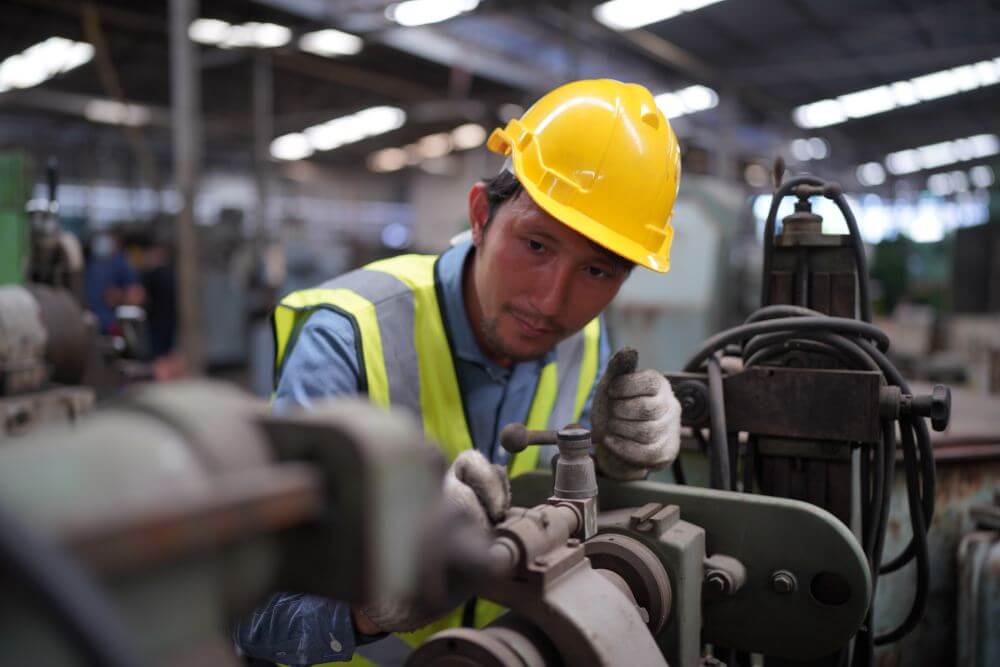
This is the most important and difficult pillar. It means giving the operator the tools and responsibility to perform basic care.
The Logic: The operator stands next to the machine for 8 hours. They know the sounds, smells, and vibrations better than anyone.
The Tasks: Cleaning, lubricating, tightening bolts, and inspecting sensors.
The Digital Shift: You cannot hand an operator a paper logbook and expect compliance. Use a mobile app to guide them through a "Daily Start-Up" routine. If they see a leak, they tag it instantly.
This pillar is about data-driven problem solving. It focuses on the "Six Big Losses" of OEE.
The Logic: You cannot fix everything at once. You must pick the biggest losses and attack them with a cross-functional team.
The Action: Form a small group (Operator + Engineer + Maintenance) to solve one specific recurring jam on one specific machine.
The Goal: Eliminate the root cause so it never happens again.
While operators handle the basics (Pillar 1), the skilled maintenance team focuses on the heavy lifting.
The Logic: Freeing mechanics from "simple" tasks (like greasing) allows them to focus on "complex" tasks (like rebuilding gearboxes).
The Strategy: Move from Reactive to Preventive and Predictive maintenance. Use data to schedule repairs before failure occurs.
This pillar connects the condition of the machine to the quality of the product.
The Logic: Defects are not just "bad luck." They are often caused by equipment degradation. A wobbling shaft causes a scratched part.
The Action: Identify the "Q-Points" (machine settings that affect quality). Maintain those points within strict tolerances to ensure Zero Defects.
This pillar focuses on the design phase of new equipment.
The Logic: It is expensive to modify a machine after it is installed. It is cheap to modify it on the drawing board.
The Action: Use the data from your current maintenance software to inform the design of the next machine. "Don't buy Motor X again; it failed 10 times. Buy Motor Y."
The Goal: Maintenance Prevention. Design machines that are easy to clean and easy to fix.
You cannot expect operators to maintain machines if they don't understand how they work.
The Logic: The skills gap is the biggest threat to TPM.
The Action: Create a formal skills matrix. Train operators on "Basic Mechanics" and "Sensor Logic." Train maintenance techs on "Root Cause Analysis."
The Tool: Use digital work instructions (One-Point Lessons) available on tablets at the machine for on-the-job learning.
A machine that is not safe is not productive.
The Logic: Accidents cause downtime and morale loss.
The Action: Integrate safety checks into the daily maintenance rounds. "Check E-Stop" and "Check Guarding" should be the first items on every digital checklist.
Manufacturing doesn't happen in a vacuum. The office supports the floor.
The Logic: If Purchasing buys the wrong spare part, the machine stays down. If Scheduling overloads the line, the machine breaks.
The Action: Apply Lean principles to the office workflow. Streamline the flow of work orders and purchase requests to support the shop floor.
The number one reason TPM fails is Paperwork.
If you ask an operator to clean, inspect, lubricate, and measure using a clipboard, they will eventually stop doing it. It becomes "pencil whipping."
The Solution: Digital TPM
Visual Guidance: Show the operator a photo of where to grease.
Forced Compliance: Require a photo of the clean sensor before the task can be closed.
Feedback Loops: If an operator tags a problem, the maintenance team must acknowledge it. If the operator feels heard, they will keep engaging.
TPM is not a "Maintenance Project." It is a total culture shift.
It requires trust. Management must trust operators to touch the machines. Operators must trust management to fix the issues they report.
By building these 8 pillars and reinforcing them with modern digital tools, you move closer to the ultimate goal of manufacturing: Perfect Production.
Explore the strategies and metrics behind effective maintenance:
Turn downtime into a number your team can actually act on.
Request a demo




















 Login
Login
 Blog
Blog