Menu

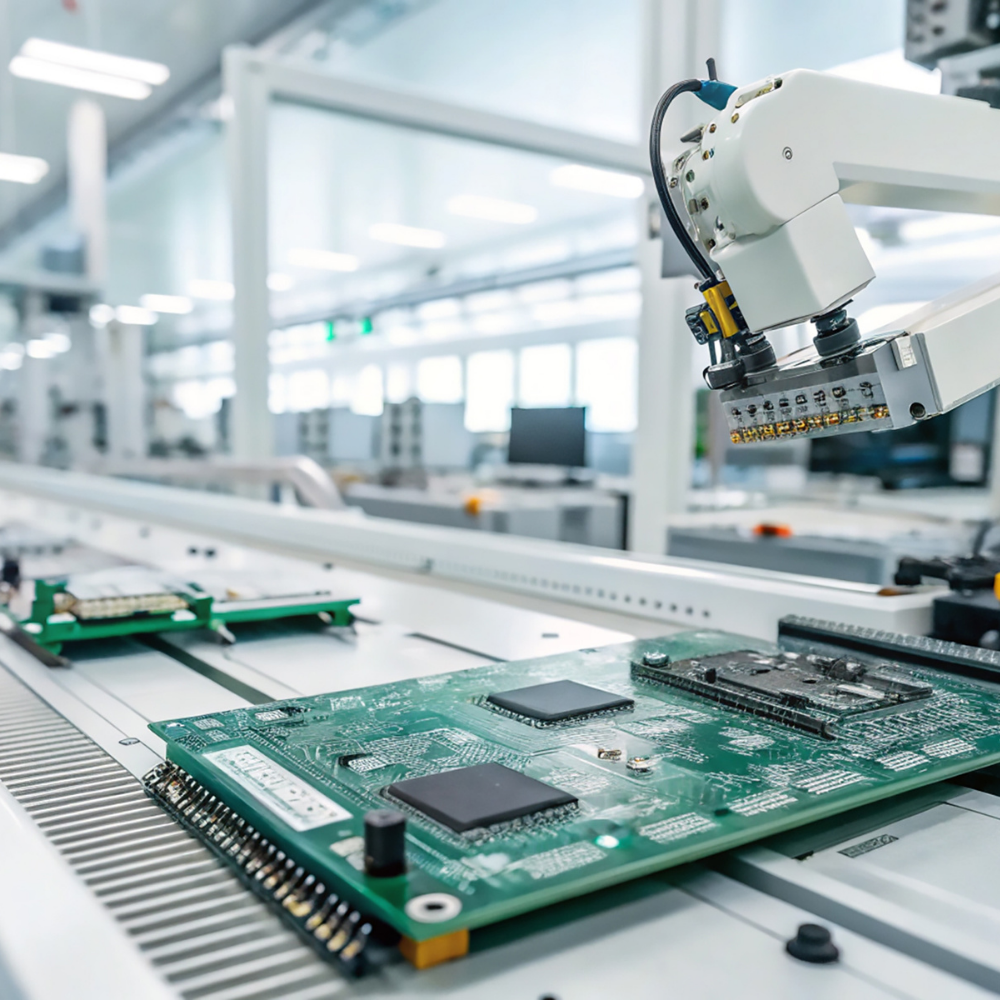
Real-time OEE for SMT and PCB assembly lines

An SMT line is a chain of machines, so a stop at one placement machine or at the oven holds up every board behind it. In Fabrico's OEE software, each machine and each line gets its own OEE score, built from Availability x Performance x Quality.

  • Availability: the time each machine actually ran, set against the time it was meant to produce.
  • Performance: boards built against the ideal cycle time, which is where a line running slower than its program shows up.
  • Quality: good boards against all boards built, with rejects recorded at inspection or test.
  • Views: by machine or by line, live on the dashboard or for a past period.

Because the three factors are kept apart, a low score tells the engineers whether to look at stops, at speed or at rejects.
Downtime tracking on SMT lines

Each stop on a connected machine is logged from the machine signal, with its start time and length, and the operator picks the cause on a tablet beside the line. Downtime analytics then sort the stops by cause, so the biggest time losses of each line are at the top.

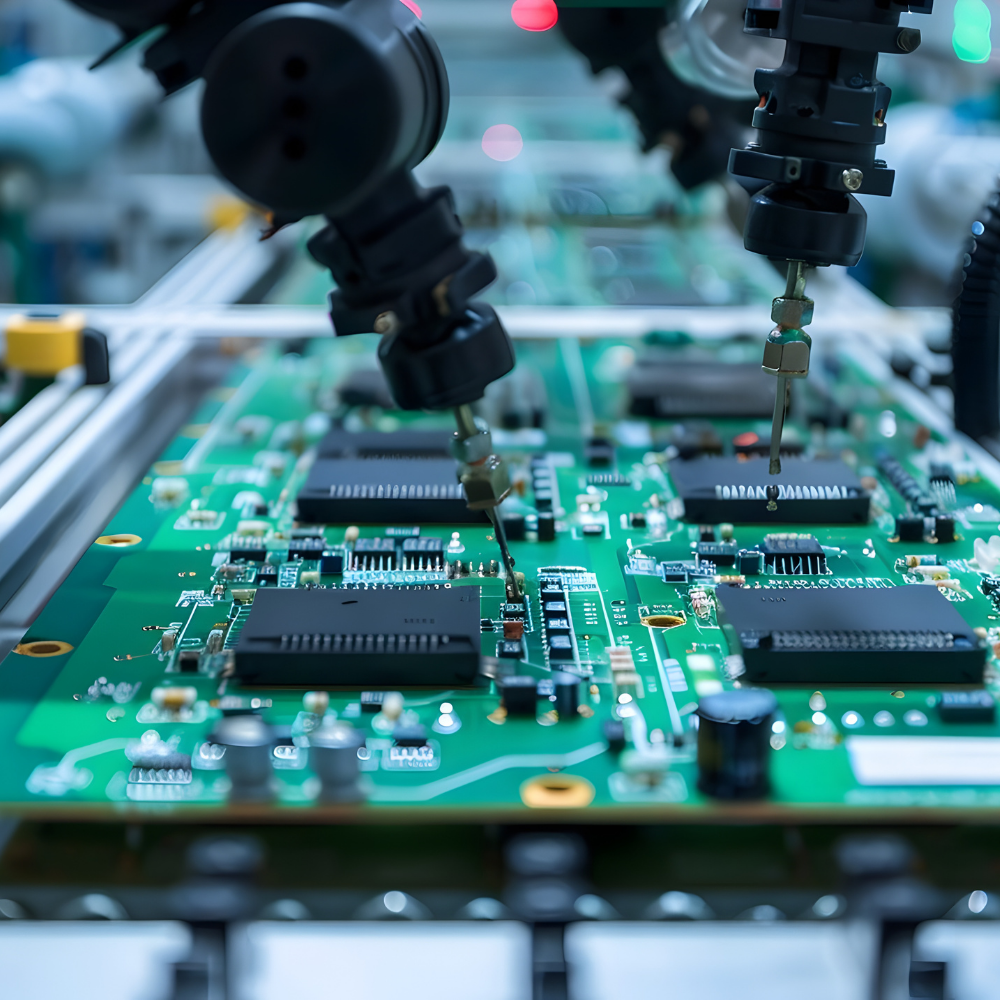
Micro-stops at pick and place

A mis-pick, a nozzle that needs cleaning or a board that sticks on the conveyor can halt a placement machine for a few seconds and then let it run on. Nobody writes those pauses down, yet over a shift they add up.

Fabrico detects micro-stops automatically and totals them per machine, so the team can see which machine to work on first.

Feeder changes for each new board

A new board type means swapping feeder reels, loading a new placement program and often a different oven profile, and part of that work stops the line. When operators tag those stops as a changeover, changeover time shows up per line, apart from breakdowns.

You can then check whether loading the feeders for the next board ahead of time makes the change shorter.

Stops at reflow, inspection and test

Stops at the reflow oven, at AOI and at in-circuit or functional test are logged the same way, each with its own cause. Waiting for components, a reel or an engineer is tagged as its own cause, so it is not counted as a machine fault.

For more on stop causes and downtime analytics, see our downtime tracking software.

Machine monitoring for SMT and test equipment

OEE needs data from the machines, not figures copied from a sheet after the shift. Each machine is connected the way its hardware allows, and one line can mix the options:

  • PLC connection: the machine's controller reports when it runs, when it stops and how many boards it completes, where the controller gives access to that data.
  • IoT sensor: fitted to equipment without a usable controller output, such as an older wave solder machine or a stand-alone test station.
  • Camera: computer vision follows manual steps such as hand soldering, through-hole insertion or box build, counting finished units and noticing when work stops.

Every connection type feeds the same OEE dashboard. Our machine monitoring software page covers what each option needs on the machine.

Built-in CMMS for SMT line repairs

If a stop needs a technician, the operator raises a work order from that stop in the app, and the technician is notified on the phone. The repair is then added to that machine's history.

  • Preventive maintenance: recurring tasks such as nozzle cleaning, feeder calibration and oven checks, planned in an annual PM plan and moved on the calendar by drag and drop.
  • Emergency jobs: breakdown calls go through a reactive flow that tracks reaction time.
  • MTTR and MTBF: for each machine, with a ranking of the machines repaired most often.
  • Spare parts: nozzles, feeder parts and other wear parts in a catalog with min/max levels, booked against the work order that used them.

Technicians scan the QR code on a machine to open its record and files on the spot.

Quality counts, multi-plant OEE and ERP integration

A board that fails at test has already used line time, and a rework loop hides that cost when nobody counts it. In Fabrico, failed boards lower the quality figure of the line that built them, so a fast line with many rejects shows a lower OEE, not a good one.

Multi-plant view: groups with several sites see all their plants in one group account, and cross-plant comparison reports set the plants side by side.

ERP: bidirectional sync with SAP PM, integration with SAP S/4HANA, and Dynamics, Oracle or other ERPs through a custom integration.

Open data: Excel export of any list, CSV export, bulk import from Excel, a REST API, webhooks and Zapier.

Access and security: role-based access control, an audit log and SSO via SAML, set up as a custom integration. Fabrico holds ISO/IEC 27001 certification, works under GDPR with a DPA and keeps data in the AWS EU region.

Languages: the app runs in English, Bulgarian, German, French and Polish, and more languages can be added.

To see how other tools compare, read our OEE software comparison.

Questions electronics plants ask

Does Fabrico trace components to each board? No: Fabrico is the monitoring and OEE layer of MES, covering machine data, stops and the repairs that follow.

Component and board traceability is not part of it, and production planning and scheduling are on our roadmap rather than in the product today.

How long does the rollout take on SMT lines? Plan about 1 month to fit and connect the devices, and 3 to 4 months for the full rollout across your lines.

Do operators need a PC at the line? No, Fabrico runs on iOS and Android phones and tablets and in the web browser.

How is our production data protected? It is encrypted at rest and in transit, backed up every day with a 4 hour RTO and 4 hour RPO, and the platform sits behind Cloudflare DDoS protection.

What support do we get? You get live and on-site training, and support by email or phone callback that responds in under 2 hours.

What does downtime cost our lines? Our cost of downtime calculator puts a money figure on your production losses.

What does a demo involve? It is a 30 minute conversation with a Fabrico consultant, no commitment, focused on your SMT lines and where they lose time.

Any data you show us during the call is handled under ISO 27001.

By clicking the Accept button, you are giving your consent to the use of cookies when accessing this website and utilizing our services. To learn more about how cookies are used and managed, please refer to our Privacy Policy and Cookies Declaration