

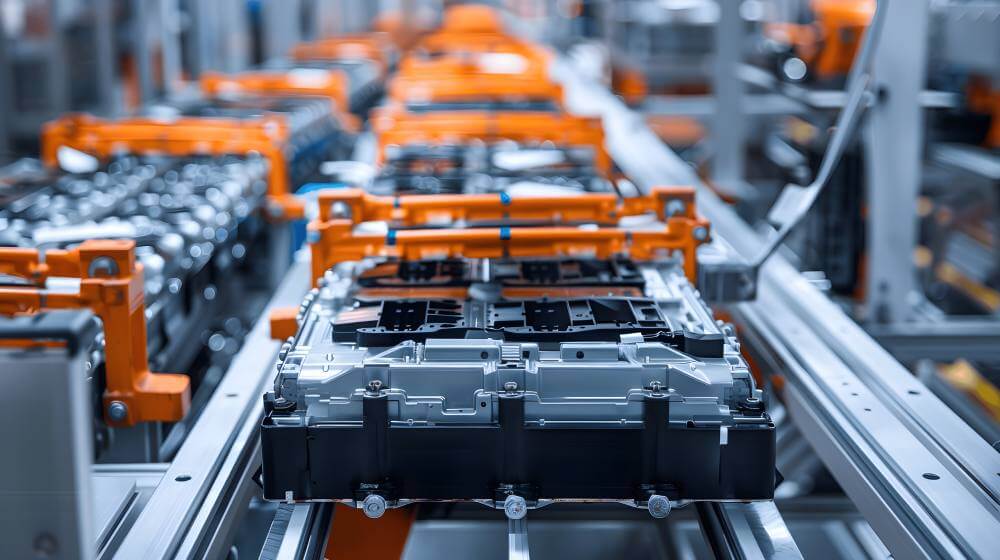

UPS and Stationary Battery Maintenance: Testing and Replacement is the disciplined practice of inspecting, testing, and timely replacing the stationary lead-acid cells that back uninterruptible power supplies, switchgear tripping circuits, and control systems, so the battery actually delivers its rated backup when mains power fails.
A battery that floats quietly for years can still fail at the moment of demand, and only structured testing exposes that hidden weakness before it matters.
Two chemistries dominate stationary backup. Vented (flooded) lead-acid cells have accessible electrolyte, allow specific gravity measurement, and vent hydrogen and oxygen during charging. Valve-regulated lead-acid (VRLA) cells are sealed with a pressure relief valve and recombine most gas internally, so you cannot check electrolyte and you must rely on indirect measurements.
Because VRLA cells run warmer and hide their state, they carry a real thermal-runaway risk that flooded cells largely avoid. The two families are governed by separate standards: IEEE 450 for vented cells and IEEE 1188 for VRLA. IEEE 1106 covers vented nickel-cadmium.
Lead-acid cells have a nominal 2.0 V per cell. Stationary strings are held on float charge, typically around 2.25 to 2.27 V per cell at 25 degrees C, adjusted for temperature. Flooded cells for stationary duty are usually filled to a specific gravity near 1.215.
Wide cell-to-cell voltage spread, low individual voltage, or a cell running hotter than its neighbours all point to a developing fault. Record the pilot cell temperature and the overall string voltage every month, and log full cell readings on the schedule below.
Impedance or conductance testing is the fastest way to find a weak cell without discharging the string. The instrument injects or measures an AC signal and reports internal resistance. A single reading means little; the value matters as a trend against that cell's own baseline and against sister cells.
A rise of roughly 20 percent or more over baseline flags a suspect cell for closer inspection or a targeted capacity check.
Ohmic testing catches dry-out, grid corrosion, and post seal failures early, but it does not replace a capacity test, since a cell can show acceptable impedance and still fail to deliver its rated ampere-hours.
A capacity test is the only true proof of stored energy. The string is discharged at a defined constant current or constant power to a specified end voltage, commonly 1.75 V per cell for lead-acid at the relevant discharge rate, and the delivered capacity is compared with the rating.
Per IEEE 450 and IEEE 1188 a battery is considered at end of life when measured capacity falls below 80 percent of rated, because degradation accelerates sharply past that point.
Perform an acceptance test on installation, a performance test within the first two years, then periodically, moving to annual testing once capacity drops below 90 percent or falls more than 10 percent between tests. Load-bank testing of the UPS itself confirms that the transfer and the battery act together under real demand.
Loose or corroded intercell connections add resistance, generate heat, and can drop the string voltage under load. Measure connection resistance during annual inspection and compare against baseline. Re-torque terminals to the manufacturer value, never guessing, and use a calibrated wrench.
Keep tops clean and dry, apply approved no-oxide compound where specified, and check that flame arrestor vents on flooded cells are clear. Poor DC connections feed directly into the reliability of the switchgear maintenance program, since tripping and closing coils depend on this battery.
Charging flooded cells also liberates hydrogen, which is flammable at 4 percent by volume in air, so ventilation is sized to keep concentration well below that limit, commonly under 1 percent, which is 25 percent of the lower flammable limit.
VRLA rooms need ventilation too, because a valve venting under abuse or thermal runaway releases hydrogen as well. Treat the DC bus as an energy hazard: a shorted stationary string delivers enormous fault current, so battery work belongs inside the same arc flash and DC safety discipline you apply elsewhere.
Verify DC protection and coordination alongside circuit breaker testing so the battery, its breaker, and the load are validated as one system.
| Test or check | Typical interval | What it reveals |
|---|---|---|
| Overall float voltage and ambient temperature | Monthly | Charger set-point drift, room conditions |
| Pilot cell voltage, temperature, specific gravity (flooded) | Monthly | Early trend on a representative cell |
| All individual cell voltages | Quarterly | Cell-to-cell spread, weak or reversing cells |
| Internal impedance or conductance | Quarterly (VRLA), periodically (flooded) | Dry-out, corrosion, post seal failure |
| Intercell connection resistance | Annually | Loose or corroded connections, hot joints |
| Capacity or performance discharge test | Per standard, then annually near end of life | True delivered capacity versus rating |
Replace the string when capacity drops below 80 percent of rated, when multiple cells show rising impedance and low voltage, when a VRLA case bulges or a cell runs persistently hot, or when age exceeds the design life at the observed operating temperature.
Do not mix new and aged cells in one string, since the weakest cell governs performance. Scheduling these recurring inspections, ohmic trends, and capacity tests as CMMS work orders keeps the whole battery fleet auditable. Teams that manage this in Fabrico can trend readings and trigger replacement before a failure. Book a Fabrico demo to see the workflow.
No. Impedance and conductance testing screen for weak cells quickly and cheaply, but a cell can pass an ohmic check and still fail to deliver rated ampere-hours. A discharge capacity test remains the only definitive proof of stored energy.
IEEE 450 and IEEE 1188 treat 80 percent of rated capacity as end of life. Below that point capacity fades rapidly, so a string reading under 80 percent should be scheduled for replacement rather than nursed along.
VRLA cells are sealed and recombine gas internally, which generates heat. If charging voltage and temperature are not controlled, current and heat can feed each other until the case melts or vents. Flooded cells dissipate heat through their liquid electrolyte and open vents, so they are far less prone to it.
Hydrogen is flammable at 4 percent by volume in air. Ventilation is designed to keep concentration well below that, commonly under 1 percent, so any charging gas is diluted long before it reaches the flammable range.

























Zakažite sastanak KSNUMKS-to-KSNUMKS sa našim stručnjacima ili se direktno upišite u naš besplatni plan.
Nije potrebna kreditna kartica!






 Login
Login
 Blog
Blog