

Most high-speed manufacturers spend thousands on OEE software to generate reports that tell them exactly how much money they lost yesterday.
See the OEE calculation this recovery starts from.
While knowing your score is important, a report cannot clear a jammed conveyor or recalibrate a drifting filler,only a technician can do that.
To drive real growth, you must stop treating OEE as a passive KPI and start treating it as an operational trigger for your maintenance team.
Passive OEE is a cost; Operational OEE is an investment. Moving from reporting to execution is how you achieve sustainable ROI.
The "Visibility Gap" in manual and hybrid lines is solved by combining machine data with Computer Vision.
Live machine data lets planners set production targets based on actual machine health, not theoretical capacity.
Operational OEE is the practice of linking real-time production performance data directly to maintenance execution workflows to ensure that every performance loss triggers a corrective action.
In a passive system, an OEE drop is a line item in a Friday morning meeting.
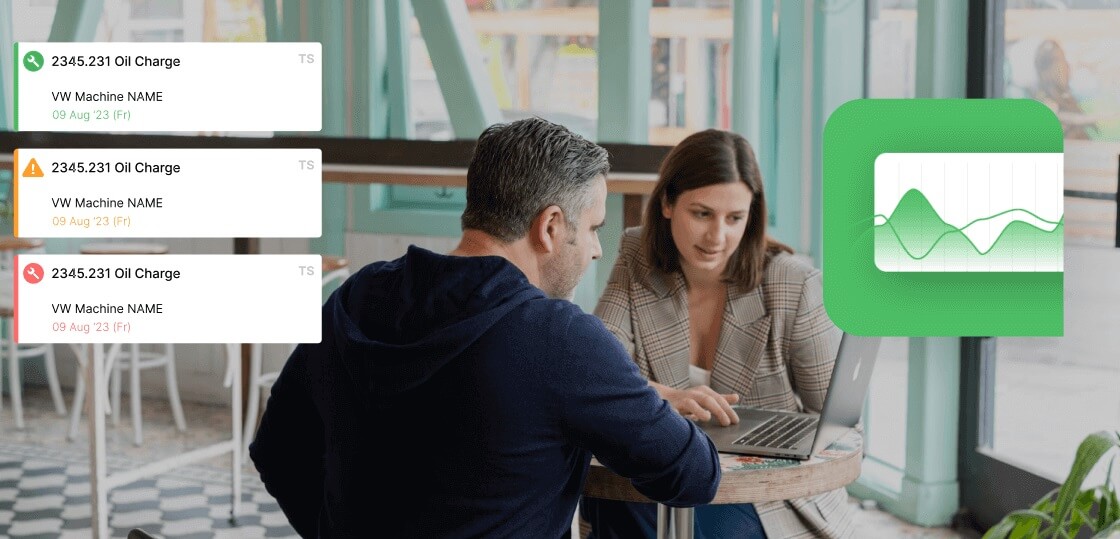
In an Operational OEE system like Fabrico, that same drop is logged at once, and a technician can open a Work Order from it on their mobile device.
This shift moves your factory from "Reporting Failure" to "Engineering Uptime."
In industries like FMCG and Food & Beverage, the biggest losses aren't major breakdowns; they are the micro-stops and slow cycles that PLCs often miss.
Fabrico's Inefficiencies Zoom-In module uses AI-powered cameras to capture the visual truth of these events.
If a labeling machine slows down by 5%, the system doesn't just log a "Performance Loss."
It flags the video footage so Mike (the Tactical Manager) can see if the issue was caused by an operator adjustment or a mechanical fault.
By providing 100% visibility into the Hidden Factory, Fabrico ensures no loss remains "invisible."
| Feature | Hardware Scoreboards (Vorne) | Generic OEE Dashboards | Fabrico (Operational OEE) |
| Primary Output | Visual Score on Floor | Post-Shift Report | Live Alerts + Work Orders |
| RCA Intelligence | Manual / Subjective | Log-Based | Visual (Zoom-In) + Machine Data |
| Maintenance Link | None | Manual Entry | Native (Integrated CMMS) |
| Planning Capability | None | Static | On the roadmap |
| Operator Role | Observer | Data Entry Clerk | Autonomous Maintenance Leader |
| Data Integrity | High (Visual) | Moderate | Absolute (Unified Dataset) |
The true power of integrated OEE and CMMS is the "Fault-to-Fix" cycle.
Diagnosis: Fabrico’s Native OEE detects a deviation from the standard cycle time via direct PLC connection.
Context: The Inefficiencies Zoom-In module captures a video clip, providing the visual "Why" behind the "When."
Cure: Tom (the Technician) is notified and opens a prioritized Work Order with the machine's SOPs and its linked spare parts at hand.
This workflow eliminates the "Decision Latency" that typically keeps machines down and production schedules in flux.
For Paula (the Strategic Leader), the business case for Fabrico isn't about the software's features; it's about the Value Fulcrum.
Reclaiming just 5% of your lost capacity through Operational OEE is often more cost-effective than adding a new shift or purchasing a new production line.
It directly reduces the Maintenance Cost per Unit and ensures that your capital assets reach their full residual value.
As your factory builds its 12-month operational data layer, it creates the perfect foundation for the Fabrico AI Agent (on the roadmap) to point your team to the losses worth acting on.
See how Fabrico unifies OEE and maintenance in one platform.
Request a demo





 Login
 Blog