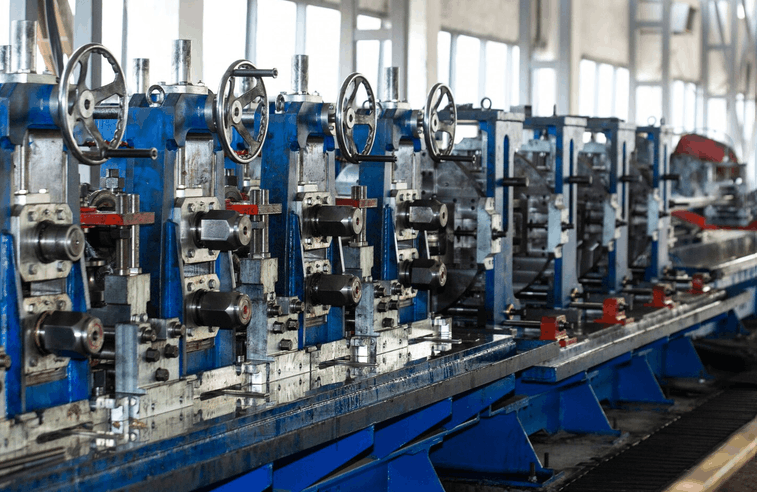

In high-speed manufacturing, the most expensive minute is the one spent waiting for someone to notice a machine has stopped.
If your OEE software identifies a performance drop but doesn't instantly notify a technician, you are paying a "Decision Latency Tax" that drains your quarterly margins.
To achieve world-class results, you must move beyond passive dashboards and run one platform for machine data and maintenance.
Decision Latency is the primary OEE killer. The time between a "Stop" signal and a "Wrench Turn" is pure lost revenue.
Integrated systems speed up the "Cure." Natively linking production diagnostics to maintenance work orders eliminates manual communication gaps.
Visual proof accelerates diagnostics. Using Computer Vision to see the root cause helps your technicians arrive with the right tools the first time.
OEE Decision Latency is the cumulative time delay between a production loss event (Availability, Performance, or Quality) and the start of the corrective maintenance action required to resolve the root cause.
For Mike (the Tactical Manager), this latency is the difference between a five-minute tweak and an hour of total downtime.
In a siloed factory, this delay is often caused by supervisors manually checking reports, radioing technicians, or searching for the correct manuals.
Fabrico eliminates this friction, sending the diagnostic data from the machine to the right technician in seconds.
The hallmark of one platform for data and action is the direct hand-off between production and maintenance.
When Fabrico’s OEE module detects a cycle-time slowdown via PLC, it doesn't just change a number on a chart.
A prioritized Work Order is opened from it in the Field-Ready CMMS.
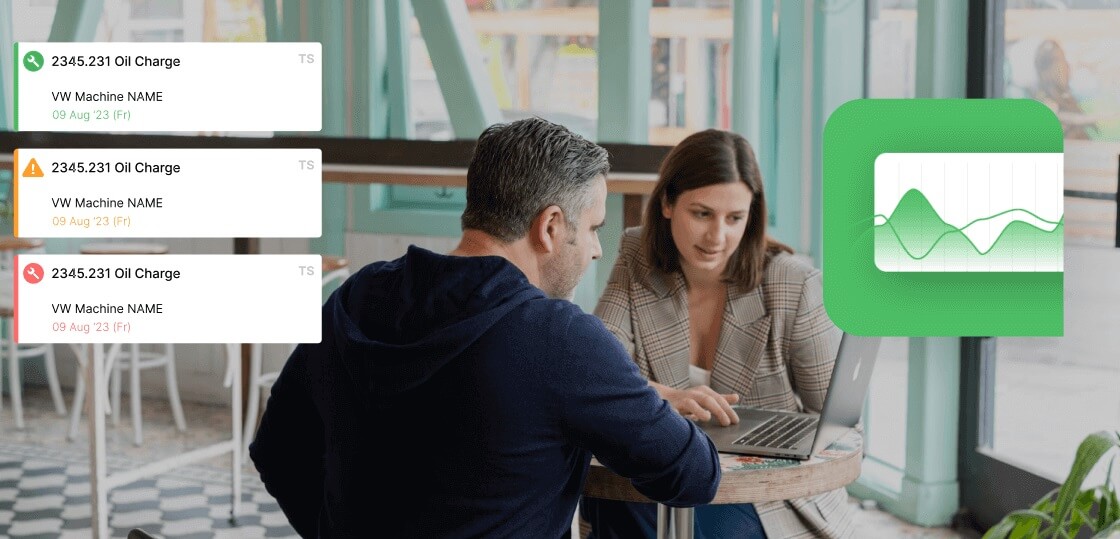
Tom (the Technician) receives a smart notification on his mobile device before the operator even has time to walk to the supervisor's office.
Diagnostic time, figuring out why a machine stopped, is the largest component of high MTTR (Mean Time to Repair).
Fabrico’s Inefficiencies Zoom-In module acts as the "Eyes" of your line, flagging video clips of every micro-stop.
Instead of guessing what happened during the night shift, Mike can "Zoom-In" to see the visual truth of a material jam or mechanical slip.
This visual evidence eliminates the "Blame Game" and ensures that the maintenance response is targeted and permanent.
Latency often occurs when a technician arrives at a machine only to realize they need a specific part located at the far end of the warehouse.
Fabrico’s Spare Parts Management is natively linked to your machines and asset history.
When a Work Order is opened, the technician sees the machine's spare parts with their storage locations and writes off what he uses with a QR scan.
This ensures your team spends more time on high-impact Wrench Time and less time on logistics, protecting your Value Fulcrum.
Decision Latency also impacts the planning department when they attempt to schedule orders on failing assets.
Fabrico shows planners real-time OEE and the maintenance backlog for every asset; production planning on top of this data is on Fabrico’s roadmap.
If a critical line is trending toward a failure, planners can see it in the live OEE data before they commit orders to it.
This allows Paula (the Strategic Leader) to adjust the plan proactively, preventing the "Secondary Latency" of rescheduling an entire shift after a breakdown occurs.
For multi-site manufacturers, latency is often caused by a lack of standardized maintenance procedures across plants.
Fabrico’s Group-First Architecture allows you to push Master PM Templates to ten sites instantly.
When Plant A solves a recurring micro-stop, that "Best Practice" becomes the standard response for the entire enterprise.
This ensures that your Residual Asset Value is protected globally and that every site reacts with the same speed and accuracy.
| Feature | Manual Paper / Excel | Standalone OEE Dashboards | Fabrico (MES and OEE with CMMS built in) |
| Fault Detection | Human Observation | Real-Time Data | Instant / Millisecond |
| Task Assignment | Radio / Phone Call | Manual Work Order | Alert + Work Order from the Stop |
| Root Cause Depth | Subjective / Tribal | Data-Only | Visual (Zoom-In) Proof |
| Decision Latency | Very High (Days) | Moderate (Hours) | Low (Real-Time Alerts) |
| Technician Tools | Paper Manuals | Siled Database | Field-Ready Mobile App |
| ROI Impact | Negligible | Moderate | High (Capacity Reclamation) |
For Paula, slashing decision latency is the fastest route to a more profitable cost-per-unit.
By identifying "Bad Actor" assets through integrated OEE data, she can move her team to Condition-Directed Tasks.
This reclaimed capacity,typically 10-15% of your availability, is essentially "found revenue" that requires zero additional Capex.
As you gather 12 months of clean operational data, you are also preparing the facility for the Fabrico Agent (AI Roadmap).
Turn downtime into a number your team can actually act on.
Request a demo







 Login
 Blog