Menu
The 4 Types of Maintenance Strategies: A Comprehensive Guide to Choosing the Right Mix (2026)

The 4 Types of Maintenance Strategies: A Comprehensive Guide to Choosing the Right Mix (2026)

Key Takeaways


  • The "Best" Strategy Myth: There is no single "Best" maintenance strategy. Predictive Maintenance is great for a turbine, but it is a waste of money for a lightbulb. World-class factories use a Mix of all four strategies.

  • Reactive (Run-to-Failure): Valid for low-cost, non-critical assets (like lightbulbs). The goal is to minimize inventory cost, not uptime.

  • Preventive (Time-Based): Valid for assets with predictable wear (like belts). The goal is to prevent age-related failure.

  • Predictive (Condition-Based): Valid for random-failure assets (like electronics/motors). The goal is to detect stress before failure.

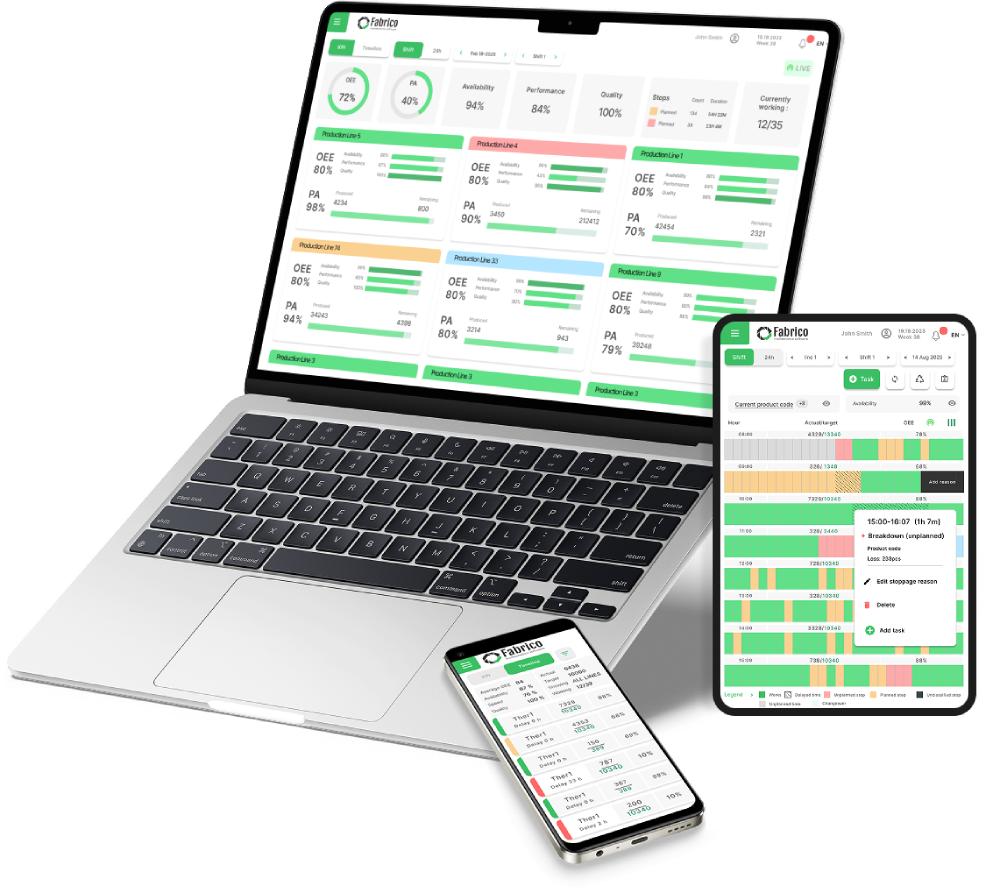
  • The Digital Backbone: While you can use different strategies, you cannot use different systems. Fabrico allows you to manage Reactive tickets, Preventive schedules, and Predictive alerts in one unified dashboard.

The 4 Types of Maintenance Strategies: A Comprehensive Guide to Choosing the Right Mix (2026)

If you Google "Maintenance Strategies," you will find thousands of articles telling you that Reactive is bad and Predictive is good.
This is an oversimplification.

If you put a $500 vibration sensor on a $20 bathroom exhaust fan, you aren't being "Predictive"; you are being wasteful.
Conversely, if you wait for your main production robot to break before fixing it, you aren't being "Lean"; you are being negligent.

Reliability is an economic calculation.
The goal of a Plant Manager isn't to prevent all failures; it is to manage the Risk and Cost of failure effectively.

In 2026, the best factories don't choose one strategy. They build a Portfolio.
Here is the definitive guide to the 4 Maintenance Strategies, and how to apply them to the right assets using digital tools.


Strategy 1: Reactive Maintenance (Run-to-Failure)


Definition: You allow the asset to run until it stops, then you fix it.

  • The Mindset: "It's cheaper to replace it than to maintain it."

  • When to Use It:

    • Asset Cost: Low (Disposable).

    • Criticality: Low (Does not stop production).

    • Safety Risk: None.

    • Examples: Lightbulbs, simple pumps, office chairs, non-critical conveyors.

  • The Digital Strategy:

    • You don't need a Schedule. You need Inventory and Speed.

    • Use Fabrico to ensure you have the spare part on the shelf. When it breaks, the operator scans a QR code to create a "Corrective Ticket," and the tech swaps it out.


Strategy 2: Preventive Maintenance (Time-Based)


Definition: You service the asset on a fixed schedule (Calendar or Usage) to prevent wear-out.

  • The Mindset: "An ounce of prevention is worth a pound of cure."

  • When to Use It:

    • Failure Pattern: Age-Related (Wear and Tear).

    • Criticality: Medium to High.

    • Examples: Changing oil, tightening chains, replacing filters, greasing bearings.

  • The Digital Strategy:

    • Usage-Based Triggers: Don't just guess "Monthly." Connect Fabrico to the PLC.

    • Rule: "Change oil every 500 Run Hours." This prevents over-maintaining a machine that sat idle.


Strategy 3: Predictive Maintenance (Condition-Based)


Definition: You monitor the asset's health (Temperature, Vibration, Speed) and service it only when it shows signs of trouble.

  • The Mindset: "If it isn't broken, don't touch it—watch it."

  • When to Use It:

    • Failure Pattern: Random (Electronics, complex assemblies).

    • Criticality: High (The Bottleneck).

    • Cost of Inspection: High (Hard to reach).

    • Examples: Main Turbine, Server Room HVAC, CNC Spindle.

  • The Digital Strategy:

    • Live Monitoring: Connect Fabrico to IoT sensors.

    • Rule: "If Vibration > 5mm/s, trigger Work Order." You fix it just in time, maximizing the asset's useful life.


Strategy 4: Prescriptive Maintenance (AI-Driven)


Definition: The system doesn't just predict the failure; it calculates the root cause and suggests the optimal solution.

  • The Mindset: "Let the data make the decision."

  • When to Use It:

    • Complexity: Very High (Too many variables for a human).

    • History: You have lots of data to train the AI.

  • The Digital Strategy:

    • The Agent: The Fabrico Agent analyzes production schedules and failure history.

    • Proposal: "Asset X is degrading. Based on the schedule, the optimal time to fix it is Tuesday at 2:00 PM during the changeover."


The Decision Matrix: How to Choose?


Don't guess. Map your assets.

Asset Type Cost of Failure Safety Risk Recommended Strategy
Lightbulb Low None Reactive (Run-to-Failure)
Conveyor Belt Medium Medium Preventive (Visual Checks)
Main Motor High Low Predictive (Vibration)
Boiler Catastrophic High Prescriptive (Safety/AI)


The Unified Platform Requirement

The biggest mistake factories make is buying separate software for each strategy.

  • An Excel sheet for PMs.

  • An IoT dashboard for Sensors.

  • A whiteboard for Breakdowns.


This creates data silos. You can't see the big picture.
Fabrico is designed to handle the Entire Portfolio.

  • It logs the Reactive repair.

  • It schedules the Preventive task.

  • It triggers the Predictive alert.


All in one dashboard. All linked to OEE.


Conclusion: Orchestrate Your Strategy

Maintenance management is like conducting an orchestra. You need the drums (Reactive), the rhythm (Preventive), and the soloists (Predictive) playing together.
If you get the mix right, you achieve reliability at the lowest possible cost.

Build your portfolio.


[Request a Demo] and let Fabrico help you assign the right strategy to every asset.

Related articles

Latest from our blog

Define Your Reliability Roadmap
Validate Your Potential ROI: Book a Live Demo
Define Your Reliability Roadmap
By clicking the Accept button, you are giving your consent to the use of cookies when accessing this website and utilizing our services. To learn more about how cookies are used and managed, please refer to our Privacy Policy and Cookies Declaration