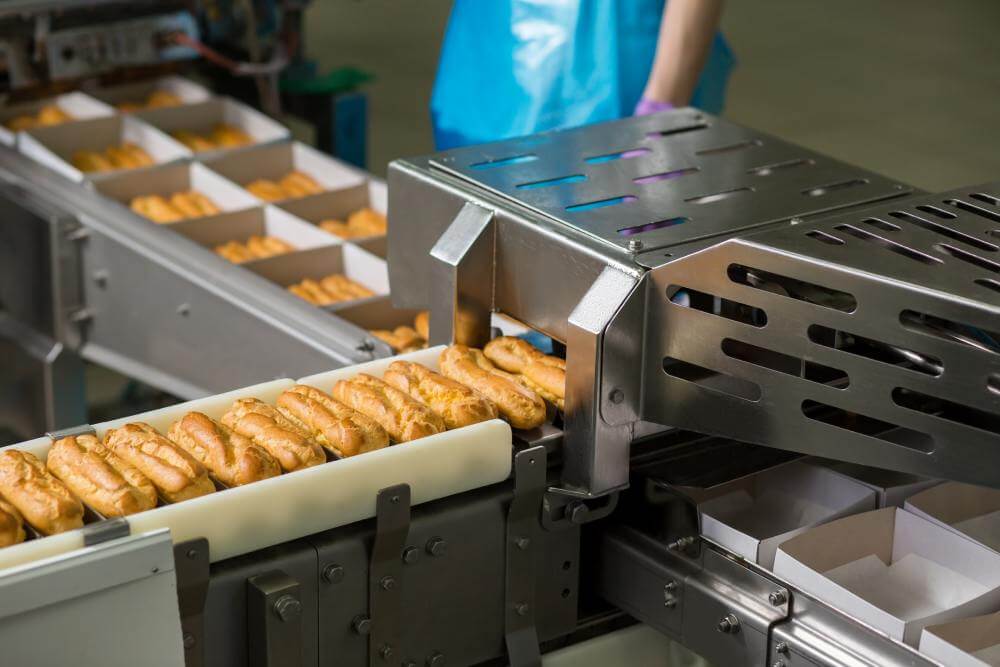

Rigidity is a Cost: Legacy ERP systems were designed for static accounting, not for the high-speed volatility of modern production floors.
See our roundup of the analytics layer this argument points to.
System of Action vs. Record: Agility requires a dedicated operational layer that synchronizes OEE and CMMS to bypass "Administrative Latency."
Competitive Speed: Real-time visibility into the "Hidden Factory" allows leadership to reallocate capacity and labor in hours, not weeks.
See how Fabrico unifies OEE and maintenance in one platform.
Book a demoWhat is the Agility Gap in manufacturing?
The Agility Gap is the disconnect between the speed of market demand and the slow, "waterfall" nature of legacy ERP systems.
When your technology cannot react to a machine performance drop in real-time, your organization loses the ability to pivot production schedules or prevent margin erosion.
For the CEO, a rigid tech stack is a liability in a volatile market.
If your production plan is an "assumption" built in an office, it will fail the moment the shop floor faces a reality your ERP cannot see.
Robert C. Hansen identifies this as the "Hidden Factory", the 20% of revenue capacity lost because legacy systems cannot detect micro-stops or speed losses as they happen.
To regain agility, you must move beyond "Systems of Record" and implement a System of Action.
| Strategic Metric | Legacy ERP (Rigid) | Fabrico (Agile System of Action) |
| Response Time | Lagging: Days to analyze shift reports | Immediate: Real-time PLC & Vision alerts |
| Data Integrity | Manual, "Pencil-Whipped" entries | Machine-Validated: Direct OT/IT feeds |
| User Adoption | Low: Technicians find UI too complex | High (96%): Mobile-first & Offline-ready |
| Workflow Link | Siloed: No link between OEE and CMMS | Native: Performance drops trigger repairs |
| Governance | Site-specific "Tribal" variations | Global: Master PM Template Standardization |
| Implementation | Waterfall: 12 to 18 month technical debt | Agile: Pilot-ready in days; full ROI in months |
Strategic leaders know that the most profitable capacity is the time currently being "stolen" by unrecorded inefficiencies.
Traditional ERP modules focus on "major downtime," but the real margin is lost in the seconds between cycles.
Fabrico's Native OEE module captures these silent revenue killers by connecting directly to your machine layer.
By using Computer Vision "Zoom-In" capabilities, leadership gains visual proof of inefficiencies that sensors miss, such as manual station jams or setup delays.
This transparency allows you to bridge the Value Fulcrum.
You move from "hope-based" scheduling to a standardized, reliable throughput model where maintenance intensity is perfectly balanced with revenue-generating runtime.
The greatest risk to your digital transformation is "The Complexity Trap."
If your software is designed for an analyst but used by a technician, the data you see in the boardroom will be corrupted.
Fabrico achieves a 96% adoption rate because it is built for the technician's thumb.
Technicians scan a QR code at the machine to instantly access the Digital Medical Record, SOPs, and part catalogs.
This maximizes "Wrench Time" and ensures that your most expensive skilled labor is fixing machines, not fighting with a desktop interface.
It creates a data-driven culture where every action on the floor is a validated data point for the boardroom.
For the CFO, the "Fixed Cost Trap" is often hidden in unmanaged MRO (Maintenance, Repair, and Operations) inventory.
In rigid environments, each plant maintains a "Squirrel Stash" of unrecorded parts because they don't trust the central system.
Fabrico provides Unified Data Intelligence across your entire global portfolio.
By sharing inventory visibility and tracking part consumption against actual machine cycles, you can liquidate dead stock and lower your total cost per unit.
This is the core of Smith & Hinchcliffe’s RCM principle: you are preserving the function (making good parts), not just the physical machine.
It ensures that your capital is working for the organization, not sitting idle in a tool crib.
The strategic goal of standardizing on an agile platform today is to secure your position in the next decade of industrial intelligence.
AI agents cannot optimize a factory that is currently running on unstructured data or rigid silos.
On our future roadmap, we are developing the "Fabrico Agent" for automated process optimization and schedule refinement.
We are also working on the "Fabrico Assistant," a GenAI advisor that will eventually provide technicians with expert troubleshooting guidance.
Consolidating on Fabrico now ensures that your organization owns the high-resolution, validated dataset required for these future modules.
You are moving from a state of "reactive firefighting" to an evidence-driven, automated competitive advantage.
Curious what honest, real-time OEE looks like on your floor?
Watch a 15-min demo



















 Login
Login
 Blog
Blog