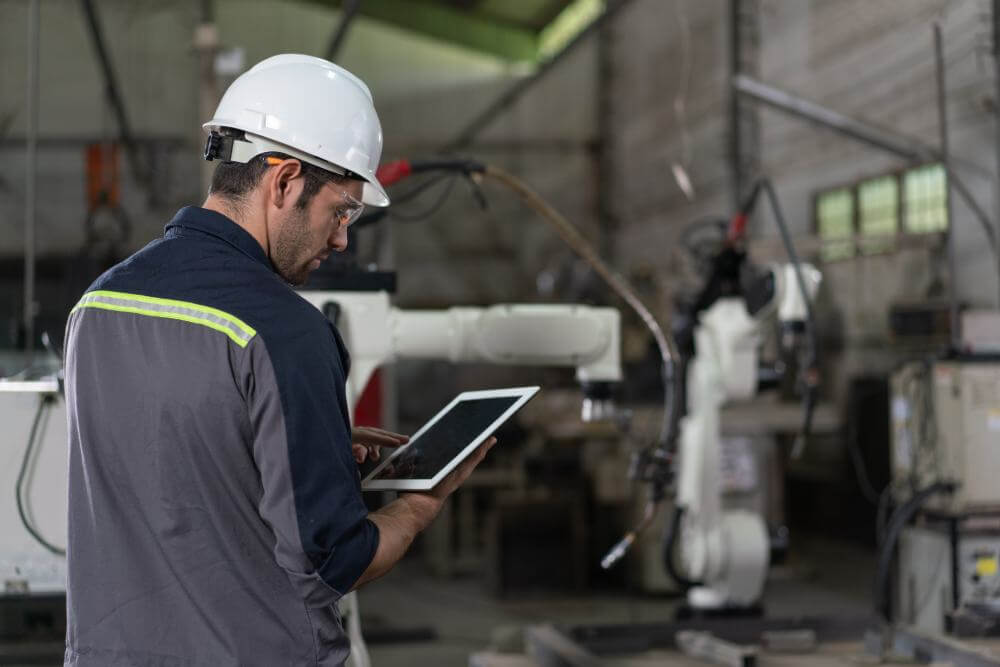
For the last 30 years, "Lean" was the only word that mattered in manufacturing.
The goal was simple: Cut waste. Reduce inventory. Standardize everything. If you could make the same widget a million times with zero waste, you won.
But in 2026, customers don't want a million of the same widget. They want 50 custom widgets, delivered tomorrow.
Factories that optimized strictly for Lean are finding themselves "Efficient but Fragile." They can run fast in a straight line, but they cannot turn.
This has given rise to Agile Manufacturing.
Agile is not just "working fast." It is the structural ability to pivot. It is the ability to absorb disruption—supply chain breaks, rush orders, design changes—without breaking the system.
Here is the strategic guide to choosing (or combining) these methodologies in the modern market.
1. Lean: The Pursuit of Efficiency
Lean (born from Toyota) is about Reliability.
-
Goal: Remove Waste (Muda).
-
Ideal State: Low Cost, High Volume, Predictable Demand.
-
Mechanism: Standard Work, Kanban, Heijunka (Leveling).
-
The Weakness: It assumes stability. If customer demand spikes by 200% overnight, or a raw material shortage hits, a Lean supply chain (with zero buffers) collapses.
2. Agile: The Pursuit of Flexibility
Agile is about Adaptability.
-
Goal: Respond to Change.
-
Ideal State: High Mix, Low Volume, Volatile Demand.
-
Mechanism: Modular Workcells, Cross-Trained Teams, Digital Scheduling.
-
The Weakness: It can be expensive. Maintaining extra capacity (to handle spikes) helps agility but hurts "Utilization" metrics.
3. The Core Conflict: Inventory vs. Capacity
The biggest difference lies in what you hoard.
Strategic Question:
Does your customer buy on Price (Lean) or Speed/Customization (Agile)?
If you are a contract manufacturer or a job shop, Lean might kill you. You need Agile.
4. How to Build an Agile Factory
You don't have to throw away Lean principles (5S and SMED are still vital). But you must layer Agility on top.
A. The "Product-Centric" Team
In Lean, you might have functional departments (Welding Dept, Assembly Dept).
In Agile, you form "Tiger Teams" around a customer order. The team follows the product from start to finish. This reduces handoff delays.
B. The Digital Nervous System
Agility requires speed of information.
-
Old Way: A paper schedule printed on Monday is obsolete by Tuesday.
-
Agile Way: A real-time digital board (like Fabrico). If a rush order comes in, the Planner drags-and-drops it to the top. The operator's tablet updates instantly. No meetings required.
C. Modular Machinery
Don't bolt machines to the floor. Use flexible connections (quick-disconnect air/power).
If a new product requires a different flow, you should be able to rearrange the line in hours, not weeks.
5. The Hybrid: "Leagile"
The smartest factories use a hybrid approach.
The Separation:
Do not run Agile jobs on a Lean line. The constant changeovers will destroy the efficiency of the Lean line. Create a separate "Rapid Response Cell" specifically for Agile work.
Conclusion: Agility is a Premium Product
In a world of Amazon Prime expectations, speed is the new currency.
If you can ship a custom order in 2 days while your Lean competitor takes 2 weeks, you win—even if your price is 10% higher.
Agility allows you to escape the "Commodity Trap." By using digital tools to master complexity, you turn market volatility from a risk into an opportunity.


 Login
Login
 Blog
Blog
![What is Overall Equipment Effectiveness (OEE)? [2026 Guide]](https://s3.fabrico.io/uploads/what-is-overall-equipment-effectiveness-oee-guide.jpg)
![What is the Industrial Internet of Things (IIoT)?[2026 Guide]](https://s3.fabrico.io/uploads/industrial-internet-of-things-iiot-guide.jpg)