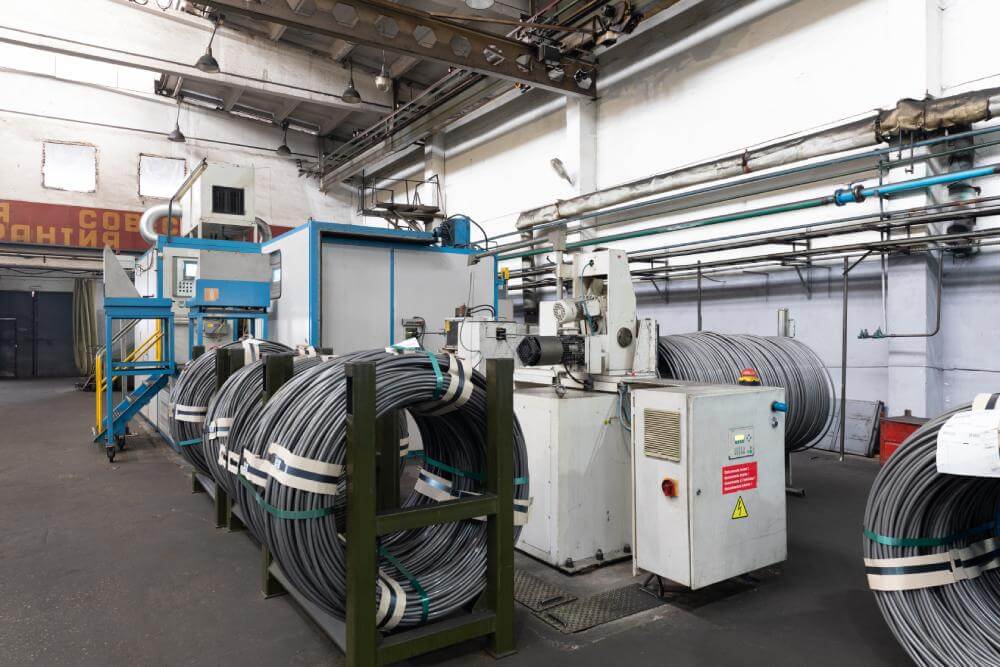
Manufacturing Cable and Wire (Power cables, Fiber optics, Magnet wire) is a high-speed balancing act.
You are managing complex Extruders, high-speed Drawing Machines, and massive Stranders.
-
If an Extruder Screw wears out, you lose insulation quality (Diameter control).
-
If a Capstan drive fails, the tension drops and the wire breaks.
-
If a Take-up Winder fails, you can't spool the finished product.
Generic facility software doesn't understand "Line Speed" or "Scrap Length."
You need Heavy Process CMMS software that links Machine Health to OEE.
Here are the 7 Best CMMS Software Tools for Cable & Wire Manufacturing in 2026.
1. Fabrico: The "Line-Speed" Solution
Best For: Manufacturers who want to link Extrusion Reliability to Production Speed (OEE).
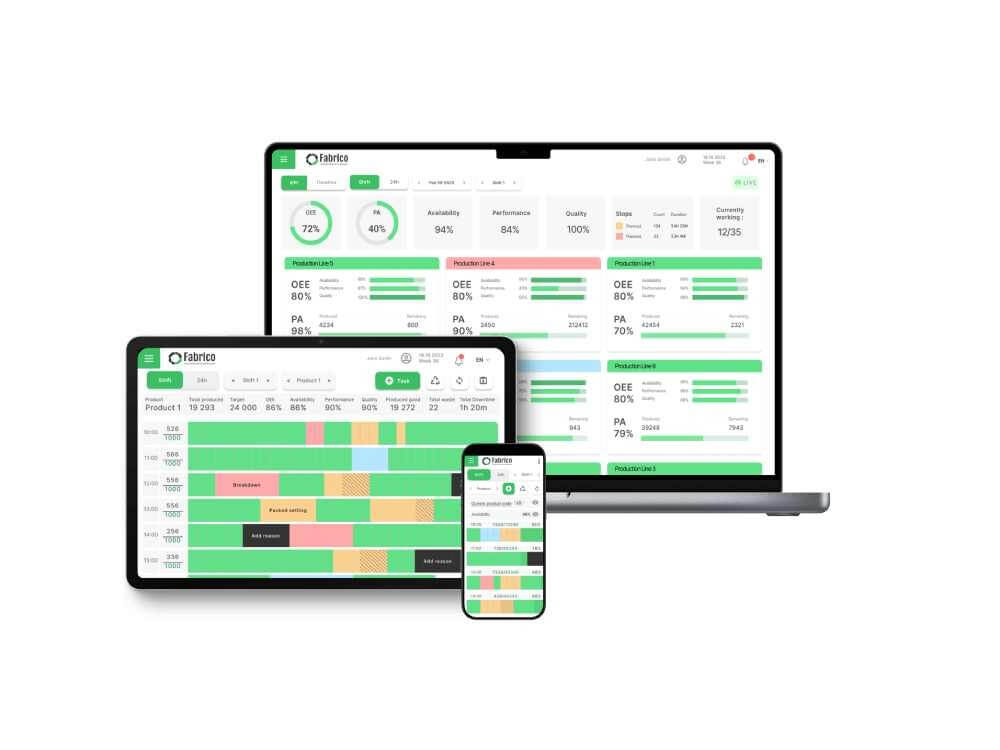
Fabrico excels in Cable & Wire because it connects the maintenance of the machine to the quality of the product. We help you prevent the micro-stops that cause insulation defects.
Why Cable Manufacturers Choose Fabrico:
-
Extruder Health (Condition Monitoring): Fabrico connects to temperature and pressure sensors on the extruder head. If the melt temperature drifts or the motor load spikes (indicating a screw issue), it triggers a maintenance alert before you burn the plastic.
-
Line Break Tracking (OEE): When the line stops, Fabrico logs it automatically via PLC integration. It forces the operator to categorize the stop (e.g., "Wire Break," "Die Change"), giving you a Pareto chart of downtime causes.
-
Tooling Management (Dies): Wire drawing relies on dies. Fabrico tracks the life (tonnage/meters) of specific dies and nipples, scheduling refurbishment exactly when needed to maintain diameter tolerance.
-
Shift Handover: These lines run 24/7. Fabrico’s Digital Handover ensures the night shift knows exactly which extruder zone was acting up during the day.
The Verdict: If you want to maximize meters-per-minute while minimizing scrap, Fabrico is the specialized choice.

2. Infor EAM (HxGN)
Best For: Global cable conglomerates.
Infor (Hexagon) is a standard in large-scale continuous manufacturing.
-
Pros: Unrivaled asset hierarchy. It can manage complex, multi-component lines (Pay-off -> Extruder -> Cooling Trough -> Capstan -> Take-up) as a single asset system.
-
Cons: It is expensive and heavy. Implementation is a major project. It is often too complex for the specific needs of a smaller specialty wire shop.
-
The Niche: Global Enterprise.
3. Aveva (Asset Performance)
Best For: Process control integration.
Aveva (Wonderware) is strong on the "Hot" side of the process (Extrusion/Compounding).
-
Pros: Deep integration with SCADA. It visualizes the entire extrusion process. Excellent for tracking energy consumption of the massive heaters and motors.
-
Cons: It is an engineering tool, not a workflow tool. It tells you the temperature is high, but it is less effective at managing the spare parts inventory to fix the heater.
-
The Niche: Process Engineering.
4. SAP PM (Plant Maintenance)
Best For: Finance-driven organizations.
If your company buys copper and plastic using SAP, you will likely use SAP PM.
-
Pros: Total integration with raw material inventory and finished goods. It handles the high capital cost of cable machinery depreciation perfectly.
-
Cons: The user interface is difficult for technicians. It requires a lot of clicks to close a simple "Filter Change" work order.
-
The Niche: ERP Standardization.
5. Fiix (Rockwell Automation)
Best For: Automated drawing and stranding lines.
If your drives and PLCs are Rockwell (Allen-Bradley), Fiix connects well.
-
Pros: Good connectivity to the automation layer. It helps track the runtime hours of high-speed motors to trigger bearing replacements.
-
Cons: It is a generalist tool. It requires configuration to handle the specific "Continuous Length" logic of wire manufacturing.
-
The Niche: Automated Machinery.
6. eMaint (Fluke)
Best For: Vibration analysis on high-speed rotating equipment.
Wire drawing machines and stranders have hundreds of rotating bearings. Vibration is the enemy.
-
Pros: Strong integration with Fluke vibration sensors. It is excellent for predicting when a flyer bow or a capstan bearing is about to fail.
-
Cons: The interface is dated. It lacks the modern "Production" context (OEE) that helps you understand the cost of that bearing failure.
-
The Niche: Condition Monitoring.
7. Cimforce
Best For: Die shop management.
If your plant manages its own diamond/carbide die polishing shop, Cimforce is a specialized tool.
-
Pros: Incredible depth for tracking the geometry and wear of wire drawing dies.
-
Cons: It is a Tooling system, not a Plant Maintenance system. It manages the dies, but not the extruders or the building.
-
The Niche: Tooling Room.
Comparison Matrix: Continuous vs. Discrete
| Feature |
Fabrico |
Infor |
Aveva |
SAP |
eMaint |
| Extruder Monitoring |
✅ Native |
✅ Custom |
✅ Native |
❌ Custom |
✅ Native |
| Tooling/Die Logic |
✅ Cycle-Based |
⚠️ Basic |
❌ No |
⚠️ Basic |
❌ No |
| Line Break (OEE) |
✅ Native |
❌ Custom |
✅ Native |
❌ No |
❌ No |
| Mobile UX |
Modern |
Complex |
Complex |
Poor |
Dated |
| Cost |
Value |
Premium |
Premium |
Premium |
High |
Summary: Don't Break the Line
In cable manufacturing, continuity is everything.
-
Choose Infor or SAP if you are a global giant focusing on supply chain.
-
Choose eMaint if you are focused solely on vibration analysis.
-
Choose Fabrico if you are a Plant Manager. If you need to keep the extruder running, the diameter constant, and the winder spinning using real-time data and automated maintenance, Fabrico is the unified solution.
Keep the wire moving.
[Book a Demo with Fabrico] to see how we help cable manufacturers reduce scrap and downtime.


 Login
Login
 Blog
Blog