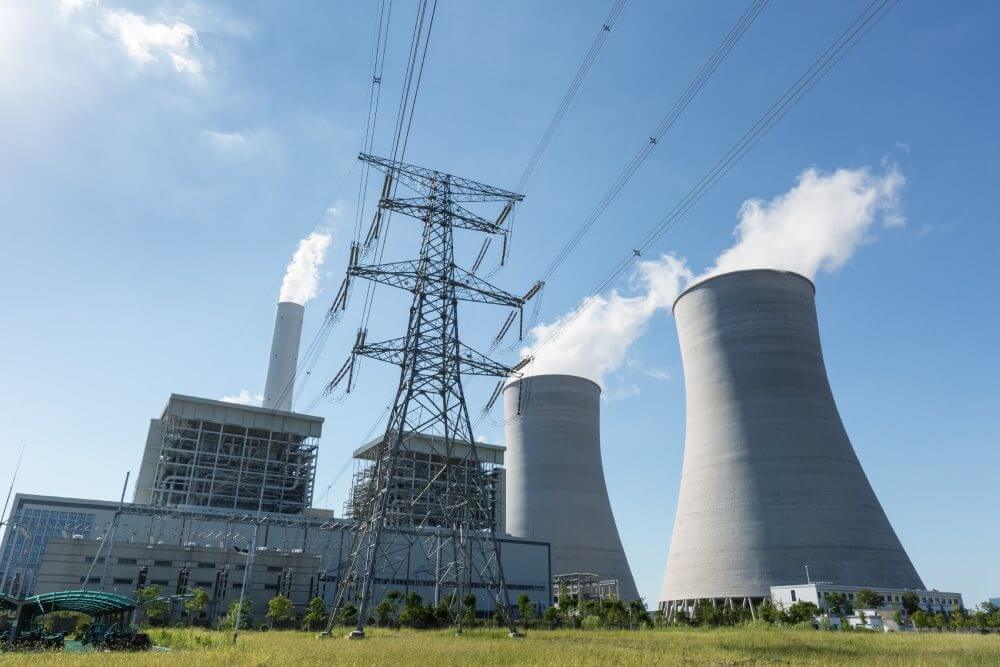
Managing a Power Plant is the ultimate high-stakes maintenance environment.
If a packaging machine stops, you lose some profit.
If a turbine stops, the grid destabilizes, regulatory fines kick in, and thousands of customers lose power.
Generic maintenance apps cannot handle this pressure.
You cannot manage a 500MW generator with a "To-Do List" app. You need Heavy Industry CMMS capabilities:
-
Condition Monitoring: Integrating with SCADA to detect vibration anomalies.
-
Safety Permitting: Managing Hot Work and High Voltage permits digitally.
-
Outage Planning: executing thousands of tasks during a 2-week shut.
Here are the 7 Best CMMS Software Tools for the Energy Sector in 2026.
1. Fabrico: The "Operational Reliability" Solution
Best For: Power plants that want to integrate Safety (LOTO), Maintenance, and Performance in one agile platform.
Fabrico brings modern usability to heavy infrastructure.
We replace the paper permit binders and disconnected spreadsheets with a live operating system.
Why Energy Leaders Choose Fabrico:
-
Digital LOTO & Permits: Safety is the #1 priority. Fabrico forces technicians to verify isolation points (Breakers/Valves) with photos before a Work Order unlocks. It creates an unbreakable digital audit trail for regulators.
-
Shutdown Management: Fabrico helps you plan your outages. You can stage parts, assign contractors, and track progress in real-time to ensure you come back online exactly when promised.
-
Condition-Based Triggers: We connect to your SCADA/PLC layer. If a bearing temperature spikes on a feedwater pump, Fabrico triggers a high-priority inspection automatically, preventing catastrophic failure.
-
Contractor Portal: During an outage, you have hundreds of external workers. Fabrico gives them secure, limited access to log their work without exposing your core data.
The Verdict: If you want to modernize your plant's reliability without a multi-year IT project, Fabrico is the strategic choice.

2. IBM Maximo
Best For: Large Utilities and Grid Management.
Maximo is the traditional "King" of the Energy sector.
-
Pros: Unmatched for Linear Assets (Transmission lines, Pipelines). If you manage the grid outside the plant as well as the turbines inside, Maximo handles the geospatial data perfectly.
-
Cons: It is massive, expensive, and slow to change. Implementing Maximo is a career-defining project. The user interface is often too complex for day-to-day technicians without extensive training.
-
The Niche: Public Utilities & Transmission.
3. GE Digital (APM)
Best For: Turbine health and predictive analytics.
GE Digital (Predix) is the leader in Asset Performance Management (APM) for power gen.
-
Pros: "Digital Twin" technology. It can model the thermodynamic stress on your specific turbine model to predict end-of-life with incredible accuracy.
-
Cons: It is a specialized engineering tool, not a general workflow tool. It tells you the turbine is degrading, but it doesn't manage the facility repairs (lights, HVAC, auxiliary pumps) as easily as a CMMS.
-
The Niche: Turbine & Generator Diagnostics.
4. Aveva (formerly Avantis)
Best For: Process control integration.
Aveva has deep roots in the control room (HMI/SCADA).
-
Pros: If your operators live in Aveva Wonderware screens, this CMMS integrates tightly. It bridges the gap between the Control Room Operator and the Maintenance Technician.
-
Cons: Like Maximo, it is "Legacy" software. It can be heavy to maintain and requires a dedicated system administrator.
-
The Niche: Plant Operations.
5. SAP PM (Plant Maintenance)
Best For: Financial compliance and procurement.
If your utility runs on SAP, the Plant Maintenance module is the default.
-
Pros: Total integration with the supply chain. When you order a €50,000 replacement rotor, the PO flows directly through Finance and Compliance checks.
-
Cons: The user experience is poor. Technicians often avoid using it, leading to "Shadow Maintenance" (work done but not logged). You often need a mobile overlay to make it usable.
-
The Niche: Corporate Finance.
6. eMaint (Fluke)
Best For: Vibration analysis programs.
eMaint (Fluke Reliability) is strong for plants with a heavy focus on rotating equipment health.
-
Pros: Seamless connection to Fluke vibration sensors. It is excellent for monitoring auxiliary equipment (pumps, fans, compressors) that support the main turbine.
-
Cons: The interface is dated. It lacks the modern "Shutdown Management" project tools found in platforms like Fabrico or Maximo.
-
The Niche: Condition Monitoring Teams.
7. Fiix (Rockwell Automation)
Best For: Renewable Energy (Wind/Solar) farms.
Fiix is a cloud-native tool that works well for distributed assets like wind turbines.
-
Pros: Good mobile app for technicians climbing towers or driving to remote solar fields. It handles multi-site reporting well.
-
Cons: It can lack the rigorous "Permit to Work" depth required for nuclear or heavy coal/gas plants compared to specialized EHS tools.
-
The Niche: Renewables & Distributed Assets.
Comparison Matrix: Keeping the Lights On
| Feature |
Fabrico |
Maximo |
GE Digital |
Aveva |
SAP PM |
Fiix |
| Safety (LOTO) |
✅ Native |
✅ Deep |
❌ No |
✅ Deep |
⚠️ Custom |
⚠️ Basic |
| Linear Assets |
⚠️ Basic |
✅ Best |
❌ No |
✅ Good |
✅ Good |
⚠️ Basic |
| Condition Monitoring |
✅ Native |
✅ Custom |
✅ Best |
✅ Native |
❌ Custom |
⚠️ Add-on |
| User Experience |
Modern |
Complex |
Complex |
Complex |
Difficult |
Good |
| Deployment |
Weeks |
Years |
Months |
Months |
Years |
Months |
Summary: Reliability is Safety
In power generation, a maintenance failure can be a safety incident. You cannot afford software that technicians ignore.
-
Choose Maximo if you are managing thousands of miles of power lines.
-
Choose GE Digital if you need physics-based modeling of your turbine.
-
Choose Fabrico if you manage the Power Plant. If you need to coordinate outages, enforce safety permits, and track asset health in a system your technicians will actually use, Fabrico is the modern standard.
Power your reliability.
[Book a Demo with Fabrico] to see how we handle the high stakes of energy maintenance.


 Login
Login
 Blog
Blog