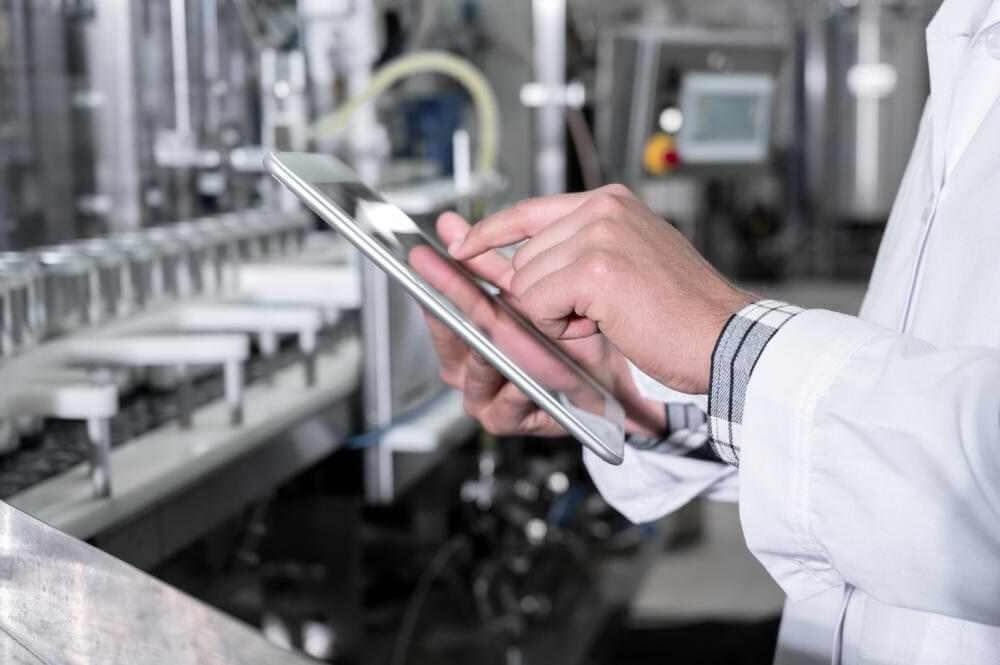
The modern factory floor is a "Tower of Babel."
Whether you are in the US with Spanish-speaking technicians, or in Europe with a team from Poland, Ukraine, and Turkey, communication is your biggest bottleneck.
If you hand a complex English checklist to a technician who only speaks basic English, two things happen:
-
They Guess: They "pencil whip" the task because they don't fully understand the nuance.
-
They Get Hurt: They miss a critical safety warning written in a language they don't read fluently.
You cannot force your best mechanic to learn a new language overnight. But you can choose software that speaks theirs.
Here are the 5 best CMMS tools specifically designed to handle mixed-language teams in 2026.
1. Fabrico (Best for Native Interface Switching)
Fabrico is built with the international manufacturer in mind. It understands that while the Headquarters might speak English or German, the Shop Floor speaks many languages.
Why it fits Diverse Teams:
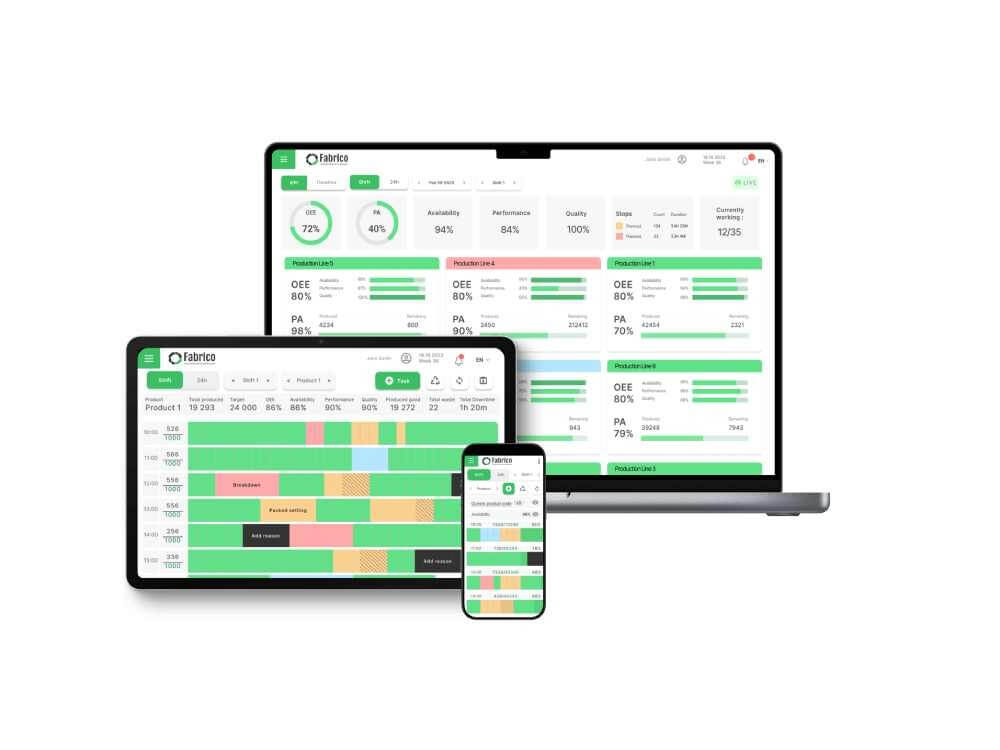
Fabrico allows for User-Level Localization. This means the Plant Manager can view the dashboard in English, while the technician opens the exact same Work Order on their tablet and sees the interface in their native language. The data remains standardized, but the experience is localized.
Key Features:
-
Profile-Based Languages: The language setting travels with the user, not the device.
-
Visual-First Workflows: Heavy use of icons (wrench, oil can, safety helmet) reduces the need for reading text.
-
Digital SOPs with Photos: Step-by-step guides rely on clear images rather than dense paragraphs of text.
-
Unified Reporting: Even if tasks are completed in different languages, the final report to management is consolidated in the company's primary language.
Best For: Factories with international teams or migrant workforces.

2. MaintainX
MaintainX is famous for its chat functionality, and it leverages this to help with translation.
Why it fits Diverse Teams:
MaintainX includes a "Tap to Translate" feature in its chat messages. If a manager types a message in English, a Spanish-speaking technician can tap a button to see it in Spanish. This is incredibly powerful for real-time communication and clarifying instructions "in the moment."
The Trade-off:
While the chat translates well, the deep technical menus and asset trees may not be as fully localized as dedicated multi-language platforms.
Best For: Teams that rely heavily on instant messaging for coordination.
3. Limble CMMS
Limble is a robust tool that supports major global languages. It is designed to be simple, which helps reduce the language burden.
Why it fits Diverse Teams:
Limble supports several key languages (English, Spanish, Portuguese, French, etc.). The interface is clean and uncluttered, which makes it less intimidating for non-native speakers. Navigating the app is intuitive, relying on big buttons and clear workflows.
The Trade-off:
It is great for the "Big 5" languages, but if you have a workforce speaking less common languages, you might find gaps in support compared to highly specialized enterprise tools.
Best For: US-based teams with Spanish/English speakers.
4. SAP PM (With Language Packs)
For the massive global enterprise, SAP is the standard. It supports almost every language on earth—if you pay for it.
Why it fits Diverse Teams:
If you have a factory in China, one in Brazil, and one in Germany, SAP can handle it all. It allows for complete localization of every field, form, and screen. It is the most powerful "global" tool.
The Trade-off:
It is incredibly complex and expensive. Setting up these language packs requires IT consultants. For the average technician, the interface is so complicated (even in their native language) that it remains difficult to use.
Best For: Global Fortune 500 companies with IT budgets to match.
5. Poka
Poka is not a traditional CMMS, but a "Connected Worker" platform focused on training videos.
Why it fits Diverse Teams:
Poka bypasses language entirely by using Video. Instead of reading how to fix a machine, the technician watches a 30-second video clip. Visuals are the universal language. It is excellent for training and standardizing work across borders.
The Trade-off:
It lacks the deep maintenance execution features (Spare Parts, Asset Lifecycle, PM Scheduling) of a full CMMS. It is often used alongside a CMMS like Fabrico.
Best For: Training and knowledge sharing across borders.
Comparison: Breaking the Language Barrier
| Feature |
Fabrico |
MaintainX |
Limble |
SAP PM |
| Approach |
User-Level Interface |
Chat Translation |
Multi-Language Support |
Global Language Packs |
| Visual Reliance |
High (Icons/Photos) |
Medium |
High |
Low (Text Heavy) |
| Translation Quality |
Native UI |
Automated (Google) |
Native UI |
Native (Configurable) |
| Ease of Use |
Very High |
High |
High |
Low |
| Setup Time |
Fast |
Fast |
Fast |
Very Slow |
| Best Use Case |
Mixed Factory Teams |
Chat/Coordination |
Simple Teams |
Global Enterprise |
The "Icon" Advantage
The best way to solve a language problem is to stop using words.
-
The Old Way: A text line saying "Check Hydraulic Oil Level."
-
The Fabrico Way: An icon of an Oil Can + a Photo of the sight glass with a green checkmark.
This "Visual Management" approach ensures that a technician from any country can understand the task instantly, without needing a dictionary.
Conclusion
Safety and quality should not depend on a dictionary.
-
For real-time chat translation: MaintainX.
-
For video-based training: Poka.
-
For a complete Maintenance System that adapts to each user's language: Fabrico is the best choice for the diverse workforce of 2026.


 Login
Login
 Blog
Blog