Managing maintenance in a Steel Mill or Foundry is not like managing a food plant.
The environment is hostile.
Extreme heat, conductive dust, and massive vibration destroy sensors and tablets.
The stakes are existential.
If a ladle turret fails or a furnace cools down unexpectedly, you don't just lose production; you might lose the entire vessel (solidification).
Generic "Work Order Apps" fail here. You cannot maintain a rolling mill with a checklist designed for a toilet repair.
You need Heavy Industry CMMS, software that prioritizes Condition-Based Maintenance (CBM) and Safety.
Here are the 7 Best CMMS Software Tools for Steel and Foundries in 2026.
1. Fabrico: The "Condition-First" Solution
Best For: Foundries that need to link Sensor Data (Heat/Vibration) to Maintenance Action.
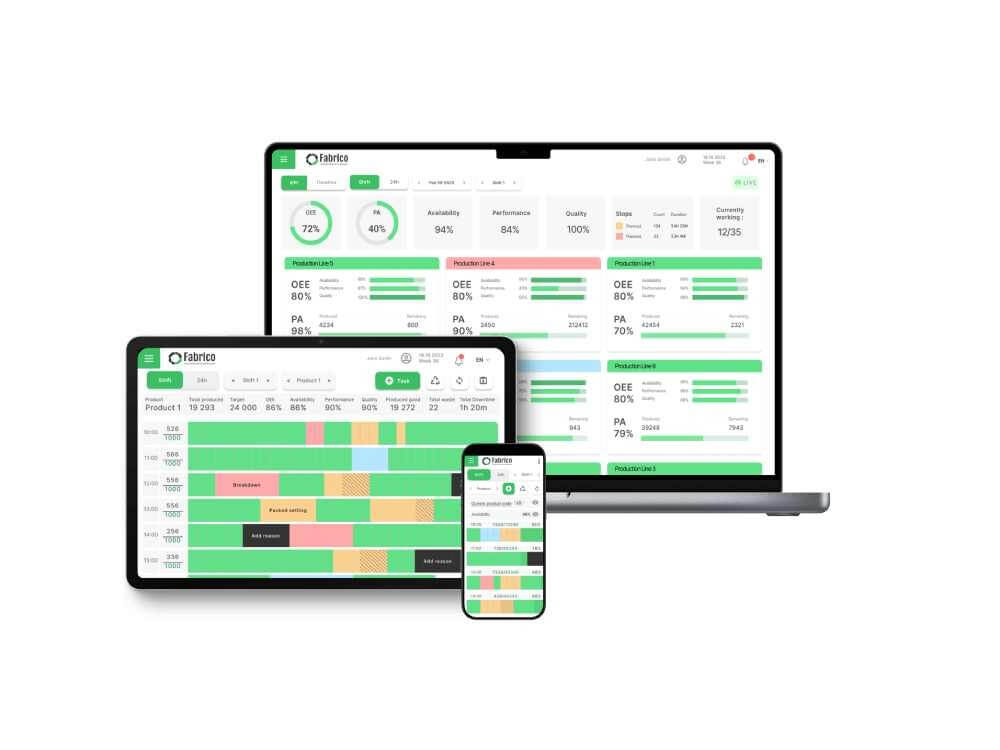
Fabrico excels in heavy industry because it doesn't wait for a breakdown. It integrates with the machine's pulse.
Why Steel Leaders Switch to Fabrico:
-
Vibration & Heat Integration: In a foundry, bearings die fast. Fabrico ingests data from vibration and temperature sensors. If a ladle crane motor gets too hot, Fabrico triggers an emergency inspection before the lift.
-
Digital LOTO (Lockout/Tagout): Safety is paramount. Fabrico’s mobile app forces a mandatory "Digital Lock Verification" (with photos) before a technician can open a work order on high-voltage equipment.
-
OEE for Throughput: In rolling mills, speed is money. Fabrico’s OEE module tracks micro-stops on the line, helping you identify exactly which roller or guide is slowing down production.
-
Rugged Usability: The interface is high-contrast and big-buttoned, designed to be used by technicians wearing gloves in dirty environments.
The Verdict: If you want to move from "Run-to-Failure" to "Predictive Reliability," Fabrico is the modern choice.

2. IBM Maximo
Best For: Massive, integrated steel conglomerates.
Maximo is the traditional standard for "Big Steel." If you are Tata Steel or ArcelorMittal, you probably use Maximo.
-
Pros: Unmatched scalability. It handles linear assets (rail lines into the plant) and massive asset hierarchies better than anything else. It integrates deeply with corporate purchasing for high-value spare parts.
-
Cons: It is a dinosaur. Implementation takes years. The user interface is notoriously difficult for shop-floor technicians, leading to poor data entry.
-
The Niche: The Mega-Mill.
3. Aveva (formerly Avantis)
Best For: Asset Performance Management (APM).
Aveva has deep roots in the process industry. It focuses heavily on "Asset Health."
-
Pros: Excellent integration with SCADA and HMI systems. If your operators are running the furnace from a control room, Aveva connects maintenance to that screen.
-
Cons: It is expensive and heavy. It requires a sophisticated engineering team to maintain the software itself.
-
The Niche: Heavy Process & Mining.
4. SAP PM (Plant Maintenance)
Best For: Finance-driven organizations.
If your company runs SAP for ERP, you will feel pressure to use SAP PM.
-
Pros: The money is right. Spare parts consumption hits the General Ledger instantly. It handles the complex depreciation of capital assets (like a new blast furnace) perfectly.
-
Cons: It is painful to use on the floor. Most foundries running SAP PM end up with "Shadow Systems" (Excel/Paper) because the technicians refuse to log into SAP.
-
The Niche: Corporate Standardization.
5. eMaint (Fluke)
Best For: Vibration analysis focus.
Since being bought by Fluke, eMaint is a strong choice if your reliability strategy is 100% focused on vibration readings.
-
Pros: Seamless connection to Fluke handheld sensors. Great for route-based maintenance (walking around checking motors).
-
Cons: The interface is dated. It lacks the modern "Production" features (like OEE and scrap tracking) that help you optimize the casting process itself.
-
The Niche: Reliability Teams.
6. Fiix (Rockwell Automation)
Best For: Automated finishing lines.
Fiix is strong where Rockwell Automation is strong.
-
Pros: If your finishing or rolling lines use Allen-Bradley PLCs, Fiix pulls that data easily. It uses AI to predict failure trends across similar assets.
-
Cons: It is a "General Manufacturing" tool trying to serve heavy industry. It sometimes lacks the specific "Permit to Work" depth required for molten metal safety compared to specialized EHS tools.
-
The Niche: Automated Rolling/Finishing.
7. Limble CMMS
Best For: Support equipment and mobile fleets.
Limble is likely too light for the blast furnace, but it is excellent for the Mobile Fleet (Forklifts, Slag Pot Carriers).
-
Pros: Great mobile app. Very fast for technicians fixing mobile assets that move around the yard.
-
Cons: It lacks the heavy asset hierarchy and condition-monitoring depth needed for critical process equipment.
-
The Niche: Yard & Fleet Maintenance.
Comparison Matrix: Heavy vs. Agile
| Feature |
Fabrico |
Maximo |
Aveva |
SAP PM |
eMaint |
Fiix |
Limble |
| Safety (LOTO) |
✅ Native |
✅ Deep |
✅ Deep |
✅ Deep |
⚠️ Basic |
⚠️ Basic |
⚠️ Basic |
| Condition Monitoring |
✅ Native |
✅ Custom |
✅ Native |
❌ Custom |
✅ Native |
⚠️ Add-on |
❌ No |
| OEE Integration |
✅ Native |
❌ No |
✅ Native |
❌ No |
❌ No |
⚠️ Add-on |
❌ No |
| User Experience |
Modern |
Difficult |
Complex |
Difficult |
Dated |
Good |
Excellent |
| Cost |
Value |
Premium |
Premium |
Premium |
High |
High |
Mid |
Summary: Protecting the Assets
In a foundry, you don't "play" with software. It has to work.
-
Choose Maximo if you are a multi-national giant managing rail, ports, and plants.
-
Choose eMaint if you are focused solely on vibration routes.
-
Choose Fabrico if you want to Modernize. If you need a system that handles the Heavy Industry requirements (Safety, Heat, Vibration) but delivers it in an app that your technicians can actually use, Fabrico is the right tool.
Don't let the heat stop you.
[Book a Demo with Fabrico] to see how we handle maintenance in the harshest environments.


 Login
Login
 Blog
Blog