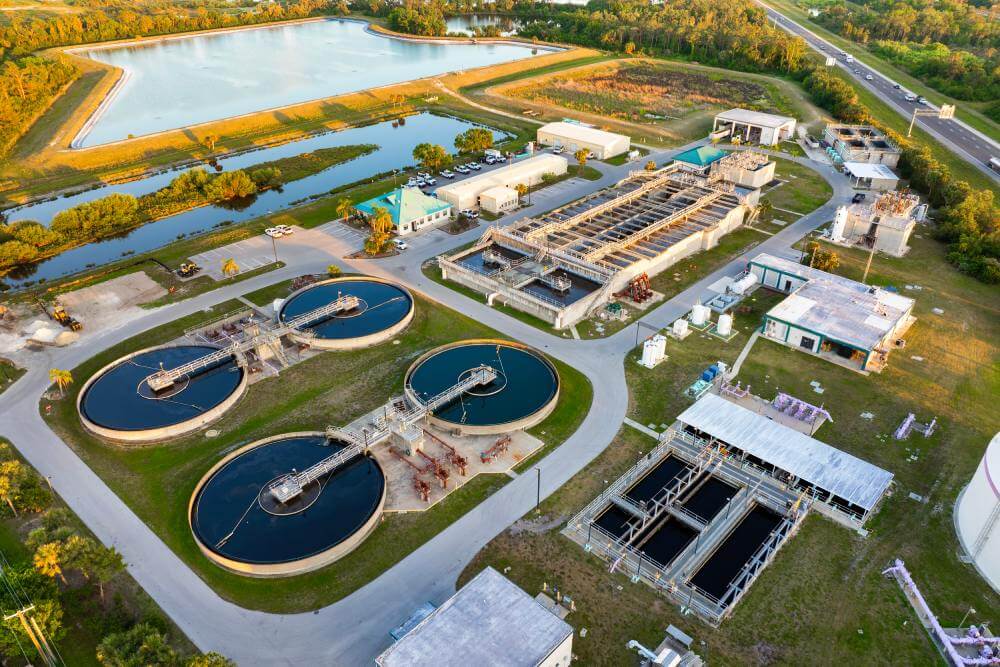
Managing a Water or Wastewater Treatment Plant (WWTP) is a balancing act between Regulatory Compliance and Asset Reliability.
You have critical assets (pumps, blowers, clarifiers) running 24/7.
You have remote assets (lift stations, booster pumps) miles away from the plant.
And you have auditors (EPA/State) demanding proof of maintenance.
Generic maintenance software often fails here because it doesn't understand the difference between a "Linear Asset" (a pipe under the street) and a "Plant Asset" (a centrifuge).
Here are the 7 Best CMMS Software Tools for Water & Wastewater in 2026.
1. Fabrico: The "Plant Reliability" Solution
Best For: Treatment plants that need to connect SCADA Data to Maintenance Action.
Fabrico is designed to keep the plant running.
While other tools focus on maps (GIS), Fabrico focuses on the Asset Health of your critical pumps and motors.
Why Water Superintendents Choose Fabrico:
-
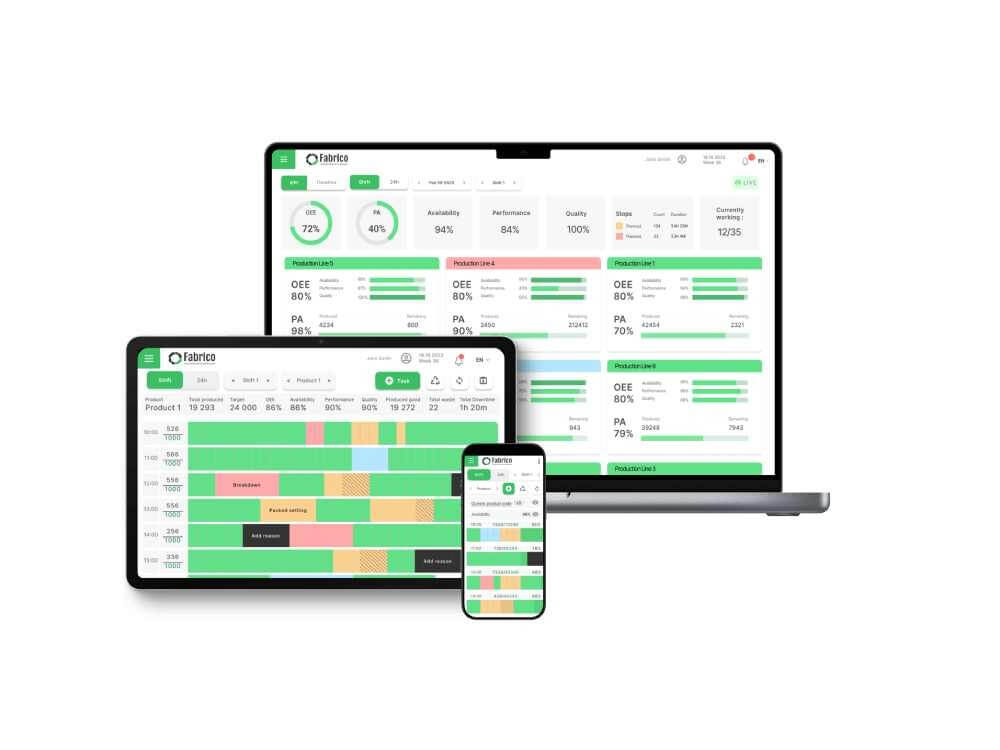
SCADA/PLC Integration: Fabrico connects to your control system. If a pump's vibration spikes or flow rate drops, Fabrico triggers an immediate Work Order. You fix it before the alarm goes off.
-
Digital Operator Rounds: Replace the paper clipboards used for daily rounds. Operators use tablets to log pressure readings and tank levels. If a reading is out of spec, the system flags it instantly.
-
Compliance Audit Trails: Every maintenance action is time-stamped and user-stamped. When the regulator asks for proof that the chlorinator was serviced, you have an undeniable digital record.
-
Mobile Field Access: For technicians visiting remote lift stations, Fabrico’s offline mobile app ensures they have access to manuals and history even without a cell signal.
The Verdict: If your priority is keeping the mechanical equipment inside the plant running reliably, Fabrico is the specialized choice.

2. Cityworks (Trimble)
Best For: "Outside the Fence" Network Management (GIS).
Cityworks is the gold standard for municipalities managing the distribution network (pipes, hydrants, valves).
-
Pros: Built directly on Esri ArcGIS. It is map-centric. If you need to visualize a water main break on a city map and dispatch a crew, Cityworks is unbeatable.
-
Cons: It is a GIS tool, not a reliability engine. It is less effective for managing the complex rotating equipment inside the treatment plant (e.g., vibration analysis on a vertical turbine pump).
-
The Niche: Linear Assets & Distribution.
3. IBM Maximo
Best For: Large utilities and regional water authorities.
Maximo is the heavyweight Enterprise Asset Management (EAM) system.
-
Pros: Infinite scalability. It handles the plant, the fleet, the IT assets, and the infrastructure in one massive database. Deep regulatory compliance features.
-
Cons: Expensive and complex. Implementing Maximo is a multi-year project. It often requires a dedicated team of administrators to keep it running.
-
The Niche: Mega-Utilities.
4. Aveva (Wonderware)
Best For: Operations-driven maintenance.
If your plant runs on Wonderware SCADA, Aveva’s asset management tools integrate tightly.
-
Pros: Seamless connection between the Control Room Operator and the Maintenance Team. It excels at "Asset Performance Management" (APM) for continuous process equipment.
-
Cons: It is legacy software. The user interface can feel dated and heavy compared to modern SaaS platforms.
-
The Niche: Process Control Integration.
5. Fiix (Rockwell Automation)
Best For: Automated treatment plants.
Fiix is strong if your plant relies heavily on Rockwell Automation (Allen-Bradley) hardware.
-
Pros: Good integration with plant controls. The "Asset Risk Predictor" uses AI to help identify which pumps are most likely to fail based on historical data.
-
Cons: It sits between the "Light" and "Heavy" categories. It may lack the specific GIS depth of Cityworks or the Reliability depth of Fabrico.
-
The Niche: Automated Plants.
6. eMaint (Fluke)
Best For: Condition monitoring of pumps.
Water plants are all about rotating equipment. eMaint (owned by Fluke) excels at vibration and temperature monitoring.
-
Pros: If you use Fluke sensors on your critical lift station pumps, eMaint captures that data natively to trigger maintenance.
-
Cons: The interface is older. It focuses heavily on the "Sensor" data, sometimes at the expense of the "Workflow" ease-of-use.
-
The Niche: Vibration Analysis.
7. Limble CMMS
Best For: Smaller districts and rural water associations.
If you have a small team (3-5 people) and just need to get off paper, Limble is the easy button.
-
Pros: Extremely fast to set up. You can get your preventive maintenance schedules loaded in a few days. Technicians love the simple mobile app.
-
Cons: It lacks the deep SCADA/PLC integration required for larger, automated plants. It is a manual ticketing system, not an automated reliability platform.
-
The Niche: Small Municipalities.
Comparison Matrix: Plant vs. Network
| Feature |
Fabrico |
Cityworks |
Maximo |
Aveva |
Limble |
| Primary Focus |
Plant Reliability |
GIS / Network |
Enterprise |
Process |
Simple Work Orders |
| SCADA Integration |
✅ Native |
❌ Custom |
❌ Custom |
✅ Native |
❌ No |
| Map/GIS Focus |
⚠️ Basic |
✅ Core |
✅ Deep |
❌ No |
❌ No |
| Mobile Offline |
✅ Yes |
✅ Yes |
⚠️ Complex |
⚠️ Basic |
✅ Yes |
| Cost |
Value |
High |
Very High |
High |
Low/Mid |
Summary: Inside or Outside the Fence?
-
Choose Cityworks if your main pain point is managing pipes, hydrants, and leaks in the street.
-
Choose Maximo if you are a massive regional authority with an unlimited budget.
-
Choose Fabrico if you manage the Treatment Plant. If you need to keep the pumps, blowers, and screens running to avoid a permit violation—and you want SCADA-driven maintenance—Fabrico is the specialized solution.
Keep the water flowing.
[Book a Demo with Fabrico] to see how we connect your SCADA data to your maintenance team.


 Login
Login
 Blog
Blog