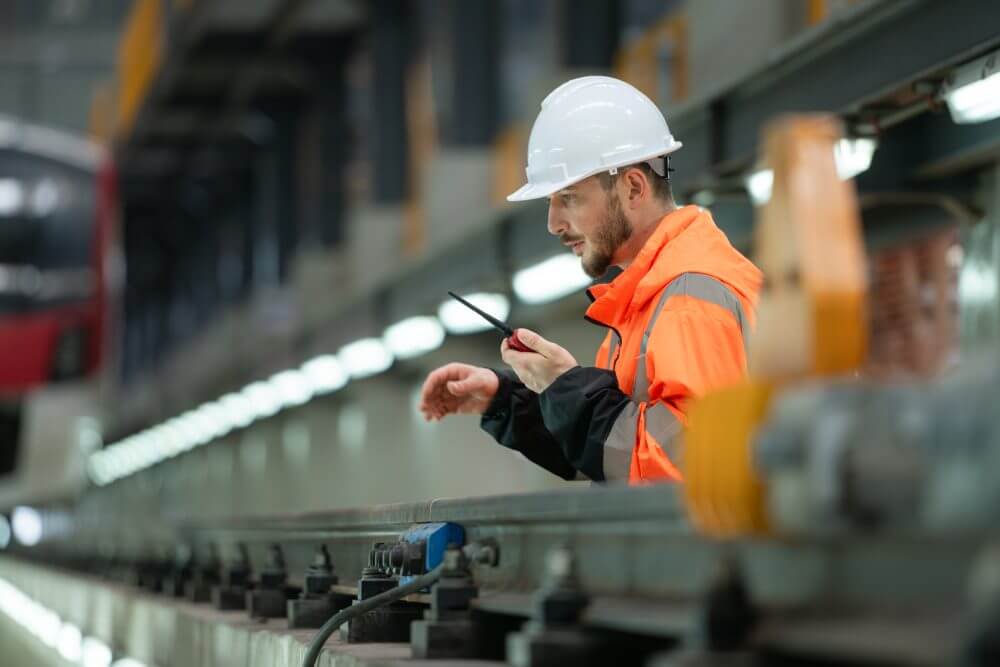
The Andon Cord is the symbol of Lean Manufacturing.
Invented by Toyota, it allowed any operator to pull a cord and stop the line if they saw a defect.
In traditional factories, this cord connects to a Light Stack—a physical pole with red, yellow, and green lights.
In 2026, the physical light stack is obsolete.
A red light doesn't carry data. It doesn't tell the Maintenance Manager ("Mike") which motor failed.
It doesn't tell the Warehouse Manager that the line is starving for materials. It just screams "Help" without context.
Digital Andon Systems replace the physical light with a software signal. They send specific, actionable alerts to the right people on their phones or watches.
If you want to slash your MTTR (Mean Time To Repair) and response times, here are the 5 best Digital Andon tools for 2026.
1. Fabrico: The "Integrated Response" Solution
Best For: Factories that want the Andon signal to trigger a Maintenance Work Order immediately.
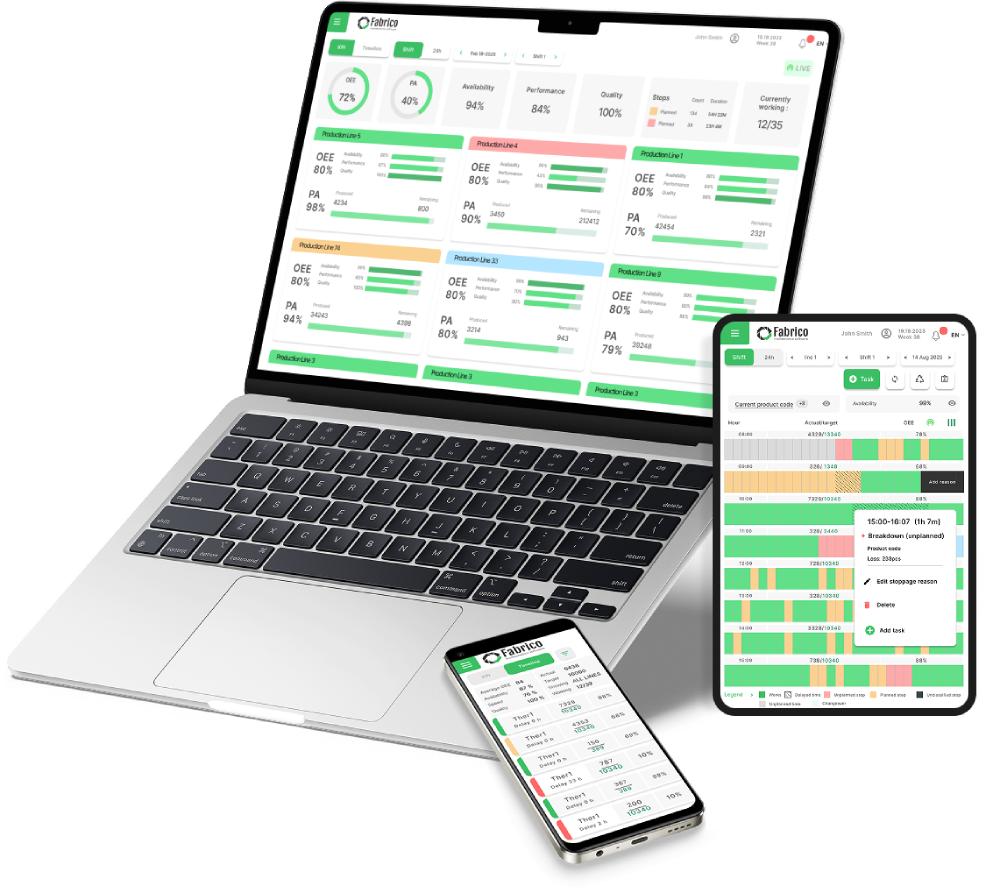
Fabrico takes the Andon concept and connects it to the CMMS (Maintenance) and OEE (Production) modules. It treats an Andon pull as a request for a specific service.
Why Manufacturers Switch to Fabrico:
-
Smart Dispatch: If an operator taps "Mechanical Fault" on the tablet, Fabrico notifies the Maintenance Lead. If they tap "Out of Material," it notifies the Warehouse. No more shouting over the radio.
-
The "Closed Loop": The Andon signal doesn't turn "Green" until the technician actually closes the work order in the system. This prevents production from restarting a broken machine.
-
Automated Triggers: You don't even need a human to pull the cord. Fabrico connects to PLCs and Computer Vision. If the machine detects a jam, it triggers the Digital Andon automatically.
-
Downtime Context: Every Andon event is logged in the OEE timeline. "Paula" (Plant Manager) can see exactly how many minutes were lost to "Waiting for Maintenance" vs. "Waiting for Materials."
The Verdict: If you want your Andon system to drive physical action, not just visual alerts, Fabrico is the choice.
2. L2L (Leading2Lean)
Best For: Dispatch-heavy environments.
L2L (now L2L) built its reputation on "CloudDISPATCH." It is essentially a giant Andon engine designed to route tasks to support teams.
-
Pros: Extremely granular dispatching logic. You can set up complex rules for who gets alerted based on skill set, shift, and location.
-
Cons: It can be complex to configure. It focuses heavily on the "Dispatch" moment, but some users find the asset management and long-term reliability planning features less intuitive than a dedicated CMMS like Fabrico.
-
The Difference: L2L is a dispatch engine; Fabrico is a total reliability platform.
3. Redzone
Best For: Team motivation and "Huddles."
Redzone uses Andon as a social tool. When a line goes down, it encourages the team to "swarm" the problem.
-
Pros: Great visualization on large TV screens. It gamifies the response time, encouraging teams to clear the red light to "win the shift."
-
Cons: It is expensive and requires a specific cultural methodology. If you just want a tool to alert maintenance without adopting the entire Redzone "coaching" philosophy, it is a heavy investment.
-
The Difference: Redzone gamifies the response; Fabrico systematizes the repair.
4. Tulip
Best For: Custom Andon lights and IoT integration.
Tulip allows you to build your own Andon apps. You can connect physical buttons, IoT light strips, and smartwatches to the system.
-
Pros: Infinite customization. You can program a smart light strip on the workstation to turn purple if quality is low, or blue if materials are low.
-
Cons: You have to build it. It requires an engineer to design the logic and maintain the app. It is a toolkit, not a ready-to-go solution.
-
The Difference: Tulip is for DIY engineering teams; Fabrico is for Operations leaders who want a turnkey solution.
5. Vorne XL
Best For: The "Physical + Digital" hybrid.
We mentioned Vorne in the OEE list, but they are primarily an Andon company. They sell the physical LED scoreboards you see in many plants.
-
Pros: Visibility. There is no missing a giant LED sign hanging from the ceiling. It works instantly out of the box.
-
Cons: It is hardware-constrained. Changing the logic or routing alerts to mobile phones is harder than with a pure software (SaaS) solution.
-
The Difference: Vorne is a hardware signal; Fabrico is a software workflow.
Comparison Matrix: Signal vs. Action
| Feature |
Fabrico |
L2L |
Redzone |
Tulip |
| Primary Focus |
Maintenance & OEE |
Dispatch |
Culture |
App Building |
| Work Order Link |
✅ Native |
✅ Native |
⚠️ Basic |
⚠️ Custom |
| Auto-Trigger (PLC) |
✅ Yes |
✅ Yes |
✅ Yes |
✅ Yes |
| Computer Vision |
✅ Yes |
❌ No |
❌ No |
✅ Yes |
| Deployment |
Fast |
Medium |
Slow |
Slow (DIY) |
Summary: Don't Just Flash a Light. Fix the Problem.
An Andon system that just turns on a red light is a cry for help.
An Andon system that dispatches a technician with the right part is a Solution.
-
Stick with Vorne if: You just want a scoreboard.
-
Choose L2L if: You have a massive facility with complex dispatch routing rules.
-
Choose Fabrico if: You want to integrate the Signal (Andon) with the Fix (CMMS). If you want to reduce the time between "Machine Stop" and "Repair Started," Fabrico is the most efficient path.
Speed up your response time.
[Book a Demo with Fabrico] to see how our Digital Andon triggers immediate maintenance action.


 Login
Login
 Blog
Blog