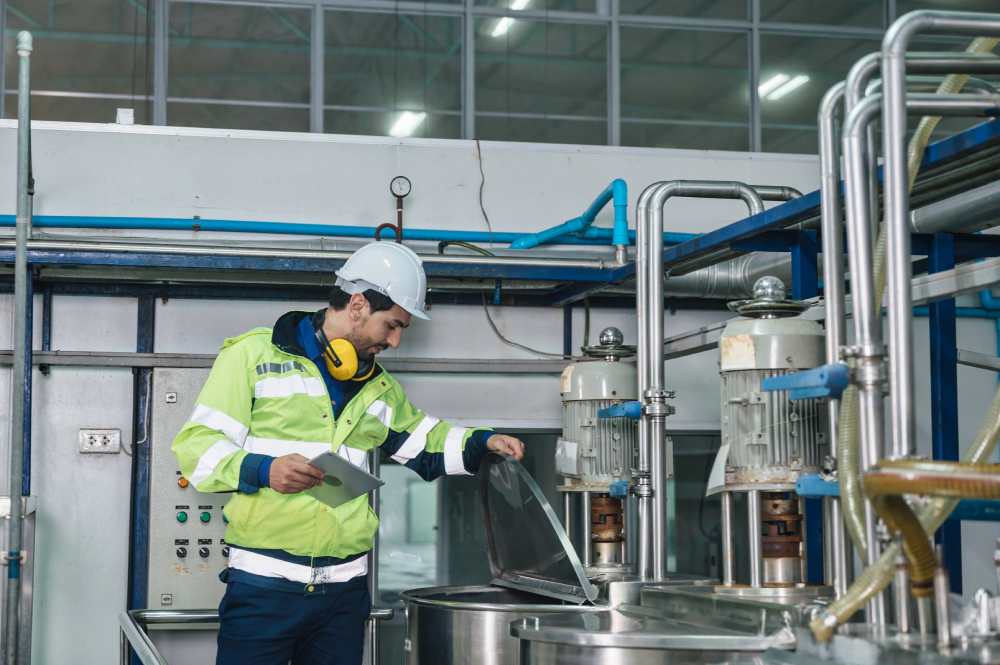
Engineered stone manufacturing is a unique hybrid of heavy industry and chemical processing. You mix crushed quartz with resin, vibrate it under vacuum into a slab, cure it in a kiln, and then polish it to a mirror finish.
The environment is extremely abrasive and hazardous. Stone dust destroys bearings and sensors. Resin hardens in pipes. And the health risks of silica dust mean that safety compliance is just as important as machine uptime.
Standard maintenance tools often fail here because they don't handle the Consumable Tracking (Abrasives) or the Safety Permitting required for a modern stone plant.
Here are the 5 best maintenance software tools for engineered stone and quartz manufacturing in 2026.
1. Fabrico (The Safety & Tooling Integrator)
Best For: Plants that need to link Abrasive Life and Silica Safety to Production.
Fabrico is designed for harsh industrial environments where "Consumables" and "Safety" are critical to the process. In a quartz plant, Fabrico connects the life of your polishing bricks directly to the production count, ensuring you change them at the perfect time.
Why it wins for Engineered Stone:
-
Silica Safety Workflows: Before a technician can open a work order on the polishing line, Fabrico forces a safety checklist: "Is the water suppression active? Is the dust collector running?" This protects your team from silicosis risks and ensures OSHA/legal compliance.
-
Abrasive Life Tracking: Polishing heads (Fickert/Frankfurt) wear out based on square meters processed. Fabrico tracks the slab count for each head. It alerts the line operator to "Change Head 3" exactly when it reaches its wear limit, preventing poor gloss levels.
-
Visualizing Press Vacuum: The quality of the slab depends on the vacuum level during pressing. Fabrico's "Zoom In" video replay allows you to correlate slab defects (porosity) with the vacuum pump performance logs from the exact moment of pressing.
-
Resin System Hygiene: Clogged resin lines cause downtime and off-ratio mixing. Fabrico uses image based digital checklists to verify that the mixing tower was flushed and cleaned at the end of every shift.
The Verdict: If you want to protect your workers from dust and your budget from wasted abrasives, Fabrico is the strategic choice.

2. SAP PM (The Global Standard)
Best For: Large Multi National Stone Brands.
The engineered stone market is dominated by large global players. For these companies, SAP is the standard for managing the global supply chain of raw quartz and resin.
Pros:
-
Raw Material Integration: It connects maintenance directly to the inventory of quartz grit and resin, ensuring you never run out of raw materials or critical spare parts.
-
Costing: Excellent for calculating the exact "Maintenance Cost per Slab," aggregating data across multiple factories.
Cons:
-
Technician Usability: The interface is complex and difficult to use in a wet, dusty environment. Technicians often avoid using it, leading to gaps in the maintenance history.
-
Rigid Planning: It is built for stable processes. Adapting the maintenance plan for a sudden change in slab recipe or abrasive type is slow and bureaucratic.
3. Breton / Simec (The OEM Software)
Best For: Machine Control and Recipe Management.
The majority of engineered stone plants use Bretonstone or Simec technology. Their proprietary software is essential for running the line and managing the complex recipes of aggregate blends.
Pros:
-
Deep Machine Control: Unmatched visibility into the vibration frequencies, press pressures, and kiln temperatures.
-
Recipe Management: The only tool for managing the precise mix of quartz sizes and resin colors.
Cons:
-
Siloed Maintenance: It runs the machine, but it doesn't manage the maintenance team. It won't schedule your technicians, track your spare bearings, or manage your building utilities.
-
Data Islands: The data stays inside the machine controller and doesn't easily integrate with your safety or inventory systems.
4. Fiix (The Automation Choice)
Best For: Highly Automated, Modern Plants.
If you have a modern, fully automated slab plant with AGVs moving slabs between the press, kiln, and polishing line, Fiix (by Rockwell Automation) is a strong option.
Pros:
-
Sensor Triggers: It connects to PLCs to trigger work orders based on alarms (e.g., "Kiln Fan Vibration High").
-
Asset Hierarchy: Good for managing the complex hierarchy of a polishing line with 20+ individual heads.
Cons:
-
Lacks Safety Workflows: While good for mechanics, it often lacks the specific, enforced safety permit workflows needed for hazardous silica environments.
-
Consumable Tracking: It is not natively designed to track consumable life (abrasives) based on production area (square meters), requiring complex custom setup.
5. MaintainX (The Quick Compliance Tool)
Best For: Smaller Fabricators needing digital logs.
If you are a smaller fabrication shop cutting slabs into countertops, rather than manufacturing the raw slabs, MaintainX is the perfect size for your operation.
Pros:
Cons:
-
No Production Context: It doesn't track how many slabs you cut. It can't tell you if your diamond blade wear is increasing due to machine misalignment.
-
Limited Depth: It lacks the deep asset history needed to manage the heavy industrial equipment of a full slab manufacturing plant.
Comparison Matrix: Fabrico vs. The Stone Industry
| Feature |
Fabrico |
SAP PM |
Breton/OEM |
MaintainX |
| Primary Focus |
Safety & Tooling (Unified) |
Finance & Logistics |
Machine Control |
Checklists |
| Mobile Experience |
Field Ready (Fast) |
Desktop Focus |
HMI Screen |
Excellent |
| Silica Safety Permits |
Enforced Workflows |
Custom Config |
None |
Good |
| Abrasive Tracking |
Slab Count Based |
Inventory Only |
None |
Manual |
| Implementation |
Weeks |
Years |
Months |
Days |
Summary: Polish Your Process
In engineered stone, quality is defined by the surface finish, and safety is defined by dust control. You need software that protects both.
-
Choose SAP if you are a global brand requiring centralized financial reporting.
-
Choose Breton/OEM for the daily operation of your press and mixing tower recipes.
-
Choose Fabrico if you want to enforce Silica Safety Rules, optimize Abrasive Usage, and ensure your polishing line never stops due to a preventable failure.
Ready for a flawless finish?
Stop relying on paper logs in a wet environment. [Request a Demo] to see how Fabrico manages the tough reality of stone manufacturing.


 Login
Login
 Blog
Blog