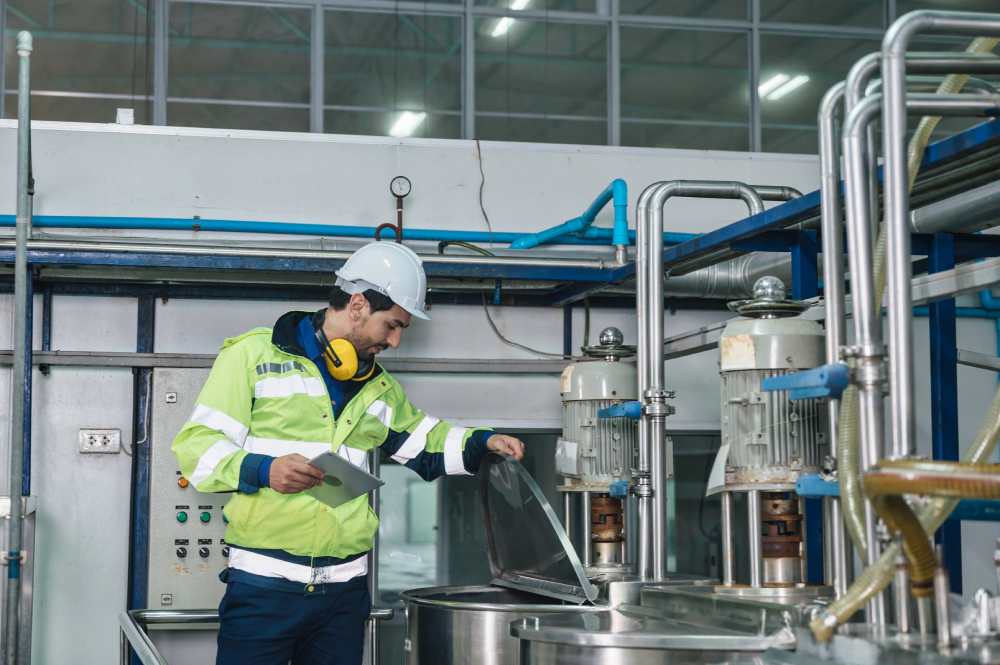
Operating an ethanol or biofuel plant is a unique balancing act. You are part chemical plant, part brewery, and part animal feed producer. You manage massive grain handling systems, sensitive biological fermentation tanks, and dangerous distillation columns.
The risks are high. A mechanical failure in the distillation column can lead to a safety incident. A failure in the mash prep area can lead to bacterial contamination that ruins your yield for weeks.
Standard maintenance tools often fail here. They treat a fermenter like a simple water tank. They do not understand the Biological Urgency of cooling failures or the Regulatory Weight of environmental compliance (LDAR/EPA).
You need a tool that handles Process Safety, Biological Integrity, and Mechanical Reliability in one platform.
Here are the 5 best maintenance software tools for ethanol and biofuel plants in 2026.
1. Fabrico (The Safety & Yield Integrator)
Best For: Plants that need to link Process Safety with Fermentation Uptime.
Fabrico is designed for high hazard process industries where safety and yield are linked. In an ethanol plant, a leaking valve isn't just a mess; it is a yield loss and a safety violation. Fabrico connects your mechanical maintenance directly to your safety workflows and production goals.
Why it wins for Ethanol:
-
Hazardous Work Permits: You cannot weld near a distillation column without a permit. Fabrico enforces digital safety workflows. Before a work order opens, the technician must complete a "Hot Work" or "Confined Space" permit on their device. This protects your team and satisfies OSHA requirements.
-
CIP Verification: Cleaning is critical to preventing infection. Fabrico uses image based digital checklists to force operators to verify that spray balls are not clogged and that CIP chemical concentrations are correct. This ensures every tank is biologically clean before the next batch.
-
Visualizing Cooling Failures: If a fermenter overheats, yield drops. Fabrico's video replay feature allows you to correlate temperature spikes with mechanical events. Did the cooling pump trip? Did the control valve stick? You can see the root cause instantly.
-
Shutdown Project Management: The annual shutdown is chaos. Fabrico allows you to stage hundreds of work orders, assign them to external contractors, and track progress in real time. This ensures you start the plant back up on schedule.
The Verdict: If you want to protect your yeast, your yield, and your people, Fabrico is the strategic choice.

2. SAP PM (The Industry Standard)
Best For: Large Integrated Energy & Ag Companies (POET, Valero, ADM).
The ethanol industry is dominated by massive energy and agriculture companies. For these giants, SAP is the backbone of grain trading, fuel marketing, and finance. SAP Plant Maintenance (PM) is the standard for asset management.
Pros:
-
Supply Chain Integration: It connects maintenance directly to the grain receiving and DDGS (Distillers Grains) shipping schedules.
-
Procurement Scale: If a massive centrifuge motor fails, SAP allows you to search inventory across your entire corporate network to find a replacement immediately.
Cons:
-
Technician User Experience: The interface is built for financial controllers, not for maintenance techs. It is complex and slow to navigate, which often leads to poor data entry in the field.
-
Rigidity: Adapting a maintenance plan in SAP is difficult. It often requires office based planners to make changes, which slows down the response time during a plant upset.
3. IBM Maximo (The Energy Heavyweight)
Best For: Plants with complex on site utilities and power generation.
Many biofuel plants generate their own steam and power using cogeneration units or thermal oxidizers. Maximo is excellent for managing these heavy utility assets and the associated regulatory reporting.
Pros:
-
Environmental Compliance: Very strong features for managing "Leak Detection and Repair" (LDAR) programs required by the EPA.
-
Asset Lifecycle: It stores decades of data on asset performance, which is excellent for long term reliability engineering and capital planning.
Cons:
-
High Cost: Maximo is expensive to license and requires a dedicated team of administrators to maintain.
-
Complexity: It can be overkill for the simpler mechanical tasks in the grain receiving or loadout areas.
4. Emerson / DeltaV (The Process Control Choice)
Best For: Automation and Control Room Integration.
If your plant runs on Emerson DeltaV or a similar DCS (Distributed Control System), their integrated asset management tools are powerful for monitoring control valves and instrumentation.
Pros:
-
Smart Instruments: It communicates directly with smart valves and sensors to report "Device Health" before a failure occurs.
-
Calibration Management: Excellent for managing the calibration schedules of critical flow meters and temperature sensors.
Cons:
-
Not a Full CMMS: It manages the instruments, but it does not manage the mechanical assets. It won't help you fix a broken conveyor belt, change a gearbox oil, or manage your spare parts warehouse.
-
Siloed Data: The data stays in the engineering department and is often not accessible to the mechanical maintenance team.
5. MaintainX (The Quick Compliance Tool)
Best For: Independent Plants needing digital safety logs.
If you run a smaller, independent ethanol plant and your main struggle is managing paper logs for safety and housekeeping, MaintainX is a fast solution.
Pros:
Cons:
-
No Process Context: It doesn't track "Gallons Produced." It cannot trigger maintenance based on fermentation batches or production volume.
-
Limited Asset Depth: It struggles with the complex hierarchy of a bio refinery where assets are interconnected in a continuous process loop.
Comparison Matrix: Fabrico vs. The Biofuel Industry
| Feature |
Fabrico |
SAP PM |
Maximo |
MaintainX |
| Primary Focus |
Safety & Yield (Unified) |
Finance & Supply Chain |
Asset Lifecycle |
Checklists |
| Mobile Experience |
Field Ready (Fast) |
Desktop Focus |
Complex |
Excellent |
| Hazardous Work Permits |
Enforced Workflows |
Custom Config |
Strong |
Good |
| CIP Verification |
Visual Checklists |
None |
Basic |
Basic |
| Implementation |
Weeks |
Years |
Months |
Days |
Summary: Biology Meets Industry
In ethanol production, you are managing a living organism (yeast) inside a hazardous chemical plant. Your maintenance software must respect both the biology and the safety regulations.
-
Choose SAP if you are part of a global energy giant requiring centralized financial control.
-
Choose Maximo if you need deep regulatory compliance for environmental emissions.
-
Choose Fabrico if you want to optimize your Fermentation Yield, enforce Safety Permits, and manage your Shutdowns with a tool built for the reality of the plant floor.
Ready to distill more value?
Stop relying on paper logs in hazardous areas. [Request a Demo] to see how Fabrico visualizes your biofuel operations.


 Login
Login
 Blog
Blog