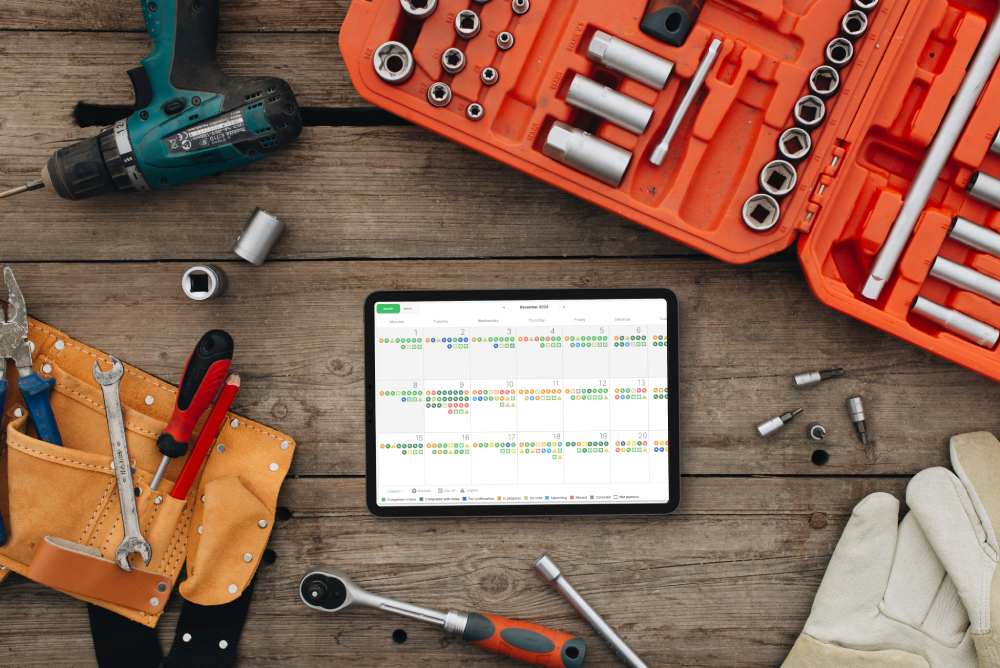
In a factory, the most critical asset isn't the machine; it's the gear protecting the human.
Fall protection harnesses, self-retracting lifelines (SRLs), and respirators (SCBA) are not "buy and forget" items. They require rigorous inspection.
-
OSHA mandates that fall protection be inspected prior to each use and by a "Competent Person" at least annually (or semi-annually in harsh environments).
-
Manufacturers put strict expiration dates on webbing and plastics (usually 5 years).
If you are managing this on a spreadsheet, you are taking a massive risk. You are relying on a human to remember to check a date column.
You need software that treats PPE like a machine. It needs a unique ID (QR/RFID), a digital history, and a hard stop when it expires.
Here are the 5 best maintenance software tools for PPE and safety equipment inspection in 2026.
1. Fabrico (Best for Integrated Factory Safety)
Fabrico is the ideal tool for manufacturers because it keeps safety data in the same system as machine data.
Why it fits PPE:
Fabrico treats a "Safety Harness" as an asset. You sticker it with a robust QR code. When a technician checks out the gear, they scan it. If the inspection is overdue, the app flags it as "Do Not Use." This prevents unsafe gear from ever entering the field.
Key Features:
-
Expiry Alerts: Set the "Retirement Date" based on the manufacturer's tag. Get an alert 30 days before the harness expires so you can order a replacement.
-
Digital Inspection Forms: Mandatory checklists for webbing cuts, stitching integrity, and hardware corrosion.
-
User Assignment: Track who has the gear. If a lanyard goes missing, you know who checked it out last.
-
Mobile Compliance: The safety audit log is always in your pocket, ready for an OSHA inspection.
Best For: Manufacturing plants managing internal safety gear.

2. Papertrail.io
Papertrail is a specialized tool built specifically for PPE management, often used in adventure parks and rope access industries.
Why it fits PPE:
It is purpose-built for "soft goods" (ropes, harnesses). It has a massive database of manufacturer equipment. It makes adding new gear very fast because it knows the inspection criteria for a "Petzl" helmet versus a "3M" harness.
The Trade-off:
It is a Niche Safety tool. It tracks your harness perfectly, but it won't help you maintain the forklift or the CNC machine. It creates a separate database for safety gear.
Best For: Rope access teams and high-volume PPE users.
3. FieldID (Master Lock)
FieldID is the heavyweight champion of RFID inspection.
Why it fits PPE:
Safety gear gets dirty. Barcodes scratch off. FieldID uses durable RFID chips embedded in the gear. You just wave a scanner over a pile of harnesses, and it identifies them all. It is excellent for "Lockout/Tagout" (LOTO) and heavy industrial inspections.
The Trade-off:
It requires specialized hardware (RFID readers). It is expensive and geared towards large enterprises or third-party inspection companies.
Best For: Large enterprises using RFID for asset tracking.
4. SafetyCulture (iAuditor)
SafetyCulture is the global standard for the inspection process.
Why it fits PPE:
The checklist builder is unmatched. You can create highly visual inspections. "Check Stitching" can include a photo of what good stitching looks like vs. bad stitching. This is excellent for training users on what to look for.
The Trade-off:
It is an Audit tool, not an Asset Lifecycle tool. It is great for the checklist, but harder to track the "Total History" and "Expiry Date" of thousands of individual items without complex setup.
Best For: EHS Managers focused on the quality of the inspection.
5. MaintainX
MaintainX is the best tool for simple, fast checks by the users themselves.
Why it fits PPE:
Before a worker climbs a ladder, they need to check their gear. MaintainX makes this take 30 seconds. Scan QR, tap "Pass," go. If they find a cut strap, they snap a photo, and the Safety Manager gets a notification instantly to take that harness out of service.
The Trade-off:
It relies on the user. It doesn't have the automated "RFID Inventory" capabilities of FieldID for mass scanning.
Best For: User-led "Pre-Use" inspections.
Comparison: The Safety Net
| Feature |
Fabrico |
Papertrail |
FieldID |
MaintainX |
| Primary Focus |
Ops + Safety |
PPE Specialist |
RFID/Heavy |
Speed/Logs |
| Expiry Tracking |
Automated |
Best in Class |
Good |
Manual Setup |
| Identification |
QR Code |
QR/Barcode |
RFID |
QR Code |
| Inspection Logic |
Pass/Fail |
PPE Specific |
Compliance |
Simple |
| Mobile Experience |
Native / Offline |
Good |
Scanner Req. |
Excellent |
| Best Use Case |
Factory Floor |
Rope Access |
Enterprise |
Pre-Use Checks |
The "Date of First Use" Trap
Many safety items expire 5 years from the Date of First Use, not the Date of Manufacture.
-
The Old Way: Writing the date on a tag with a Sharpie (which rubs off).
-
The Fabrico Way: When you unbox the gear, you scan it into the system as "Active." The software calculates the expiry date automatically and locks it in. You never have to guess.
Conclusion
Safety gear is only safe if it's inspected.
-
For specialized rope/harness tracking: Papertrail.
-
For heavy RFID users: FieldID.
-
For a complete system that manages Safety Assets alongside Production Assets: Fabrico is the secure choice for 2026.


 Login
Login
 Blog
Blog