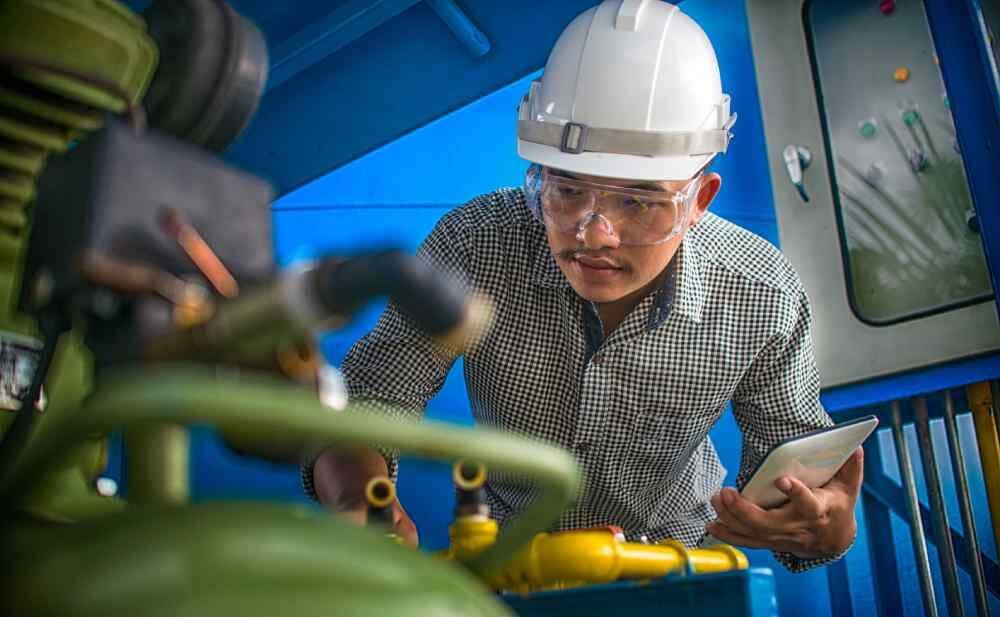
If your reliability team still tracks maintenance for your massive overhead cranes and computer numerical control wheel lathes on paper logs, your factory is exposed to massive financial risk. Manual tracking relies entirely on human memory and physical clipboards. This creates dangerous gaps in your maintenance data and introduces severe process variance.
You simply cannot guarantee the efficiency of a heavy rolling stock plant if you do not trust your underlying maintenance records. The software market is completely saturated with generic tools built for basic facility managers. These basic platforms do not understand the unforgiving demands of high speed fabrication and complex locomotive assembly logistics.
This guide reviews the top maintenance platforms for 2026 specifically tailored for the railcar and locomotive manufacturing industry. It will show you exactly how to select a system built to handle heavy industrial efficiency and rigorous equipment reliability.
What is railcar manufacturing maintenance software?
Railcar manufacturing maintenance software is a specialized digital platform designed to manage heavy equipment repairs in extreme fabrication environments.
It centralizes digital operator checklists and machine performance data to ensure continuous welding and chassis assembly lines run at maximum efficiency.
It also tracks spare parts inventory to prevent stockouts of critical high wear components like robotic welding tips and heavy press hydraulics.
The Heavy Assembly Trap
Many industrial operations directors make the mistake of relying on generic facility software to manage a heavy locomotive plant. This creates an immediate and dangerous operational bottleneck.
Legacy systems are built for fixing broken air conditioners or tracking janitorial work.
The software passively waits for a technician to notice a failing hoist motor, walk to a desktop computer, and submit a ticket. In a heavy railcar fabrication facility, waiting ten minutes to report a fault means a delayed production schedule and massive labor waste.
Furthermore, basic applications allow technicians to blindly check boxes on safety inspections without actually verifying the equipment condition. This dangerous practice destroys your operational safety and inflates your repair costs.
You need a system of action. Your software must connect directly to your processing equipment. It must read exact machine cycles, generate condition directed work orders automatically, and enforce strict digital parameters for every safety check.
5 Best Maintenance Software Platforms for Railcar Manufacturing
1. Fabrico
Fabrico is engineered specifically for the extreme demands of discrete and heavy manufacturing. It is the only platform on this list that natively unifies real time machine tracking with an audit ready mobile execution system.
Instead of relying on delayed manual inputs, Fabrico connects directly to your existing Programmable Logic Controllers. When a robotic chassis welder or CNC lathe drops in performance, Fabrico automatically generates a condition directed work order. Technicians scan a code on the physical machine to instantly access digital cleaning and calibration checklists.
These digital checklists force operators to input specific numerical values rather than simple checkmarks. Every single action is recorded with a user credential and precise timestamp. This guarantees perfect traceability for your reliability engineering team.
For high speed packaging and visual weld inspection stations, Fabrico utilizes computer vision. Overhead cameras detect manual inefficiencies and capture video clips of micro stops that traditional sensors miss. Please note that our artificial intelligence agent for schedule optimization and our generative troubleshooting assistant are currently in beta and on our immediate development roadmap.
Best for: Multi site railcar and locomotive manufacturing groups that must automate usage based maintenance and guarantee absolute equipment reliability.

2. SAP Plant Maintenance
SAP Plant Maintenance is a heavyweight module integrated directly into the broader SAP ecosystem. It provides seamless financial tracking for global industrial conglomerates.
SAP is built primarily for financial accountants and corporate compliance. The desktop heavy interface creates massive friction on the factory floor.
Most modern heavy manufacturers are forced to connect agile mobile platforms to their SAP instance just to bridge this usability gap. If technicians find the software too hard to use, your reliability data will always be inaccurate.
Best for: Global enterprises that require absolute financial integration and are willing to sacrifice frontline usability.
3. Fiix
Fiix is an enterprise grade system backed by Rockwell Automation. It provides strong tracking capabilities and high level corporate governance for large industrial operations.
Fiix offers deep reporting and highly specialized industrial integrations. However, this massive scale comes with heavy complexity. The user interface is notoriously complex and desktop heavy.
This complexity creates massive friction on the shop floor when operators try to log simple safety checks. It often results in poor adoption and inaccurate data entry. Most modern heavy manufacturers prefer agile native applications to bridge this usability gap.
Best for: Massive global industrial enterprises that require deep financial integration and have dedicated information technology teams to manage complex software training.
4. MaintainX
MaintainX is a highly popular tool known for its consumer grade mobile interface. The application mimics standard messaging platforms. This makes it exceptionally easy for frontline workers to adopt and use daily.
The software excels at digitizing paper checklists and managing basic safety audits for smaller teams. However, MaintainX is a generalist platform built to serve restaurants, schools, and commercial properties.
It lacks native production tracking capabilities. It relies entirely on external integrations rather than direct machine connectivity. This makes it very difficult to execute true condition directed maintenance on high speed continuous assembly lines.
Best for: Small batch manufacturers and light industrial operations looking to simply eliminate paper checklists.
5. UpKeep
UpKeep pioneered the mobile first approach to maintenance management. It offers a robust framework for tracking work orders, managing schedules, and controlling basic inventory.
UpKeep performs exceptionally well for commercial real estate, facility servicing, and distribution fleet management. Yet it operates in a silo away from your live factory production schedule.
Without a native interactive planning board that reacts to real time machine availability, maintenance tasks frequently collide with critical railcar production runs.
Best for: Logistics providers and distribution centers focused on general asset upkeep rather than unified production efficiency.
The Comparison Matrix
| Feature |
Fabrico |
SAP PM |
Fiix |
MaintainX |
UpKeep |
| Primary Focus |
Manufacturing |
Financial ERP |
Heavy Enterprise |
General Facilities |
Property Management |
| Audit Ready Traceability |
Yes |
Yes |
Yes |
Basic |
Basic |
| Native Production Tracking |
Yes |
Requires Custom IT |
Requires Custom IT |
No |
No |
| Automated Machine Triggers |
Yes |
Complex |
Yes |
API Only |
API Only |
| Interactive Planning Board |
Yes |
Complex |
Complex |
No |
No |
3 KPIs Your Manufacturing Software Must Measure
A digital tracking system is only valuable if it produces actionable boardroom data. To protect your profitability, your software must automatically calculate the following metrics.
1. Preventive Maintenance Compliance Rate:
Are your preventive and safety tasks actually getting done? Digital audit trails equipped with user credentials, timestamps, and geolocation confirm that tasks were completed at the machine. This completely eliminates fake data entry and ensures total audit readiness.
2. Mean Time Between Failures:
How reliable is your heavy fabrication and lifting equipment? By connecting directly to machine sensors, your software provides an exact calculation of uptime between fault codes. This proves the return on investment for your reliability engineering programs.
3. Maintenance Cost Per Unit:
This is the ultimate measure of factory efficiency. By linking inventory consumption and technician labor hours directly to specific production batches, you can calculate the exact maintenance cost required to manufacture a single railcar chassis.
Conclusion
Treating your maintenance tracking as a separate entity from your heavy production floor is a massive strategic failure. Generic tracking software will digitize your paper processes, but it will not protect your product yield or prevent machine breakdowns.
To maximize your revenue, you must implement a platform that speaks the specific language of industrial manufacturing. By unifying real time machine data with a mobile execution system, you empower your technicians to act exactly when the machine requires it.
This closed loop system slashes repair times, enforces strict safety protocols, and transforms your maintenance department into a true competitive advantage.


 Login
Login
 Blog
Blog

![What is Overall Equipment Effectiveness (OEE)? [2026 Guide]](https://s3.fabrico.io/uploads/what-is-overall-equipment-effectiveness-oee-guide.jpg)
![What is the Industrial Internet of Things (IIoT)?[2026 Guide]](https://s3.fabrico.io/uploads/industrial-internet-of-things-iiot-guide.jpg)