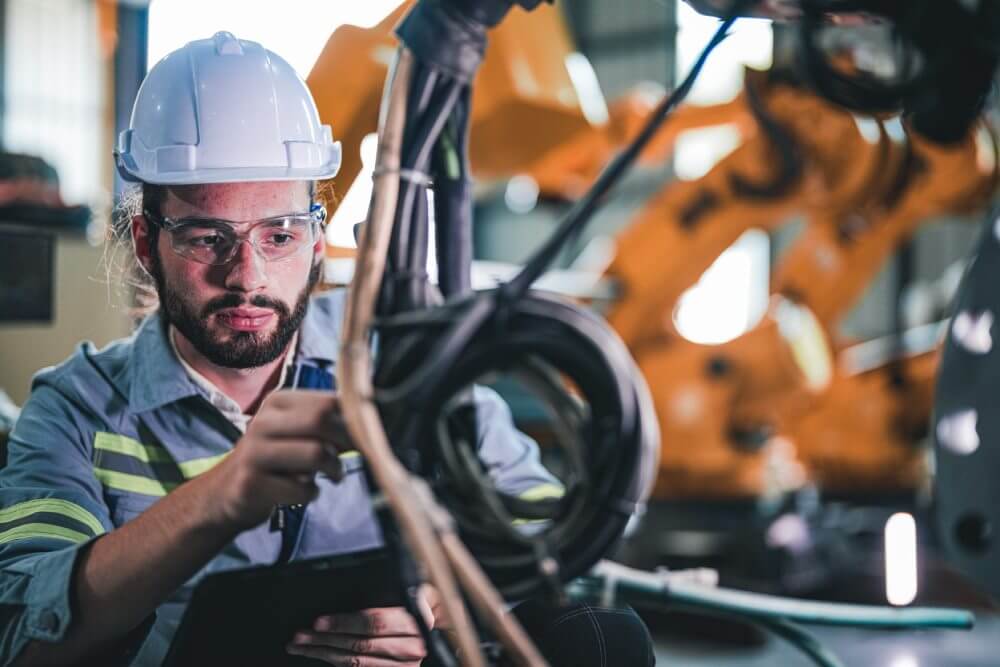
Most maintenance software is "Administrative." It asks: "Did you fix it?" and "How much did it cost?"
But it rarely helps the technician answer the hardest question: **"What is wrong with this machine?"
In 2026, with skilled labor shortages, you cannot rely on "Tribal Knowledge" (waiting for Bob to come in).
You need Maintenance Troubleshooting & Diagnostic Software—tools designed to capture knowledge, visualize faults, and guide technicians to the root cause faster.
We reviewed the top 5 platforms that move beyond "Work Orders" to help you actually solve problems.
1. Fabrico (Best for AI & Video Diagnostics)
The Verdict: The only platform that combines Computer Vision (to see the past) with GenAI (to find the future fix), linked directly to OEE.
Fabrico bridges the gap between the machine and the human. While other tools are static repositories of information, Fabrico is active. Its "Inefficiencies Zoom-In" feature captures video of the machine breakdown, giving the technician an "Instant Replay" of the failure. Once the fault is identified, the Fabrico Assistant (GenAI) instantly pulls the repair procedure from the manual. It reduces the "Detective Work" to seconds.
Key Diagnostic Features:
-
Inefficiencies Zoom-In: Automatically links video clips of the breakdown to the Work Order. See the jam, crash, or wobble instantly.
-
Fabrico Assistant (GenAI): Ingests OEM manuals and historical logs. Technicians ask natural questions ("How to reset Servo B?") and get immediate, cited answers.
-
Historical Pattern Matching: When opening a ticket, the system suggests: "This asset has failed 3 times recently due to Sensor Misalignment."
-
OEE Context: Shows exactly where in the production cycle (Speed, Temperature, Pressure) the failure occurred.
Best For: Manufacturing teams focused on slashing Mean Time To Repair (MTTR).

2. Poka (Best for Skills & Training Videos)
The Verdict: The leader in "Connected Worker" video training, excellent for building a library of "How-To" guides.
Poka is fantastic for capturing Tribal Knowledge. It allows technicians to easily record and share short videos explaining how to fix specific issues. It functions like a private "YouTube for the Factory." If your primary struggle is training new staff on standard procedures, Poka is best-in-class.
Pros:
-
Excellent video capture and sharing interface.
-
Strong "Skills Matrix" to track who knows how to fix what.
-
Social-media style feed for factory updates.
Cons:
-
Not a Diagnostic Engine: It relies on humans to record the solution. It doesn't use Computer Vision to catch the problem automatically.
-
Loose OEE Link: Focuses on training, not real-time machine performance data.
Best For: Standardizing training and sharing operator knowledge across sites.
3. Dozuki (Best for Digital Manuals)
The Verdict: The standard for converting paper SOPs into digital, step-by-step visual guides.
Dozuki (born from iFixit) knows how to make a manual. It enforces strict version control and standardization. If you have complex assembly or repair procedures that must be followed exactly (e.g., Medical Device manufacturing), Dozuki ensures every technician follows the same path.
Pros:
-
Best interface for step-by-step visual instructions.
-
Strict version control (ISO/FDA compliant).
-
Great for complex tear-down procedures.
Cons:
-
Static Content: It creates great manuals, but doesn't help you find the problem. It assumes you already know what to fix.
-
No Machine Data: Does not connect to PLCs or OEE.
Best For: Regulated industries needing strict adherence to standard repair procedures.
4. MaintainX (Best for Collaborative Troubleshooting)
The Verdict: Leveraging the power of the team via chat to solve problems together.
MaintainX excels when the answer isn't in a manual—it's in a colleague's head. Its chat-centric interface allows a technician at a machine to instantly message the Reliability Engineer or the OEM vendor, sharing photos and getting real-time advice. It democratizes troubleshooting.
Pros:
-
Instant chat/collaboration on mobile.
-
Easy to annotate photos (draw arrows on the leak).
-
Vendor portal allows external experts to join the chat.
Cons:
Best For: Teams that value communication and "Swarming" problems.
5. Augmentir (Best for AI Worker Guidance)
The Verdict: An "AI Connected Worker" platform that guides technicians through workflows and learns from their activity.
Augmentir focuses on the human worker. It uses AI to suggest the best workflow based on the specific technician's skill level. It can guide a junior tech through a complex diagnosis using decision trees ("Does it look like A or B?"). It is a strong tool for guiding the diagnostic process.
Pros:
-
Smart workflows that adapt to user skill.
-
"Remote Expert" video calling (AR).
-
AI analysis of worker performance.
Cons:
-
Worker Focus, Not Machine Focus: Analyzes the person, not the machine data (PLC/OEE).
-
Setup Heavy: Building the logic trees takes time.
Best For: Workforces with high turnover or many junior technicians needing guidance.
Comparison Matrix: The 2026 Landscape
| Feature |
Fabrico |
Poka |
Dozuki |
MaintainX |
Augmentir |
| Primary Method |
Video Replay + GenAI |
Training Videos |
Digital Manuals |
Team Chat |
AI Workflows |
| Visual Diagnosis |
✅ Auto-Capture (Vision) |
❌ Manual Record |
❌ Static Photos |
❌ Static Photos |
⚠️ AR Support |
| OEE Integration |
✅ Native |
❌ No |
❌ No |
❌ No |
❌ No |
| Finds Root Cause |
Yes (Visual Proof) |
No (Training) |
No (Execution) |
Yes (Human Help) |
Yes (Logic Tree) |
| Setup Speed |
Fast |
Medium |
High (Content Entry) |
Fast |
High (Logic Build) |
Conclusion: Stop Searching, Start Solving
If you need training, buy Poka. If you need strict manuals, buy Dozuki.
But if you want to reduce the time your technicians spend guessing why a machine stopped, Fabrico is the only tool that gives them the Video Evidence and AI Knowledge to solve it instantly.
Cut your diagnostic time in half.
[Request a Demo] and see Fabrico’s "Zoom-In" technology.


 Login
Login
 Blog
Blog