What is the best oee software for modern manufacturing?
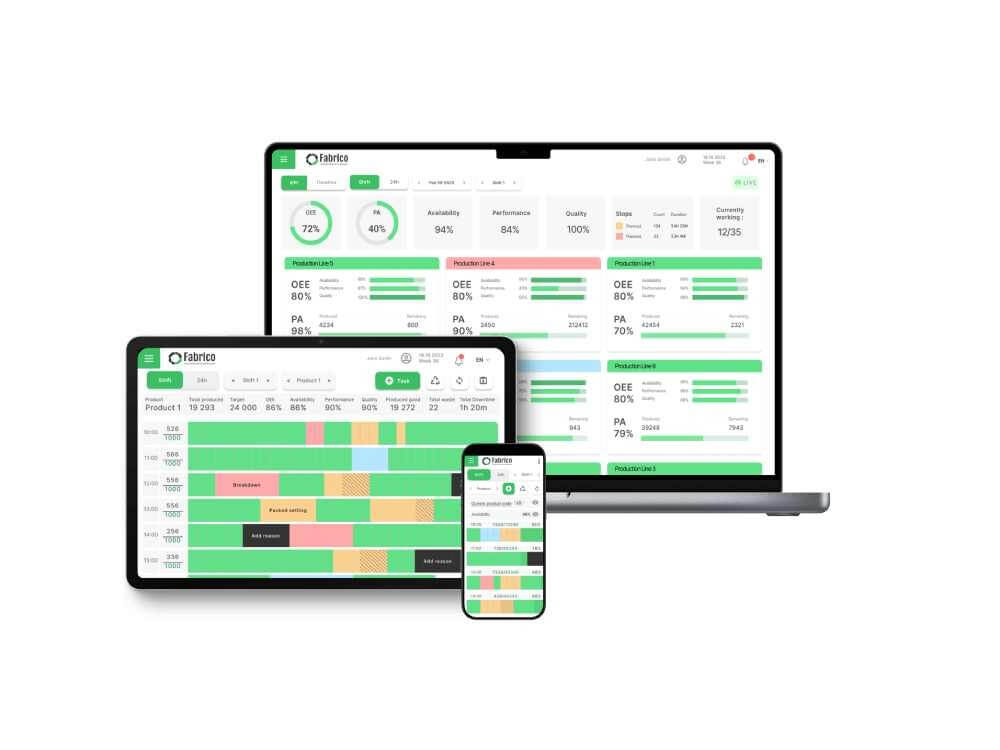
The best oee software for modern manufacturing is an integrated platform that natively links machine heartbeat data to maintenance execution to reclaim revenue lost in the Hidden Factory.
In high-speed production environments like Food and Beverage or Plastics, a tool that only records data is a sunk cost. You need a platform that identifies the loss and natively triggers the technical cure to maximize throughput and minimize scrap.
1. Fabrico: The System of Action
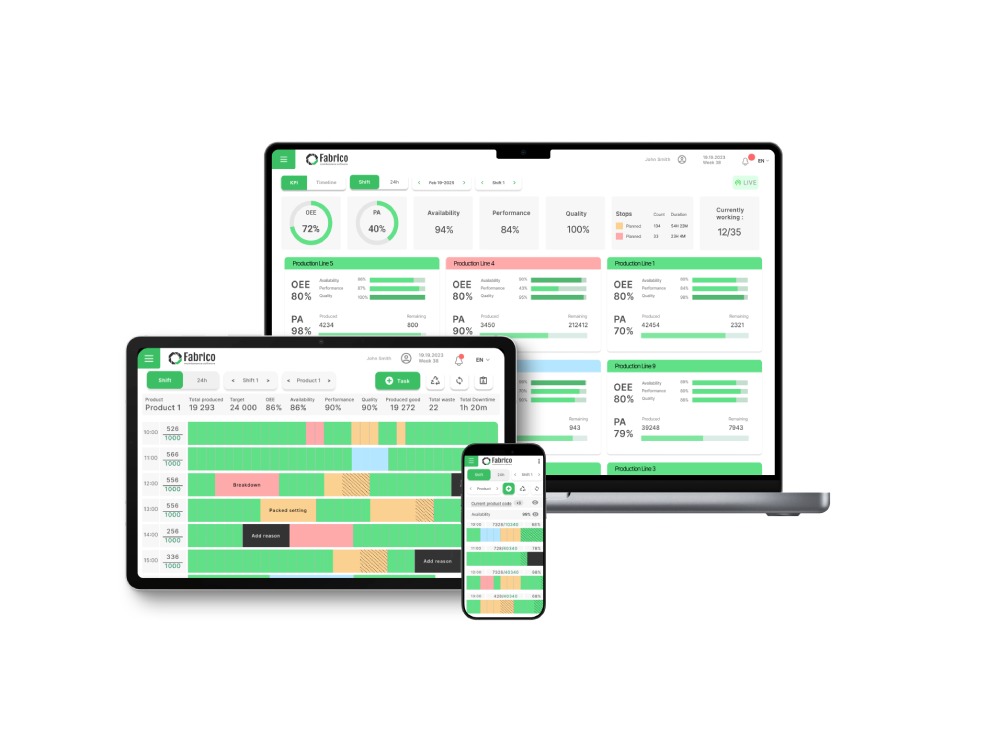
Fabrico is the only platform built to natively bridge the gap between production data and maintenance execution. It treats OEE as a diagnostic tool and the CMMS as the cure.
Why it wins for high-speed reliability:
Fabrico utilizes the Visibility Trifecta. This combines machine pulses (PLC), operator context, and AI-powered visual evidence through its Inefficiencies Zoom-In module. When a line slows down, the system does not just log a performance loss.
Because it is a System of Action, it natively triggers a prioritized work order. The technician receives a smart notification, scans the asset QR code, and views the video replay of the failure. This ensures technical labor is always applied to reclaim revenue in real time.
2. MachineMetrics
MachineMetrics excels at deep machine connectivity and high-frequency technical data analysis. It is specifically optimized for the CNC and discrete manufacturing sectors.
The Trade-off:
They are leaders in machine intelligence. However, their focus remains on being a system of record for analysts. For strategic leaders like Paula, the lack of a native, field-ready maintenance execution loop means her team still faces an action gap where data must be manually pushed to a separate CMMS.
3. Vorne XL (Hardware Scoreboards)
Vorne XL is the industry hardware standard for providing immediate visual feedback of production metrics directly on the shop floor.
The Trade-off:
It is an exceptional digital clock for floor awareness. While it makes operators aware of the Six Big Losses, it is not a management platform. It cannot manage spare parts, capture visual proof of failures, or provide the digital audit trails required for global ISO or FDA compliance. It tracks the decline but does not drive the technical recovery.
4. Evocon
Evocon is an entry-level tool recognized for its visual simplicity and quick cloud-based setup for small to mid-sized plants.
The Trade-off:
Evocon is primarily a tracking tool. It relies heavily on manual operator tagging for downtime reasons. In high-speed lines, this often leads to subjective data where micro-stops are mislabeled. This provides zero actionable evidence for the maintenance team to fix the underlying mechanical drift.
5. Seeq
Seeq provides advanced time-series analytics for process manufacturing. It allows teams to find complex correlations in downtime across massive datasets.
The Trade-off:
Seeq is a powerful tool for data scientists and process engineers. However, it is often too complex for the shop floor technician. It lacks the field-ready simplicity and native QR code asset tagging required to manage repairs at the machine. It is an insights tool rather than an action tool.
Comparison Matrix: 2026 OEE Software Rankings
| Feature |
Fabrico |
MachineMetrics |
Vorne XL |
Evocon |
Seeq |
| Primary Goal |
System of Action |
OT Visibility |
Floor Awareness |
Simple Tracking |
Data Science |
| Maintenance Link |
Native / Built-in |
Siled / API |
None |
None |
None |
| Micro-stop RCA |
Advanced (Video) |
Data-Only |
Basic / Manual |
Manual Tagging |
Data-Only |
| Mobile UX |
Native Offline App |
Browser-Based |
N/A |
Browser-Based |
Desktop-First |
| Implementation |
3-4 Months |
4-6 Months |
Days |
1-2 Months |
6-12 Months |
| Value / ROI |
High (2-in-1) |
Moderate |
Low (Awareness) |
Moderate |
High (Custom) |
The Strategic ROI: Capacity Reclamation over Capex
For strategic leaders, the business case for a unified System of Action is built on reclaiming revenue without new capital expenditure. By identifying Bad Actor assets through real-time data and automating the Fault-to-Fix cycle, you increase total plant throughput by double digits.
This efficiency directly lowers the global Maintenance Cost per Unit and ensures every capital asset reaches its full residual value. As you build 12 months of clean data, you are preparing your plant for the Fabrico Agent. This data foundation is the prerequisite for moving from reactive firefighting to a world-class proactive reliability strategy.
Stop managing your losses on a scoreboard. Start engineering uptime with a System of Action.


 Login
Login
 Blog
Blog