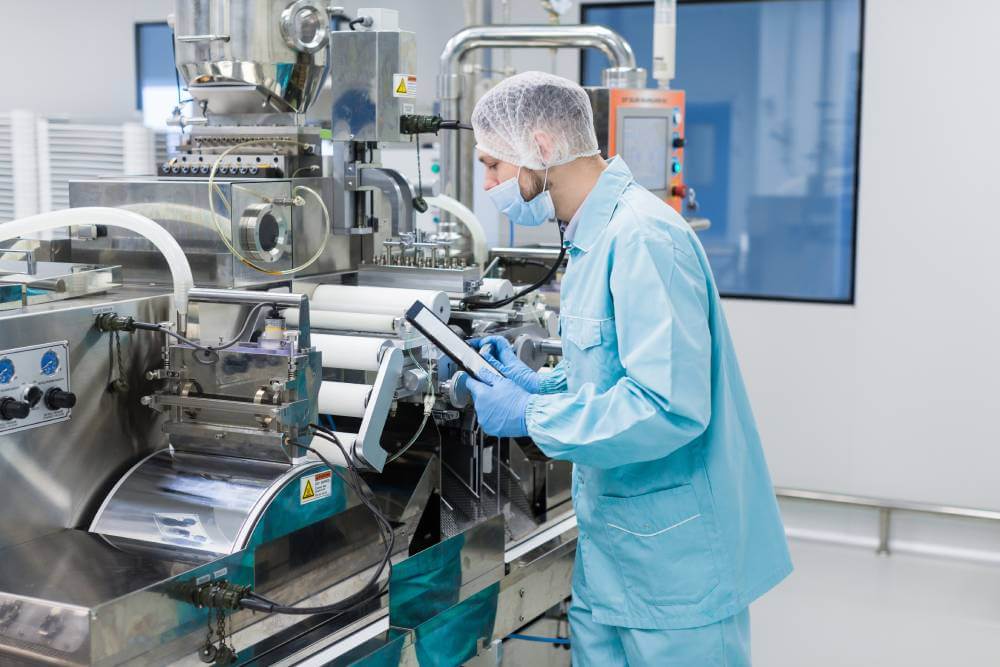
Medical Device manufacturing sits in a unique "Valley of Death" between high-speed production and ultra-strict regulation.
You are under immense pressure to reduce costs and increase output (OEE).
But you operate under the watchful eye of the FDA (21 CFR Part 820) and ISO 13485 standards.
If a CNC machine making bone screws drifts by 5 microns, you don't just have scrap; you have a potential patient safety incident.
If an assembly station isn't validated, you can't run it.
Standard OEE tools often fail here because they treat compliance as an afterthought.
You need software that treats Machine Health, Process Quality, and Regulatory Documentation as three legs of the same stool.
Here are the 5 best OEE software tools for the Medical Device industry.
1. Fabrico (Best for Asset Integrity & Digital Logbooks)
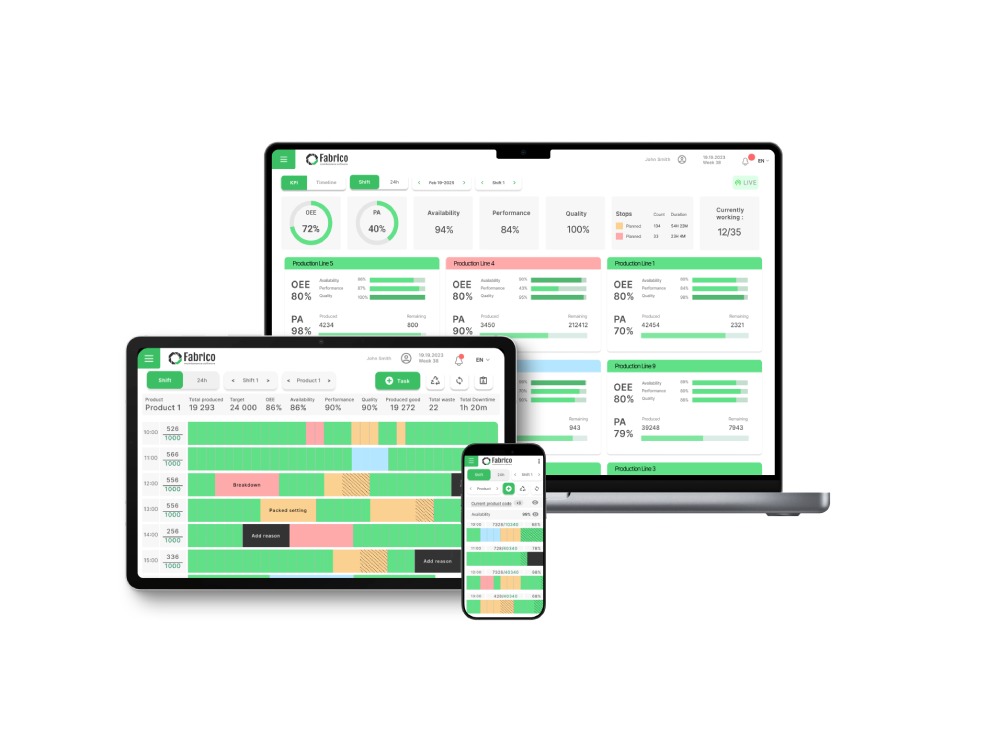
Fabrico is built to bridge the gap between "Running the Machine" and "Documenting the Process."
In Medical Device manufacturing, downtime is frequently caused by compliance checks—waiting for Quality to sign off on a line clearance, or waiting for Maintenance to verify a sensor calibration.
Fabrico digitizes these workflows to minimize the "Administrative Downtime."
Key Features for Medical Devices:
-
Digital Equipment Logbooks: Automatically logs every cycle, maintenance event, and error code. Replaces paper logs with 21 CFR Part 11 compliant digital records.
-
Calibration Management: Tracks the usage of critical assets (e.g., CMMs, torque drivers) and auto-locks the machine if calibration is overdue.
-
Visual Setup Verification: Uses Computer Vision to verify that the correct fixtures are loaded for the specific device variant, preventing costly setup errors.
-
Traceability: Links the OEE downtime reason directly to the User ID and Timestamp, creating a perfect audit trail for CAPA investigations.
Best For: Manufacturers of discrete devices (Implants, Surgical Tools) needing to balance OEE with ISO 13485 compliance.
2. MasterControl (Best for Quality-First Manufacturing)
MasterControl is widely known as the standard for QMS (Quality Management Systems) in Life Sciences.
Their "Manufacturing Excellence" solution extends their document control dominance onto the shop floor.
It focuses entirely on the eDHR (Electronic Device History Record).
It ensures that no step is skipped. It is fantastic for enforcing "Right First Time" quality. If your primary goal is to eliminate paperwork errors that cause batch release delays, MasterControl is the leader.
However, it is less focused on machine telemetry (PLC data) and more focused on operator inputs and document compliance.
Best For: Plants where "Paperwork Errors" are the biggest cause of lost productivity.
3. Tulip (Best for Human-Centric Assembly)
Tulip is a "No-Code" app platform that is revolutionizing manual assembly cells (e.g., assembling catheters or pacemakers).
Medical device assembly is often highly manual and requires skilled operators.
Tulip allows engineers to build "Process Apps" that guide the operator through the assembly steps with photos and videos, tracking cycle time for every step.
It captures granular OEE data on human performance. It connects to IoT devices (smart torque drivers, scales) to validate assembly steps automatically.
Best For: Manual assembly lines requiring guided workflows and digital validation.
4. MachineMetrics (Best for Orthopedic Implants / CNC)
MachineMetrics is the leader in CNC machine monitoring.
For the segment of the medical industry that machines metal (Titaniam hips, bone screws, surgical instruments), this tool is invaluable.
It connects directly to the CNC control (Swiss lathes, 5-axis mills) to track tool life and spindle load.
It helps engineers optimize the cutting path to reduce cycle time without compromising surface finish. It is a "Process Engineering" tool rather than a "Compliance" tool.
Best For: High-precision machine shops producing metal implants.
5. Siemens Opcenter (Best for Automated High-Volume)
Siemens Opcenter (formerly Camstar) is the enterprise choice for high-volume, automated production (e.g., syringes, vials, wound care products).
It is a full MES (Manufacturing Execution System). It controls the automation, manages the batch record, and tracks OEE across the entire facility.
It is powerful, validated, and expensive. It is designed for factories where the machines run the process with minimal human intervention.
Implementing Siemens is a major multi-year project, but for global Tier 1 manufacturers, it offers unmatched scale.
Best For: Large-scale, fully automated medical consumables manufacturing.
Comparison: The Compliance-Efficiency Balance
Which tool fits your regulatory environment?
| Feature |
Fabrico |
MasterControl |
Tulip |
MachineMetrics |
Siemens |
| Primary Strength |
Asset Health (Maintenance) |
eDHR (Documentation) |
Human Process (Apps) |
CNC Data (Machining) |
Automation (MES) |
| Calibration Lockout |
Native |
Via Integration |
Configurable |
Limited |
Native |
| Digital Logbooks |
Native (Compliance) |
Native (Focus) |
Custom Built |
Limited |
Native |
| User |
Maintenance & Ops |
Quality & Ops |
Manufacturing Eng |
Process Engineer |
IT & Controls |
| Implementation |
Fast (Weeks) |
Medium (Months) |
Fast (Days) |
Fast (Weeks) |
Slow (Years) |
Conclusion: Don't Let Compliance Kill Efficiency
In Medical Device manufacturing, you often feel like you have to choose between "Going Fast" and "Being Compliant."
MasterControl makes you compliant.
MachineMetrics makes you fast.
Fabrico offers the hybrid approach. We use OEE data to drive the maintenance and calibration workflows that keep you compliant. We ensure the machine is healthy so that the process remains valid.
You don't need to choose between speed and safety. You just need software that connects them.
Ready to validate your OEE?
See how Fabrico handles Digital Logbooks and ISO 13485 compliance.
Book a Demo with Fabrico Today


 Login
Login
 Blog
Blog