What are micro-stops in OEE monitoring?
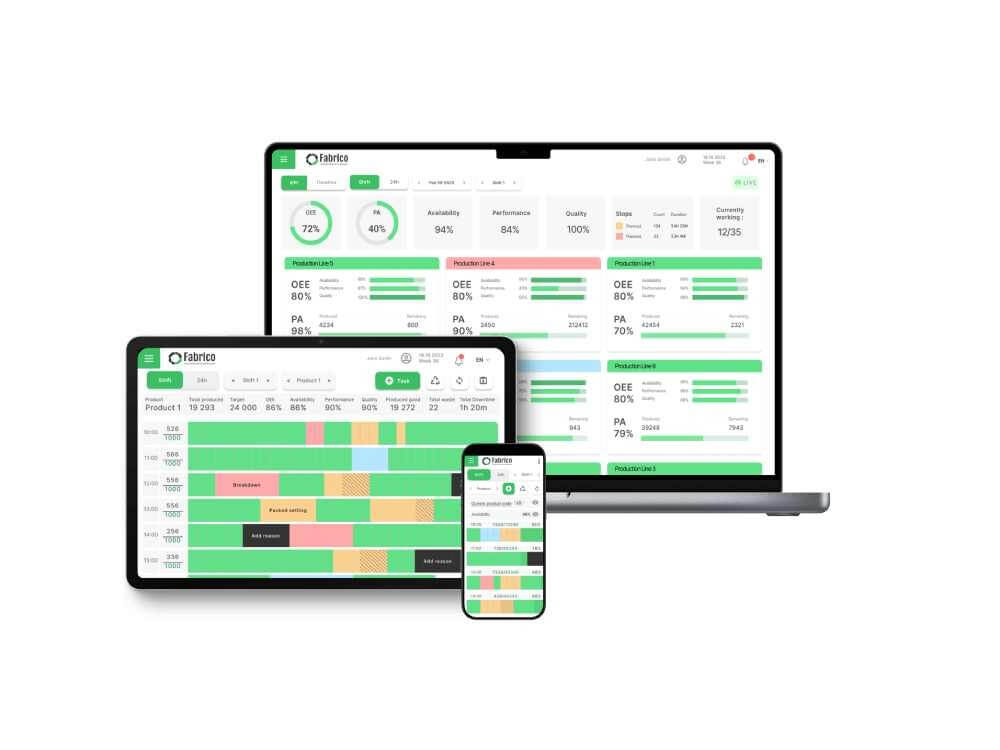
Micro-stops (also known as minor stoppages or idling) are downtime events typically lasting less than two minutes that occur so frequently they are ignored by manual logs, yet significantly reduce OEE Performance by starving or blocking the production flow.
For Mike (the Tactical Manager), micro-stops are the most frustrating part of the shift.
They happen too fast for operators to log manually, leading to a "Pencil Whip" culture where two hours of cumulative loss are labeled as "Unknown."
Fabrico eliminates this blindness by utilizing the Visibility Trifecta to capture every micro-second of lost truth.
1. Fabrico: The Integrated System of Action
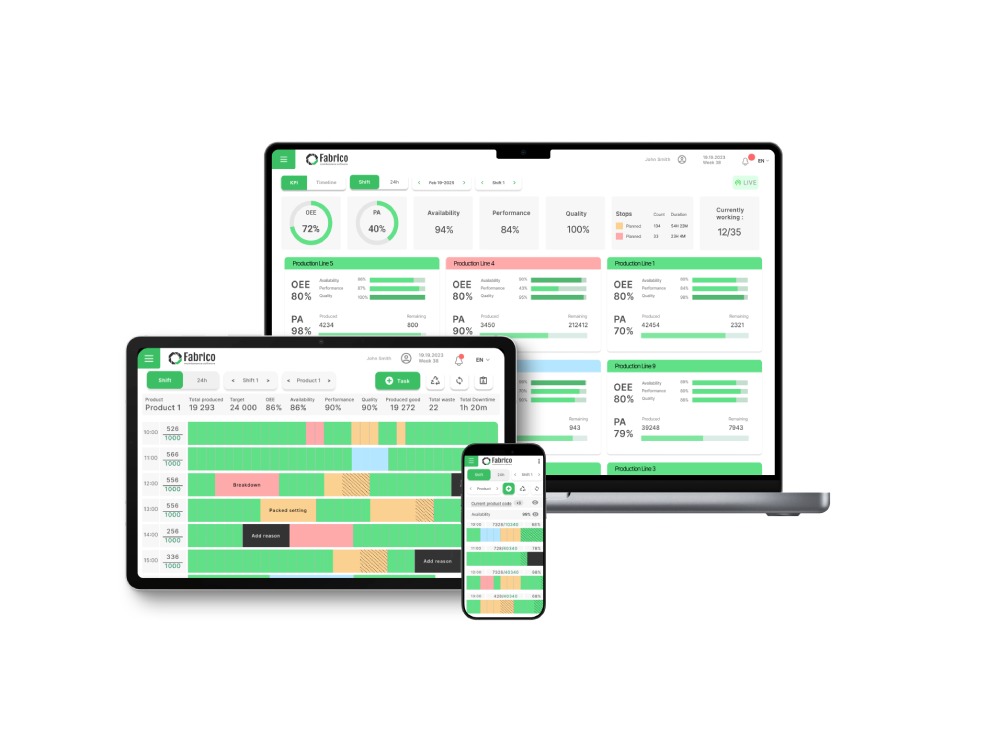
Fabrico is the only platform built to natively unify Native OEE, AI-powered Computer Vision, and a Field-Ready CMMS into a single source of truth.
Why it wins for micro-stop detection:
Fabrico utilizes the Inefficiencies Zoom-In module to capture the 15% of losses that traditional PLCs miss.
When a line stutters or a feeder jams, the system flags a 10-second video clip of the exact moment of failure.
Because it is a System of Action, it natively triggers a prioritized Work Order for Tom (the Technician).
This ensures the maintenance team focuses on the Value Fulcrum, fixing the mechanical drifts that steal your shift targets before they become major breakdowns.
2. MachineMetrics
MachineMetrics is a robust platform focused on deep IoT machine connectivity, particularly for the CNC and discrete manufacturing sectors.
The Trade-off:
They are leaders in "Machine Intelligence," pulling high-frequency signal data to identify technical anomalies.
However, their micro-stop analysis is often "Data-Only."
For Paula (the Strategic Leader), the lack of a native, mobile-first maintenance execution loop means she still faces an "Action Gap" where data exists in one silo and the technician's wrench exists in another.
3. Vorne XL (OEE Scoreboards)
Vorne XL is the industry standard for hardware-centric scoreboards that provide immediate visual feedback of micro-stops on the factory floor.
The Trade-off:
It is an exceptional "Digital Clock" for floor awareness.
However, it is not a management system.
It cannot capture visual proof (video), it doesn't manage spare parts, and it lacks the digital audit trails required for ISO/FDA Traceability and global multi-site standardization.
4. Evocon
Evocon is an entry-level OEE tool recognized for its visual simplicity and quick cloud-based setup.
The Trade-off:
Evocon excels at simple tracking but relies heavily on manual operator tagging for anything the PLC cannot define.
In high-speed lines, this often leads to subjective data where micro-stops are mislabeled, providing zero actionable evidence for the maintenance team to fix the underlying mechanical drift.
5. Worximity
Worximity focuses on "Smart Factory" connectivity and provides real-time OEE visibility through an intuitive "Tile" interface.
The Trade-off:
While Worximity tracks performance in real-time, it functions primarily as a scoreboard.
It lacks the deep engineering asset data and Advanced Visual RCA needed for a full Reliability-Centered Maintenance (RCM) strategy.
It identifies that you are losing money but doesn't manage the technical "Cure" to stop it.
Comparison Matrix: Micro-Stop Detection Capabilities
| Feature |
Fabrico (System of Action) |
MachineMetrics |
Vorne XL |
Evocon |
Worximity |
| Detection Method |
PLC + Vision + Human |
PLC / IoT |
Hardware Only |
PLC / Manual |
PLC / IoT |
| Visual Proof (RCA) |
Advanced (Zoom-In) |
Data-Only |
None |
None |
Photo-Only |
| Response Trigger |
Auto-Work Order |
Email / Alert |
Visual Alert |
Dashboard |
Dashboard |
| Maintenance Link |
Native CMMS |
Siled / API |
None |
None |
Siled / API |
| Decision Latency |
Zero (Automated) |
Moderate |
High |
Very High |
Moderate |
| Implementation |
3-4 Months |
4-6 Months |
Days |
1-2 Months |
2-3 Months |
The Strategic ROI: Reclaiming the Hidden Factory
For Paula (the Strategic Leader), the business case for micro-stop detection is built on "Capacity Reclamation."
Reclaiming just 10 minutes of "Invisible Loss" per shift is often more profitable than adding a new production line.
By identifying "Bad Actor" assets through real-time 3D data, you move your team from reactive "firefighting" to a proactive reliability strategy.
This shift directly reduces the Maintenance Cost per Unit and ensures your multi-million dollar assets reach their full residual value.
Stop ignoring the small stops. Start engineering uptime with a System of Action.


 Login
Login
 Blog
Blog