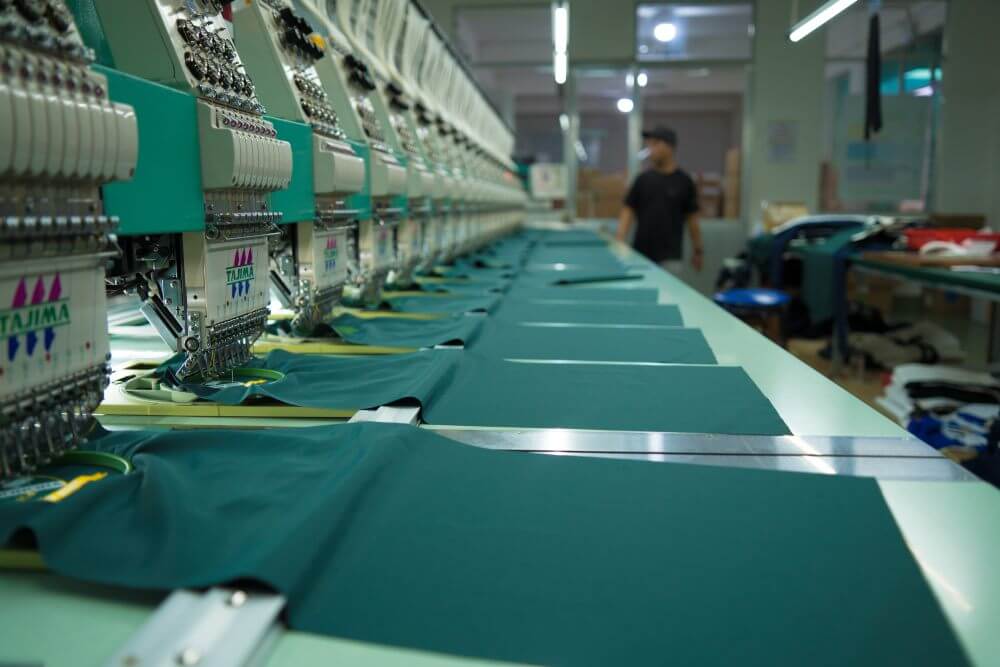
Textile manufacturing is a high-volume, low-margin game where OEE (Overall Equipment Effectiveness) is often synonymous with "Loom Efficiency."
Whether you are spinning cotton yarn, knitting jersey fabric, or weaving technical denim, your machines are running 24/7.
A 1% drop in efficiency across a shed of 200 looms translates to thousands of meters of lost fabric per day.
But calculating OEE in textiles is unique. It isn't just about uptime; it's about the Stop Rate (Stops per 100,000 picks) and the Quality Grade.
Legacy tools often fail because they treat a knitting machine like a CNC lathe. They don't understand that a "stop" might be a 30-second yarn repair (normal) or a 2-hour beam change (setup).
Here are the 6 best OEE software tools specifically designed for the Textile industry.
1. Fabrico (Best for Maintenance-Driven Efficiency)
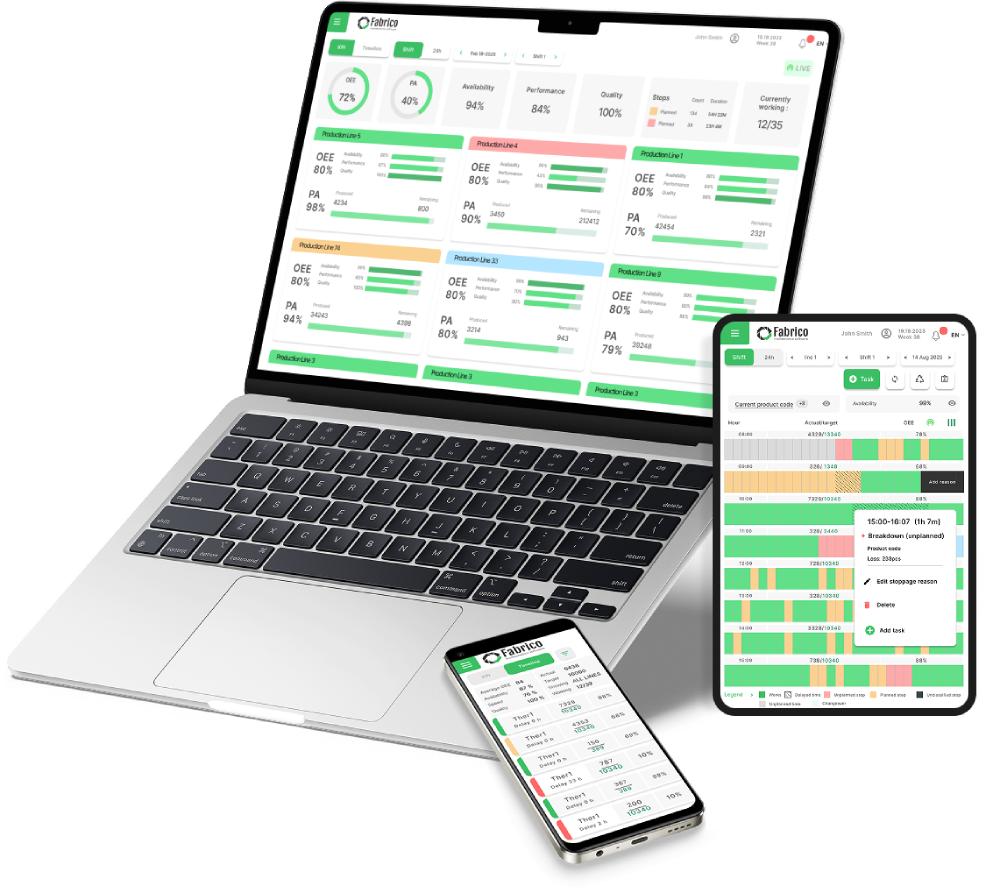
Fabrico brings a distinct philosophy to the textile mill: The Loom Stops Because It Is Worn.
While other systems focus on counting the stops, Fabrico focuses on the cause of the stop.
Is Loom #42 stopping for weft breaks 3x more often than Loom #43? Fabrico identifies this "Bad Actor" and automatically triggers a maintenance task to check the air jet nozzles or the rapier gripper.
Key Features for Textiles:
-
Bad Actor Detection: innovative analytics highlight looms or spinning frames that are statistically underperforming the group, flagging them for maintenance.
-
Digital CILs (Cleaning): Textile dust (lint) is the enemy. Fabrico manages the cleaning schedules (blow-off/suction) to prevent lint buildup from causing micro-stops.
-
Visual RCA: Uses Computer Vision to capture video of complex jams or fabric tears, helping technicians diagnose mechanical timing issues.
-
Beam Change Optimization: Tracks the "Setup Time" of beam changes (Knotting/Gaiting) against a standard, helping you reduce changeover losses.
Best For: Weaving and Knitting mills that want to use OEE data to drive mechanical reliability.
2. BMSvision (Best for Specialized Textile MES)
BMSvision (formerly Barco) is the undisputed heavyweight specialist in textile MES.
They have specific modules for every vertical: SpinMaster (Spinning), WeaveMaster (Weaving), and KnitMaster (Knitting).
They connect directly to the proprietary controllers of machines like Picanol, Vandewiele, and Rieter. They can tell you the exact arrival time of the weft yarn in milliseconds.
If you need deep, machine-specific telemetry (e.g., air consumption per pick), BMSvision is the gold standard. However, it requires proprietary hardware and a significant CapEx investment.
Best For: Large-scale integrated mills needing deep machine control integration.
3. Smartex (Best for AI Quality Inspection)
Smartex has revolutionized circular knitting with Computer Vision.
In knitting, if a needle breaks, you might produce a roll of fabric with a continuous hole (runner) for 20 minutes before anyone notices. That is 100% waste.
Smartex installs cameras inside the machine. If it detects a defect (hole, oil spot, lycra fault), it stops the machine immediately.
Their OEE software is Quality-First. It guarantees that your "Quality" score is near 100% by physically preventing bad fabric from being made.
Best For: Circular Knitting mills where defect rates are high.
4. Datatex (Best for Textile ERP)
Datatex is the leading ERP designed exclusively for the textile supply chain.
Their NOW (Network Oriented World) platform handles the complex inventory of the textile industry (Dyebaths, greige fabric, finished rolls).
Their machine monitoring module links OEE to Costing. It calculates the exact cost per meter based on energy, labor, and machine efficiency.
It is less about "Live Troubleshooting" and more about "Financial Visibility" and planning.
Best For: Vertical mills needing to link production data to inventory and finance.
5. Coats Digital (FastReactPlan) (Best for Planning & Garment)
Coats Digital (part of the Coats thread empire) focuses on the "Downstream" side—Garment manufacturing and cutting.
FastReactPlan is the industry standard for production planning.
While it is a planning tool, it tracks "Plan vs. Actual" rigorously. It visualizes OEE in the context of the sewing line.
If you are a Cut & Sew operation, standard machine monitoring doesn't work well (sewing machines are manual). FastReactPlan tracks the efficiency of the line balance.
Best For: Apparel manufacturers and Cut & Sew operations.
6. Infor (CloudSuite Fashion) (Best for Enterprise Scale)
Infor offers a massive enterprise suite for Fashion and Textile.
It connects the shop floor to the global supply chain.
For massive conglomerates that own spinning mills, weaving plants, and retail brands, Infor provides the end-to-end data thread.
Their OEE capabilities are part of a larger "Smart Factory" module. It is powerful but requires a heavy implementation effort. It is not a tool you install in a week.
Best For: Global textile conglomerates managing multiple sites and supply chains.
Comparison: The Fabric of Efficiency
Which tool fits your mill?
| Feature |
Fabrico |
BMSvision |
Smartex |
Datatex |
Coats Digital |
Infor |
| Primary Focus |
Maintenance (Reliability) |
Machine Control (MES) |
AI Quality (Vision) |
ERP (Financial) |
Planning (Sewing) |
Enterprise (Supply Chain) |
| Vertical |
Weaving/Spinning/Knit |
All Textile |
Circular Knit |
All Textile |
Garment/Sewing |
Fashion/Retail |
| Stop Analysis |
Video Replay |
Sensor Data |
Camera Detect |
Data Log |
Operator Log |
Data Log |
| Quality Link |
Native (CILs) |
Sensor |
Active Stop |
Inventory |
QC Module |
Global |
| Maintenance |
Native (CMMS) |
Module |
None |
None |
None |
Module |
Conclusion: Don't Knit With Broken Needles
In textiles, you can't sell "Efficiency." You sell Fabric.
If your efficiency is high but your fabric is full of defects, you lose.
If you are a Knitting Mill fighting defects, Smartex is a game changer.
If you are a Weaving Mill needing deep machine data, BMSvision is the classic choice.
But if your goal is to improve the Reliability of your assets—to stop the looms from breaking down and to minimize the lint that causes the stops—Fabrico is the unified solution that connects OEE to Action.
Ready to reduce loom stops?
See how Fabrico uses maintenance data to improve beam efficiency.
Book a Demo with Fabrico Today


 Login
Login
 Blog
Blog