Operational Excellence (OpEx) is the holy grail of manufacturing.
It is the relentless pursuit of safety, quality, and productivity.
For years, OpEx was managed on whiteboards, in Excel spreadsheets, and through Kaizen events.
In 2025, OpEx is managed in the Cloud.
The challenge for Directors of Operations ("Paula") is finding software that actually drives behavior.
Many tools are just "Scoreboards", they show you the metrics (OEE, Scrap, MTTR) but don't help you improve them.
You need a Factory Operating System—a platform that connects the Strategy (OpEx) with the Execution (Maintenance & Production).
Here are the 6 Best Operational Excellence Software Tools for 2026.
1. Fabrico: The "Actionable OpEx" Platform
Best For: Manufacturers who want to link Continuous Improvement directly to Maintenance Execution.
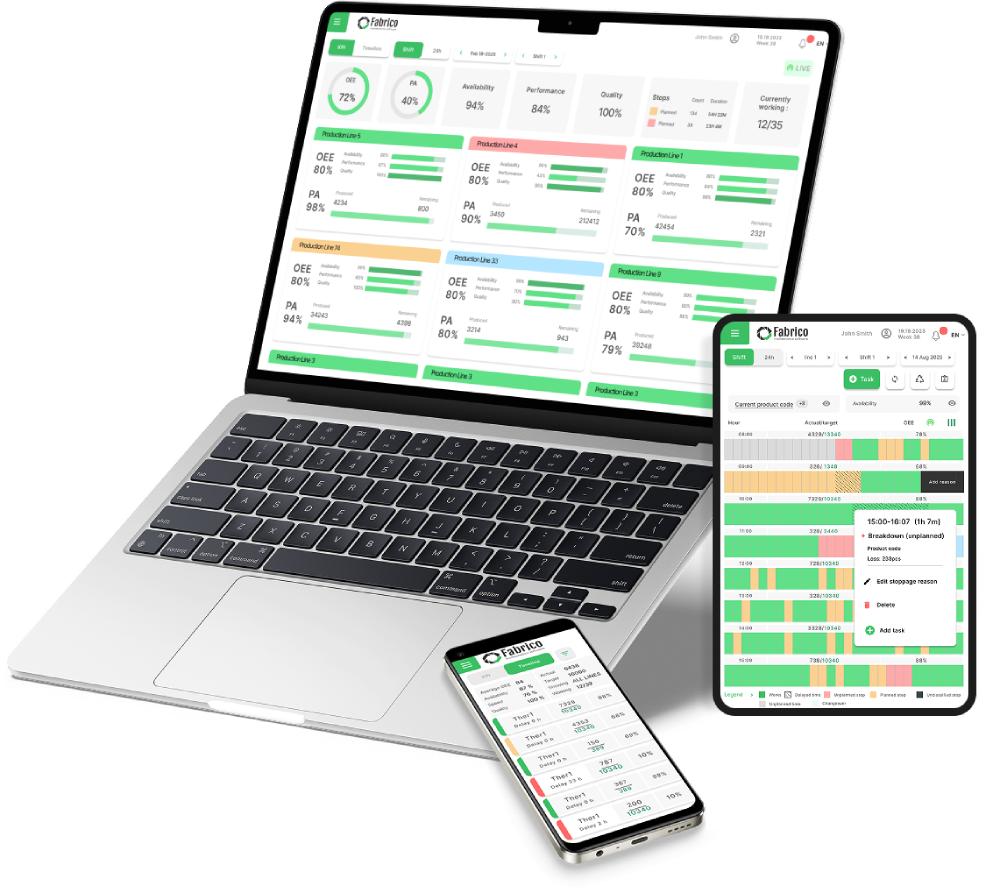
Fabrico is unique because it bridges the gap between "Monitoring" and "Fixing." Most OpEx tools stop at the data; Fabrico continues into the workflow.
Why OpEx Leaders Choose Fabrico:
-
The "Data-to-Action" Loop: If your OEE score drops (Data), Fabrico automatically triggers a maintenance work order or a root cause analysis (Action). You don't just see the loss; you eliminate it.
-
Standardized Work (SOPs): OpEx relies on standardization. Fabrico’s digital SOPs ensure that every operator performs the task exactly the same way, every time, reducing variability (Six Sigma).
-
Autonomous Maintenance (TPM): Fabrico empowers operators to perform their own inspections (CILs) on mobile tablets, a core pillar of Total Productive Maintenance.
-
Visual Management: It replaces the physical "Gemba Board" with a real-time digital dashboard visible to the whole plant.
The Verdict: If you want your OpEx strategy to result in physical changes on the shop floor, Fabrico is the integrated choice.
2. Redzone
Best For: Cultural transformation and workforce engagement.
Redzone is the market leader in "Social Manufacturing." It focuses heavily on the human element of OpEx—huddles, high-fives, and team competition.
-
Pros: Incredible for morale. It gamifies production targets ("Winning the Shift"). The chat features break down silos between shifts.
-
Cons: It is expensive and requires a rigid adherence to their specific "Coaching" methodology. It is less focused on the hard engineering data of asset reliability than Fabrico.
-
The Niche: Culture-driven improvement.
3. Minitab
Best For: Statistical analysis and Six Sigma projects.
Minitab is the scientist's tool. It is the industry standard for processing heavy data sets to find statistical variance.
-
Pros: Unrivaled for Deep Data Analysis. If you are running a Black Belt project to reduce variation in a chemical process, Minitab is essential.
-
Cons: It is an offline analysis tool, not a shop floor operating system. It doesn't manage work orders or real-time OEE. It analyzes the past, it doesn't manage the present.
-
The Niche: Six Sigma Black Belts.
4. Tulip
Best For: Custom app building for specific workstations.
Tulip is a "No-Code" platform that allows engineers to build their own OpEx apps.
-
Pros: Flexibility. You can build a custom "Quality Check" app for one specific station that connects to smart scales and cameras. It connects the physical worker to the digital process.
-
Cons: High effort. You have to build and maintain the apps yourself. It requires internal engineering resources to deploy effectively.
-
The Niche: DIY Engineering teams.
5. Rever
Best For: Frontline innovation and Kaizen.
Rever focuses on the "Idea Funnel." It empowers operators to snap photos of waste and suggest solutions.
-
Pros: It democratizes innovation. It captures the small ideas from the floor that management misses. It tracks the dollar value of every implemented idea.
-
Cons: It focuses on "Suggestions," not "Assets." It lacks the heavy maintenance management features required to keep the machines running reliably.
-
The Niche: Suggestion programs.
6. iNexus
Best For: Strategy deployment (Hoshin Kanri).
iNexus is a "Top-Down" tool. It helps global organizations cascade their strategy from the CEO down to the plant level.
-
Pros: Excellent for tracking high-level KPIs across 50 sites. It ensures everyone is working on the right strategic goals.
-
Cons: It sits in the boardroom, not on the shop floor. It tracks the goals, but it doesn't help the technician fix the machine to achieve the goals.
-
The Niche: Corporate Strategy Offices.
Comparison Matrix: Strategy vs. Execution
| Feature |
Fabrico |
Redzone |
Minitab |
Tulip |
Rever |
iNexus |
| Primary Focus |
Reliability & OEE |
Culture |
Statistics |
Custom Apps |
Ideas |
Strategy |
| Execution Layer |
✅ CMMS |
⚠️ Tasks |
❌ No |
⚠️ DIY |
❌ No |
❌ No |
| OEE Integration |
✅ Native |
✅ Native |
❌ No |
✅ DIY |
❌ No |
❌ No |
| Target User |
Plant Floor |
Operators |
Engineers |
Engineers |
Operators |
Execs |
| Cost |
Value |
Premium |
Premium |
High |
Mid |
Premium |
Summary: How to Choose Your OpEx Tool
-
Choose iNexus if you need to align corporate strategy.
-
Choose Minitab if you are doing deep statistical analysis.
-
Choose Redzone if you have a budget surplus and need to fix your culture.
-
Choose Fabrico if you want to Operationalize Excellence. If you believe that OpEx is the result of reliable machines (CMMS) and efficient production (OEE) working together in a single system, Fabrico is the unified solution.
Turn your strategy into execution.
[Book a Demo with Fabrico] to see how we drive continuous improvement through data and workflow.


 Login
Login
 Blog
Blog