"We didn't catch the defect until the batch was finished."
This is the most expensive sentence in manufacturing. By the time Quality Control (QC) finds a bad part, you have already wasted materials, machine time, and labor.
Traditional Quality Management Systems (QMS) are great for documenting the failure. But they don't help you prevent it.
In 2026, the industry is moving from Quality Control (Checking) to Predictive Quality (Preventing).
Predictive Quality software doesn't just measure the part; it monitors the Machine Health and Process Parameters that create the part. If the machine vibrates abnormally or the temperature spikes, the software alerts you before the part is ruined.
Here are the 5 best tools to help you move from Scrap to Strategy.
The Comparison Matrix (2026)
| Software |
Best For... |
Prediction Method |
Data Source |
Maintenance Link |
| 1. Fabrico |
Visual & Process Prevention |
Computer Vision + OEE |
Camera + PLC |
Direct (Fix the Machine) |
| 2. Braincube |
Process Optimization (IIoT) |
Digital Twin / AI |
Historical Data |
Low |
| 3. InfinityQS |
Statistical Process Control (SPC) |
Statistical Trends |
Manual/Gauge Data |
None |
| 4. Plex QMS |
Compliance & Traceability |
Inspection Data |
ERP Records |
Medium |
| 5. Sight Machine |
Enterprise Data Analytics |
Big Data Correlation |
Cloud Data Lake |
Low |
1. Fabrico: The "Visual" Prevention Engine
Verdict: The best choice for manufacturers who want to catch defects by seeing the process failure in real-time.
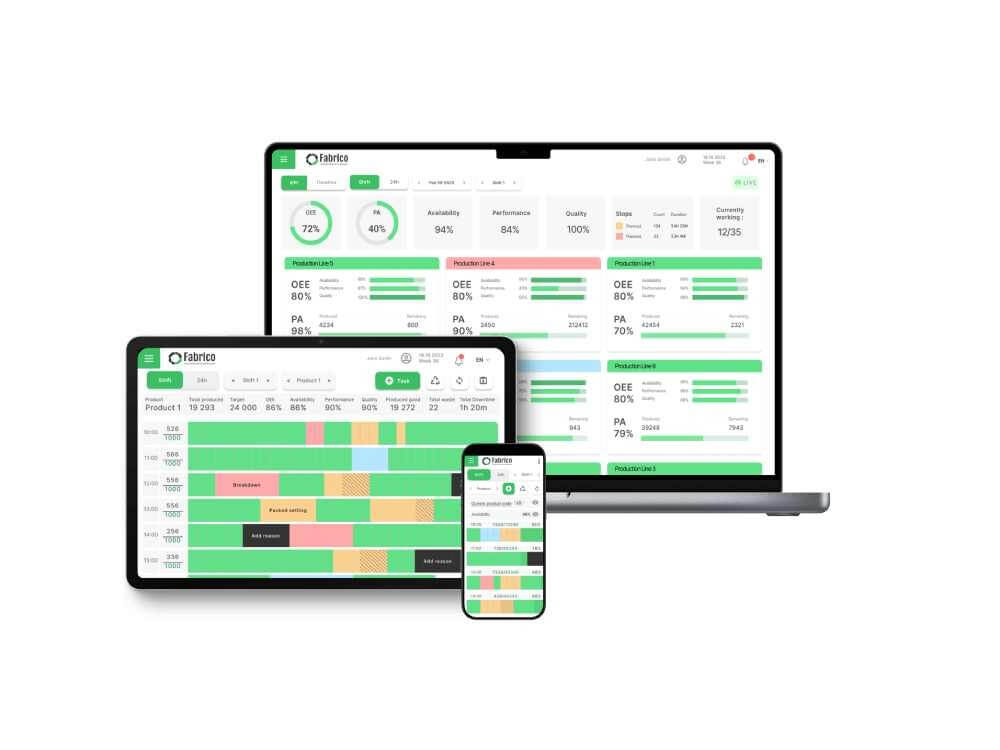
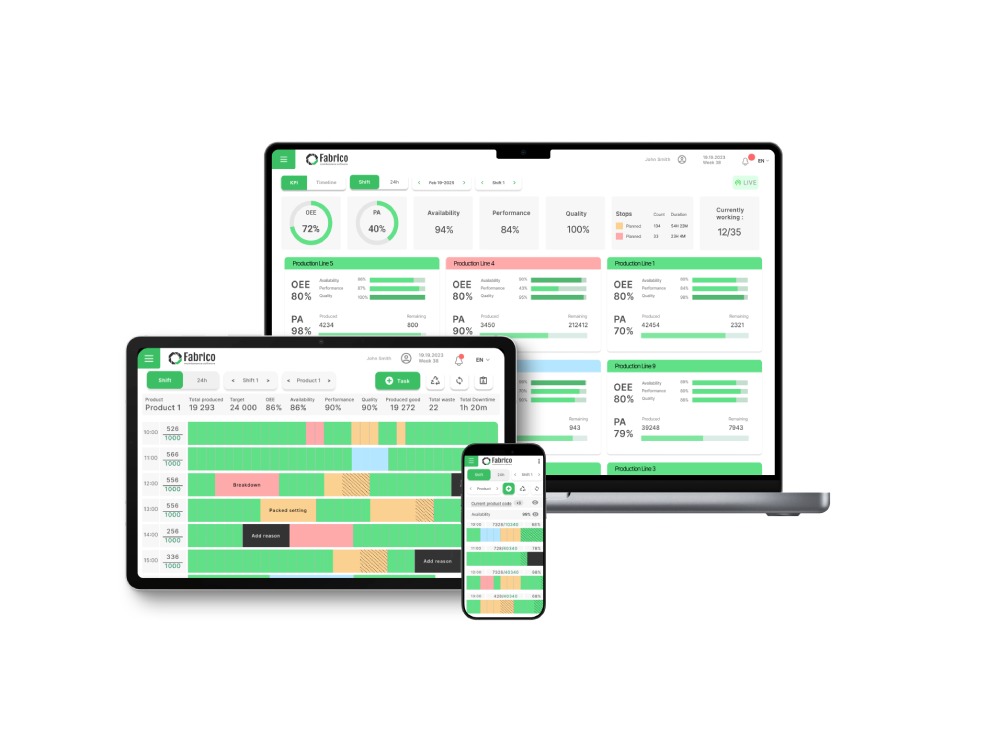
Fabrico takes a unique approach: Quality is an outcome of Machine Health. If the machine is running perfectly (OEE Performance), the quality is usually good. If the machine is jamming or stuttering, quality drops.
Why It Wins on Prevention:
-
Computer Vision (The "Eyes"): Fabrico’s cameras watch the line 24/7. They can detect a "misaligned bottle" or a "short fill" instantly—often faster than a human operator.
-
OEE Correlation: Fabrico links Quality Loss directly to Machine Stops. If Line 1 stopped 5 times for "Jams," Fabrico flags that batch as "High Risk" for defects.
-
Condition-Based Maintenance: Often, defects are caused by worn parts (e.g., a loose belt). Fabrico tracks the wear and triggers a PM before the belt causes a quality issue.
Best For: High-speed production (Food, Packaging, Consumer Goods) where process stability = product quality.
2. Braincube: The "Digital Twin" Scientist
Verdict: A powerful IIoT platform for continuous process manufacturers (Paper, Steel, Chemicals).
Braincube builds a "Digital Twin" of your production process. It analyzes historical data to find the "Golden Batch" settings—the exact temperature, speed, and pressure that produced your best quality ever.
Pros:
-
Deep Analysis: It can crunch millions of data points to find hidden correlations (e.g., "Humidity affects quality, but only when running Speed B").
-
Set Point Management: It recommends the exact machine settings to operators to maintain quality.
Cons:
-
Complexity: It is a data science tool. It requires significant engineering time to model the process.
-
Not a Workflow Tool: It tells you what to change, but it doesn't manage the Work Order to fix the machine if it breaks.
Best For: Complex process industries with thousands of variables.
3. InfinityQS (Enact): The SPC Standard
Verdict: The modern cloud version of the classic Statistical Process Control (SPC) chart.
InfinityQS focuses on the math. It digitizes the operator's caliper measurements and instantly plots them on a Control Chart. If three points trend upward (even if still within limits), it triggers an alarm.
Pros:
-
Statistical Rigor: It is the gold standard for proving process capability (Cpk/Ppk) to customers.
-
Cloud Native: Accessible from anywhere, unlike old Excel-based SPC tools.
Cons:
-
Reactive Input: It usually relies on an operator measuring a part after it is made. It is faster than paper, but still reactive compared to sensor-based prediction.
-
Siloed: It doesn't know why the process drifted (e.g., was it a machine failure?).
Best For: Precision machining and parts manufacturing.
4. Plex QMS (Rockwell): The Compliance Guardian
Verdict: The best for industries where "Traceability" is the law (Auto, Aero, Med Device).
Plex QMS is integrated into the Plex ERP. Its strength is Containment. If a defect is found, Plex instantly locks that inventory serial number so it cannot be shipped.
Pros:
-
Traceability: You can trace a defect back to the specific operator, machine, and raw material batch.
-
Control Plans: Forces operators to complete specific checks before the machine will run.
Cons:
-
Heavy Implementation: It is a massive enterprise system.
-
Inspection Focused: It is designed to manage inspections, not necessarily to predict failures using machine sensor data.
Best For: Tier 1 Automotive and highly regulated industries.
5. Sight Machine: The Enterprise Data Lake
Verdict: A big data platform for Global 2000 companies trying to compare quality across 50+ factories.
Sight Machine sucks in data from every machine, ERP, and SQL database in your company to create a unified data model.
Pros:
Cons:
-
Cost & Time: Very expensive and takes months to normalize data across different legacy systems.
-
Disconnect from Action: It gives high-level insights to executives, but doesn't put a tool in the hands of the technician to fix the belt that is causing the defects.
Best For: Global enterprises with massive data teams.
Conclusion: Don't Just Measure It—Fix It.
Predictive Quality is the intersection of Data and Action.
-
If you need to analyze Chemical Processes, buy Braincube.
-
If you need Statistical Charts, buy InfinityQS.
-
If you want to use Computer Vision and Machine Health to stop defects at the source, Fabrico is the unified solution.


 Login
Login
 Blog
Blog