In the world of maintenance KPIs, MTTR (Mean Time To Repair) measures how fast you run, but MTBF (Mean Time Between Failures) measures how far you can go.
If your team is constantly "firefighting"—fixing the same conveyor belt every Tuesday and Thursday, your MTBF is low. This is the most expensive way to run a factory. It burns out technicians, consumes spare parts, and destroys production capacity.
To increase MTBF, you cannot just "try harder." You need software that helps you transition from Reactive Repair to Reliability Engineering. You need tools that reveal why things are breaking so you can stop them from breaking again.
Here are the 5 best software tools to help you increase MTBF in 2026.
Why You Can't "Prevent" Your Way to High MTBF
Many managers think the answer to low MTBF is "More Preventive Maintenance (PM)." They are wrong.
Doing more PMs can actually hurt MTBF (by introducing "maintenance-induced failures"). The real secret to high MTBF is Root Cause Elimination.
-
Low MTBF: The machine jams. Tech clears the jam. (Repeats 10 times).
-
High MTBF: The machine jams. Tech watches a video replay, sees the guide rail is loose, and tightens the rail. (Repeats 0 times).
You need software that gives you the Context (Video, Data, History) to make that second scenario happen.
Top 5 Software Tools to Increase MTBF (Ranked)
1. Fabrico
Best For: Root Cause Elimination via Video & OEE.
The "Visual Reliability" Advantage:
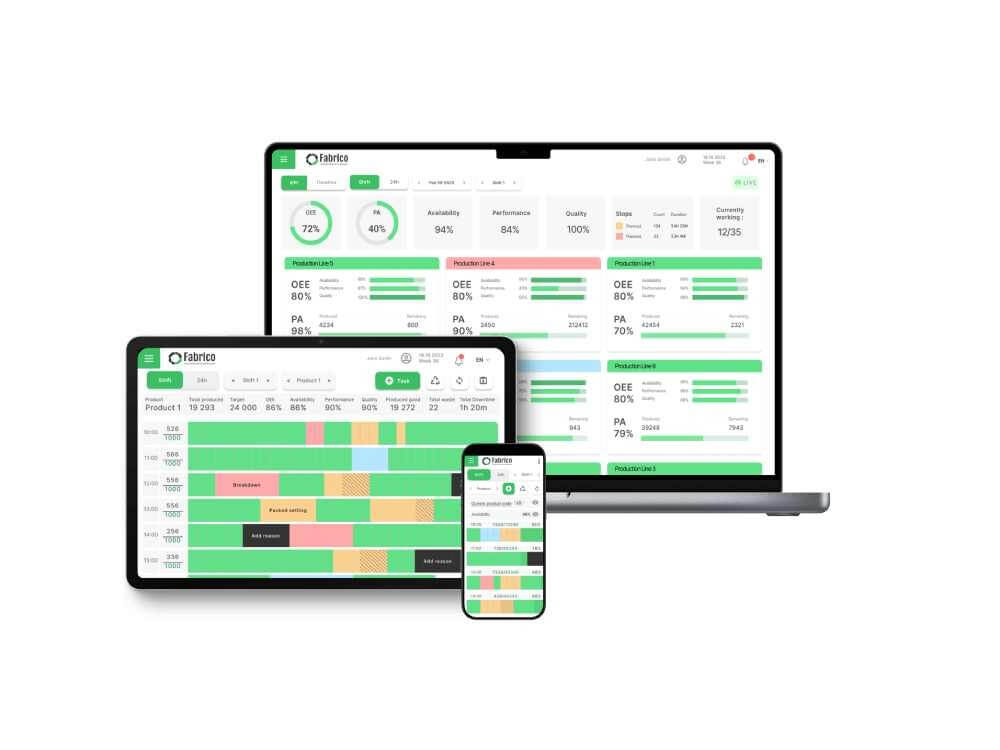
Fabrico is the most effective tool for increasing MTBF because it attacks the source of the problem: Diagnostic Uncertainty.
Most recurring failures happen because the technician guessed the root cause and was wrong. Fabrico uses Unified Data Intelligence to give the technician the truth.
-
Inefficiencies Zoom-In: When the machine fails, Fabrico captures a video clip of the event. The technician watches the replay. They can see that the jam wasn't caused by the sensor, but by the operator feeding the material too fast.
-
The Fix: The technician updates the SOP or trains the operator.
-
The Result: The failure mode is eliminated permanently. MTBF skyrockets.
Key Reliability Features:
-
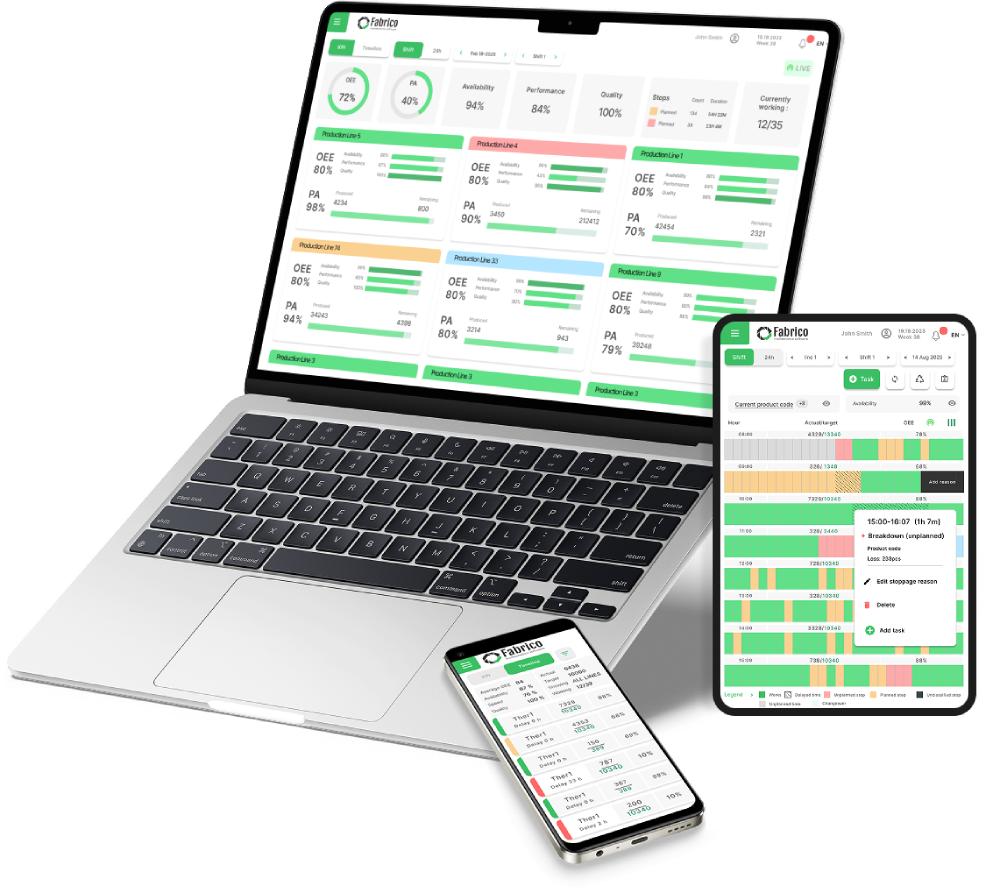
Video Root Cause Analysis: Indisputable evidence of failure causes.
-
Asset History Log: Instant access to every previous repair, helping techs spot patterns ("We've replaced this belt 3 times this month... check the tensioner").
-
Condition-Based Triggers: Fixes assets based on OEE performance drops before they fail hard.
Pros:
-
Eliminates "No Fault Found" and "Band-Aid" repairs.
-
Connects Operator behavior to Asset Reliability.
-
Highest impact on "Process-Related" failures.
Cons:
2. Fiix (Rockwell Automation)
Best For: Reliability Engineering Data (Failure Codes).
Overview:
Fiix is a favorite among Reliability Engineers who love data. Its strength lies in its rigid Failure Coding system. When a technician closes a Work Order, Fiix forces them to select:
-
Problem Code: (e.g., "Overheating")
-
Cause Code: (e.g., "Lack of Lubrication")
-
Remedy Code: (e.g., "Greased Bearing")
This structured data allows engineers to run "Pareto Analysis" and identify the top 5 reasons for failure across the plant, targeting their efforts where they matter most.
Key Reliability Features:
-
Nested Failure Codes: Structured hierarchy for precise data.
-
MTBF Reporting: Automated dashboards showing MTBF trends per asset.
-
Rockwell Integration: Pulls machine runtime to calculate MTBF accurately.
Pros:
Cons:
3. Tractian
Best For: Predictive Asset Health (Motors/Pumps).
Overview:
Tractian increases MTBF by cheating the system: it catches the failure before it technically counts as a "Functional Failure."
By placing vibration sensors on motors and pumps, Tractian monitors the asset's health curve. When it detects early bearing wear (Stage 1 Failure), it alerts you. You replace the bearing during a planned window. Because the machine never "broke" during production, your operational MTBF improves.
Key Reliability Features:
-
Vibration Signatures: Detects misalignment, unbalance, and looseness.
-
Asset Health Score: Simple 0-100% score for every motor.
-
Spectral Analysis: Deep dive for vibration analysts.
Pros:
Cons:
4. Limble CMMS
Best For: PM Consistency.
Overview:
Sometimes, low MTBF is simple: we aren't doing the basics. Limble CMMS excels at making Preventive Maintenance easy and consistent. By ensuring that lubrication, cleaning, and inspection tasks are actually done on time, it raises the baseline reliability of the entire plant.
Key Reliability Features:
-
PM Dashboards: Shows exactly which assets are overdue.
-
Task Instruction: Clear pictures show techs where to grease.
-
Auto-Scheduling: If a PM is missed, it doesn't disappear; it stays in the queue.
Pros:
Cons:
5. UpKeep
Best For: Asset Lifecycle Tracking.
Overview:
UpKeep is great for the financial side of reliability. It tracks the "Total Cost of Ownership" for every asset. If a specific forklift has an MTBF of 20 hours and is costing $5,000/month in repairs, UpKeep visualizes this clearly, helping managers make the "Repair vs. Replace" decision. Replacing a "Lemon" asset is often the fastest way to boost plant-wide MTBF.
Key Reliability Features:
-
Depreciation Tracking: Monitors asset value over time.
-
Cost vs. Budget: Real-time visibility into maintenance spend.
-
Downtime Logs: Simple manual logging of downtime events.
Pros:
Cons:
Comparison Matrix: Reliability Features
| Feature |
Fabrico |
Fiix |
Tractian |
Limble CMMS |
UpKeep |
| Primary MTBF Driver |
Video Root Cause Analysis |
Failure Code Data |
Predictive Sensors |
PM Execution |
Asset Replacement |
| Visual Diagnosis |
Yes (Zoom-In) |
No |
No |
No |
No |
| Failure Coding |
Good |
Best-in-Class |
N/A |
Good |
Basic |
| Predictive Alerts |
Yes (OEE/PLC) |
Yes (Add-on) |
Best-in-Class |
No |
No |
| Best For |
Complex Manufacturing |
Reliability Engineers |
Motors & Pumps |
Small Teams |
Facilities |
The "5 Whys" in Digital Form
To truly increase MTBF, you must adopt a "Find the Root Cause" culture. Use your software to enforce it.
If an asset fails 3 times in one week, use Fabrico to:
-
Watch the Video: See what actually happened.
-
Check the History: See what the last tech did.
-
Update the CIL: Add a new check for operators to catch the issue early.
Software that connects Production Reality (Video/OEE) with Maintenance Action (Work Orders) is the only way to break the cycle of recurring failures.
Stop fixing the same machine twice. Increase your MTBF with a Fabrico Demo.


 Login
Login
 Blog
Blog