Your machine operators are likely adjusting your factory into a state of total chaos.
In high-speed manufacturing environments, components naturally wear down over time, causing minor variations in product quality or cycle speed.
Instead of reporting these minor degradations to the maintenance department, experienced machine operators simply turn a pneumatic dial, increase a temperature setting, or bypass a sensor to keep the line moving.
This dangerous habit of "knob-twiddling" completely destroys the machine's engineered centerline.
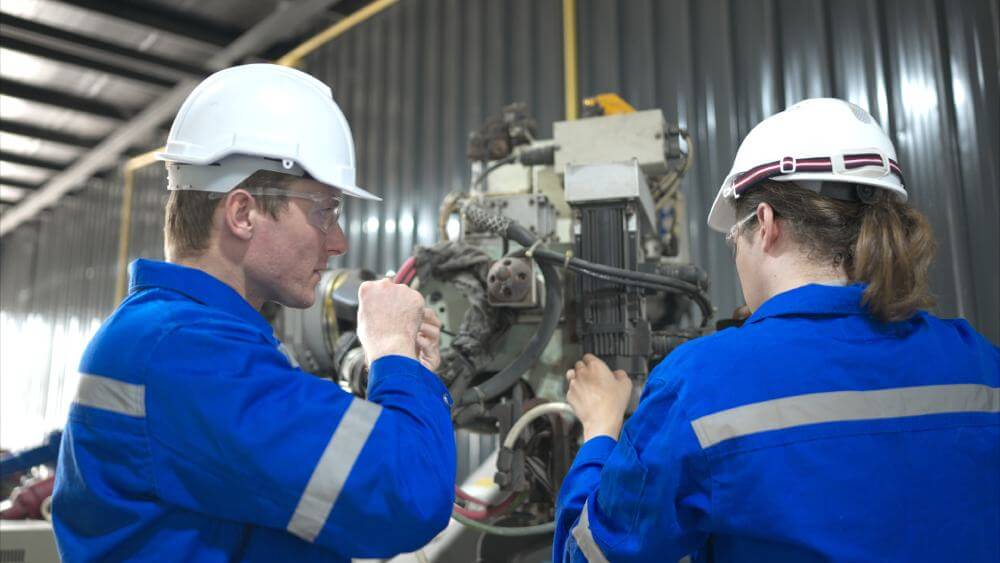
When the asset finally suffers a catastrophic crash three days later, the responding maintenance technician walks into a completely altered mechanical environment, turning a simple repair into a massive, multi-hour diagnostic nightmare.
To permanently stabilize your Overall Equipment Effectiveness (OEE) and protect your product quality, you must deploy an execution architecture that strictly enforces your engineering baselines.
What is CMMS software for centerlining and process stability in manufacturing?
CMMS software for centerlining and process stability in manufacturing is a digital governance platform that locks down equipment parameters and triggers immediate maintenance when a machine deviates from its optimal state.
Instead of relying on tribal knowledge or paper checklists, the software integrates directly with machine PLCs to continuously monitor cycle times, speeds, and error codes against the engineered "Run-to-Target" baseline.
If a machine begins to drift, the system instantly dispatches a condition-directed work order to a technician to fix the underlying mechanical friction, completely removing the operator's need to manually tweak the machine.
The "Knob-Twiddling" Liability
Legacy Enterprise Asset Management (EAM) systems like SAP PM and standalone quality databases are completely blind to operator behavior.
These massive financial platforms assume that once a machine is set up, it runs perfectly until a catastrophic component failure occurs.
Because legacy software makes it incredibly difficult for an operator to submit a formal work request for a minor speed loss, the operator is forced to take matters into their own hands.
They subtly change the machine's operating parameters to compensate for a slipping drive belt or a dull cutting blade.
This creates a massive "Process Instability" liability across your entire facility.
Because the operator hid the mechanical degradation with a parameter tweak, the maintenance department has absolutely no idea that the drive belt is failing.
When the belt eventually snaps during a critical production run, the technician replaces the belt, but forgets to reset the operator's secret parameter tweaks, guaranteeing that the machine will instantly crash again upon startup.
If your software cannot physically see when a machine drifts from its centerline, your factory will remain permanently trapped in a cycle of undocumented, self-inflicted breakdowns.
The Fabrico Framework: Enforcing the Baseline
To achieve world-class operational resilience, your engineering baselines must be rigorously defended against well-meaning but destructive human interventions.
We call this The Fabrico Framework, built on the absolute necessity of merging live OEE diagnostics with a Field-Ready CMMS.
Fabrico acts as the ultimate digital referee between your production operators and your maintenance mechanics.
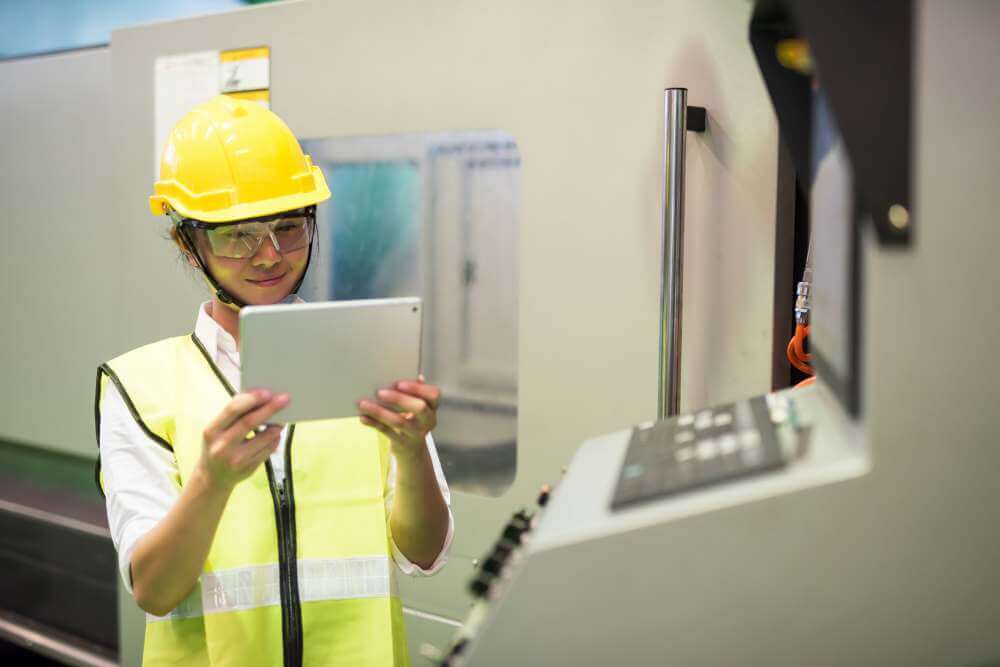
At the start of every shift, operators are required to perform a Digital CIL (Clean, Inspect, Lubricate) and Centerline checklist on their mobile devices.
Fabrico forces the operator to physically verify and digitally sign off that every single dial, gauge, and input screen matches the exact engineered baseline for that specific product SKU.
If an operator notices that the machine requires a non-standard adjustment just to run correctly, they are not allowed to simply tweak it and walk away.
They flag the deviation in the Fabrico app, which instantly bypasses the operator and pushes a prioritized, condition-directed work order to the maintenance department to fix the actual mechanical root cause.
Visual Baseline Verification via Computer Vision
When a machine drifts from its centerline and begins producing scrap, engineers must know exactly what physical motion caused the deviation.
Fabrico completely eradicates diagnostic guesswork using our proprietary Inefficiencies Zoom-In module.
By positioning industrial computer vision cameras above your critical, high-speed automated cells, Fabrico continuously buffers video footage tied directly to your live production timeline.
If a packaging machine suddenly drops below its engineered cycle time, the dispatched technician does not have to interrogate the operator to find out what happened.
They simply press play on their smartphone to watch a high-definition video replay of the exact mechanical stutter or material jam that forced the machine off its centerline.
This indisputable visual evidence ensures that the technician executes a permanent physical repair, returning the machine to its absolute optimal state without relying on temporary parameter tweaks.
The AI Roadmap: Autonomous Centerlining
Fabrico currently provides the most rigorous, baseline-enforced execution platform available to modern manufacturers.
However, we are actively engineering the next tier of intelligent industrial stability.
Currently on our product roadmap is the Fabrico Agent, a proprietary AI-driven optimization engine.
Once deployed, this AI Agent will autonomously analyze your live PLC telemetry against your computer vision footage, mathematically detecting microscopic deviations from the centerline before they impact product quality.
Additionally, our upcoming Fabrico Assistant (also on the roadmap) will serve as a generative AI copilot, allowing operators to instantly ask, "What is the exact engineered centerlining parameter for the primary extruder on this specific custom product run?"
By standardizing your operational baselines inside Fabrico today, you are building the exact, unalterable master dataset required to power these autonomous AI capabilities tomorrow.
Legacy Spreadsheets vs. Centerline-Optimized CMMS
| Feature / Capability |
Legacy CMMS & Paper Logs |
Fabrico (Centerline-Optimized CMMS) |
| Process Stability |
Destroyed by undocumented operator tweaks. |
Defended by strict Digital Centerline Checklists. |
| Maintenance Triggers |
Waits for the machine to completely break. |
Triggers instantly when OEE deviates from the baseline. |
| Diagnostic Context |
"Machine jammed, operator adjusted settings." |
Video replays of the mechanical drift via Computer Vision. |
| Shift Handovers |
Incoming shift inherits secretly altered machines. |
Digital log ensures baselines are reset every shift. |
| Future AI Readiness |
Altered baselines poison machine learning models. |
Clean, standardized execution data ready for AI Roadmap. |
Stop Treating the Symptoms
You cannot build a highly profitable, continuous-flow manufacturing enterprise if your operators are constantly masking mechanical failures with temporary adjustments.
Your profitability depends entirely on your ability to run every single machine at its absolute, engineered optimal state.
By deploying a unified System of Action, you eliminate the administrative friction that forces operators to go rogue.
Standardize your centerlining workflows today, and permanently restore the mechanical truth to your factory floor.


 Login
Login
 Blog
Blog