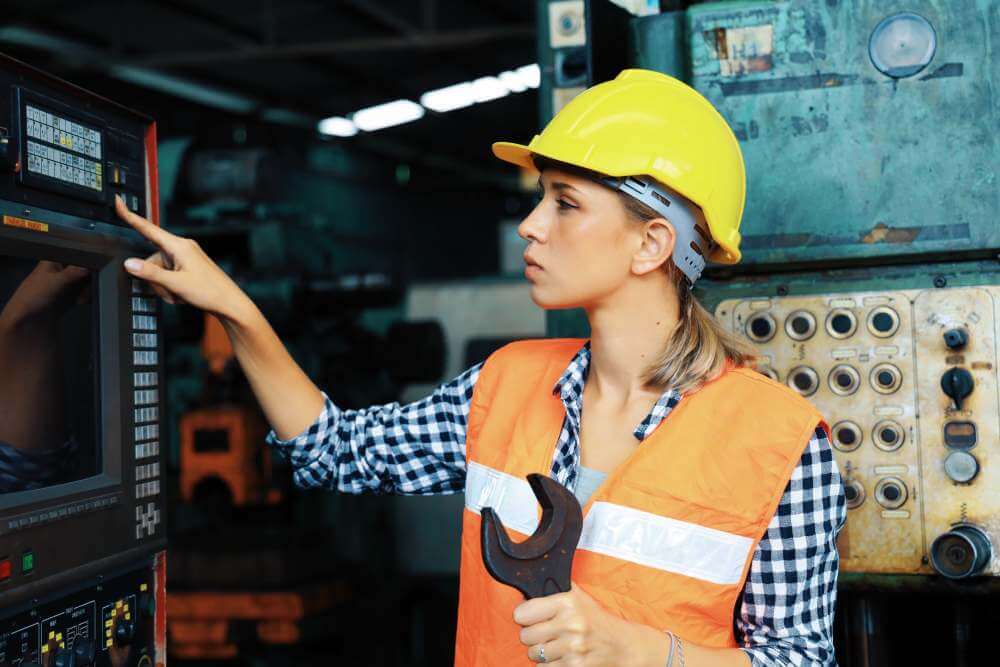
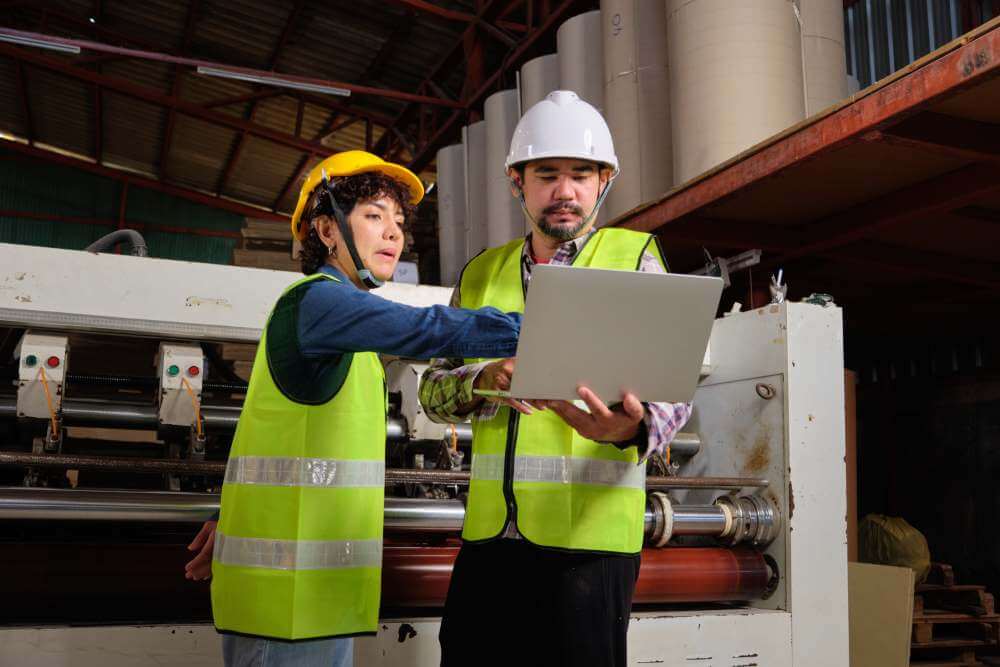
Your maintenance technicians are likely spending more time reading than wrenching.
When a highly complex, automated packaging line throws an obscure fault code, the mechanic cannot simply guess the repair sequence.
They must reference the Original Equipment Manufacturer (OEM) manual to identify the specific torque settings, wiring schematics, and calibration tolerances.
In most factories, this 500-page paper manual is buried in a filing cabinet, locked in a manager's office, or completely lost.
The time your technician spends walking the shop floor searching for this document is pure administrative latency that actively destroys your Overall Equipment Effectiveness (OEE).
To permanently protect your profit margins and maximize Wrench Time, you must place the entire engineering library directly into the pocket of your frontline workers.
What is CMMS software with digital machine manuals in manufacturing?
CMMS software with digital machine manuals in manufacturing is a mobile execution platform that centralizes all OEM documentation, schematics, and troubleshooting guides into a cloud-based digital repository.
Instead of hunting for paper binders, a technician simply uses their smartphone or rugged tablet to scan a QR code affixed to the broken machine.
The software instantly validates the asset and unlocks the exact, version-controlled technical manuals required for that specific equipment, allowing the mechanic to diagnose and execute the repair immediately.
The "Filing Cabinet" Liability
Legacy Enterprise Asset Management (EAM) systems like SAP PM were designed to manage financial depreciation, not to store heavy technical documents for shop-floor access.
Because legacy software is clunky and desktop-oriented, maintenance teams are forced to rely on physical paper binders stored near the machines or in the maintenance crib.
Paper manuals are a massive operational liability; they become covered in grease, pages are ripped out, and they are never updated when the OEM releases a critical safety revision.
When a junior technician references an outdated paper schematic, they risk executing a repair that violates engineering standards, potentially causing a catastrophic secondary crash.
Furthermore, searching through a massive paper index for a specific error code takes twenty minutes.
At a downtime cost of $125,000 per hour, forcing your technicians to act as librarians is a severe fiduciary failure that permanently inflates your MTTR.
The Fabrico Framework: Knowledge at the Point of Repair
To achieve world-class operational resilience, your technical knowledge must be as agile as your production schedule.
We call this The Fabrico Framework, built on the absolute necessity of a Field-Ready CMMS that operates as a unified System of Action.
Fabrico entirely eliminates the physical filing cabinet by digitizing your entire technical library and linking it directly to your ISO 14224-compliant asset hierarchy.
When your OEE tracking system detects a speed loss or PLC fault, Fabrico instantly dispatches a digital work order to the technician's mobile device.
The technician does not walk to the office; they walk directly to the machine, scan the QR code, and instantly pull up the digital manual on their screen.
Because the documents are hosted in the cloud, management can push OEM revisions globally with a single click, ensuring every technician is working from the absolute latest engineering truth.
Augmenting Manuals with Visual Evidence
Reading a manual is only effective if you actually know what physical component is broken.
Fabrico bridges the gap between text-based troubleshooting and physical reality using our proprietary Inefficiencies Zoom-In module.
By positioning industrial computer vision cameras above your critical assets, Fabrico captures time-stamped video footage of the exact moment the machine faults.
The technician can watch the video replay of the mechanical crash on their mobile device, and instantly cross-reference that visual evidence with the digital schematic.
This combination of indisputable visual proof and instant documentation completely eliminates the trial-and-error diagnostic phase.
The AI Roadmap: Conversing With Your Equipment
Fabrico currently provides the fastest, most organized digital documentation delivery system available on the shop floor today.
However, we are actively engineering the next tier of intelligent industrial knowledge management.
Currently on our product roadmap is the Fabrico Assistant, a generative AI troubleshooting copilot designed specifically for the frontline worker.
Once deployed, this AI Assistant will autonomously digest thousands of pages of your uploaded OEM manuals and historical work orders.
Instead of scrolling through a 500-page PDF, a technician will simply type or speak into the Fabrico app, asking, "What is the reset sequence for Error Code 404 on this servo?"
The Fabrico Assistant will instantly read the manual and return the exact, step-by-step paragraph, bypassing the search process entirely.
By digitizing your machine manuals inside Fabrico today, you are building the exact, structured master dataset required to train these autonomous AI capabilities tomorrow.
Paper Binders vs. Digital CMMS Manuals
| Feature / Capability |
Legacy Paper Binders |
Fabrico (Digital Manuals CMMS) |
| Accessibility |
Locked in offices; forces technicians to walk. |
Instant access via mobile QR code scan at the asset. |
| Version Control |
Outdated, dangerous, and physically degrading. |
Cloud-synced, guaranteeing the latest OEM revisions. |
| Searchability |
Requires manually skimming hundreds of pages. |
Instantly searchable via digital text indexing. |
| Diagnostic Context |
Disconnected from the physical breakdown. |
Paired with Computer Vision video replays of the fault. |
| Future AI Readiness |
Paper is completely invisible to machine learning. |
Digitized text serves as the training data for AI Roadmap. |
Stop Searching and Start Wrenching
You cannot solve the manufacturing skills gap if your junior technicians are barred from accessing the knowledge they need to do their jobs.
Your factory's profitability depends entirely on keeping tools in hands and minimizing administrative friction.
By deploying a unified System of Action, you ensure that every mechanic carries the collective engineering intelligence of the entire enterprise in their pocket.
Standardize your digital machine manuals today, and permanently close the information gap on your shop floor.


 Login
Login
 Blog
Blog