Your most expensive breakdowns are the ones that never actually stop the machine.
When manufacturing executives review their Overall Equipment Effectiveness (OEE) scores, they easily spot the massive, hour-long downtime events.
However, they completely overlook the "Performance" metric, ignoring the fact that a critical packaging line ran for an entire eight-hour shift at only 75% of its engineered speed.
This silent capacity killer bleeds your profit margins dry, forcing you to pay for excessive overtime labor just to hit your standard daily production quotas.
To permanently reclaim this hidden factory, you must stop treating maintenance solely as a response to broken equipment, and start treating it as a response to slow equipment.
What is CMMS software to eliminate machine speed losses in manufacturing?
CMMS software to eliminate machine speed losses in manufacturing is a performance-driven execution platform that triggers digital work orders based on cycle time degradation rather than catastrophic failure.
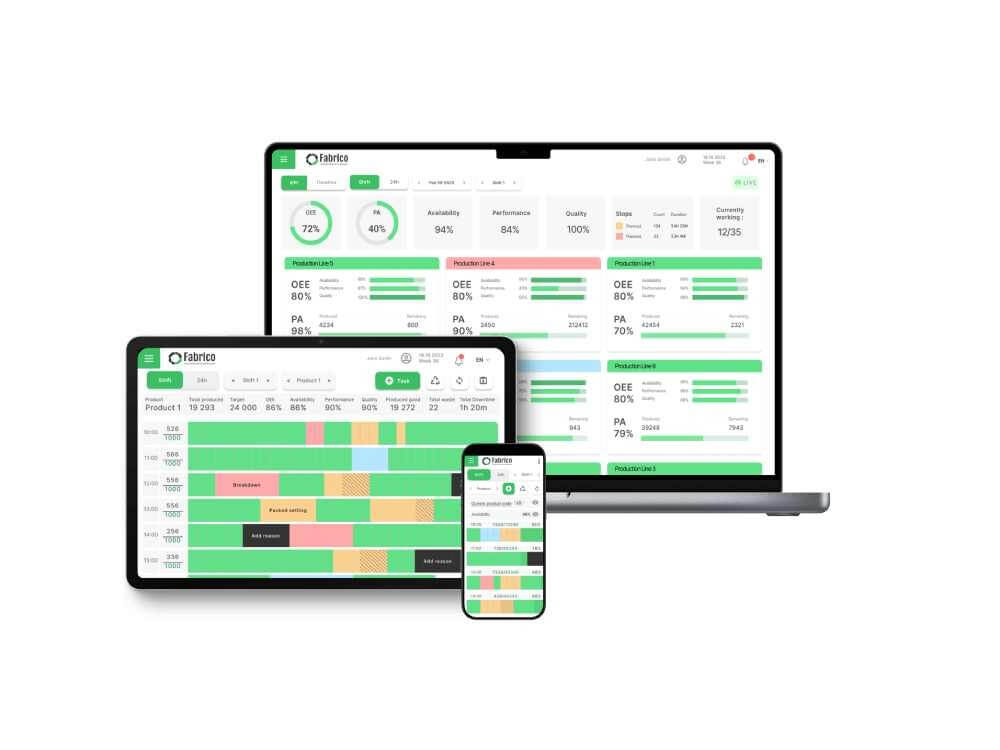
By natively integrating with machine Programmable Logic Controllers (PLCs), the software continuously tracks the exact duration of every mechanical cycle against the engineered target (Takt time).
If the machine consistently operates below this target speed, the system automatically classifies it as a performance loss and instantly dispatches a mechanic to recalibrate, lubricate, or repair the degrading asset.
The "Silent Capacity" Liability
Legacy Enterprise Asset Management (EAM) systems like SAP PM and IBM Maximo are fundamentally built on a "Break-Fix" methodology.
In these disconnected systems, a maintenance work order is only generated when a machine operator manually types a fault report into a desktop computer.
Because production operators are heavily incentivized to keep the line moving, they will almost never submit a maintenance ticket if the machine is still technically producing parts.
If a worn drive belt causes the machine to slip and lose two seconds per cycle, the operator will simply adapt to the slower rhythm.
By the end of the month, those lost two seconds have compounded into tens of thousands of unproduced units.
Because the machine never registered a hard stop, the maintenance manager is completely blind to the mechanical degradation.
If your software relies on humans to tell you when a machine is underperforming, your continuous improvement program is entirely paralyzed by this silent capacity liability.
The Fabrico Framework: Performance-Driven Execution
To achieve world-class operational resilience, your mechanics must be dispatched the exact moment your yield begins to erode.
We call this The Fabrico Framework, built on the absolute necessity of merging high-resolution OEE cycle counting directly with a Field-Ready CMMS.
Fabrico acts as the central nervous system of your factory, shifting your maintenance culture from reactive firefighting to proactive centerlining.
By connecting directly to your existing automation layer via PLCs or IoT gateways, Fabrico measures the unvarnished mechanical truth of every single machine stroke.
When the software detects a statistically significant speed loss trend, it completely bypasses the production operator.
Fabrico instantly pushes a prioritized, condition-directed work order to the assigned technician's mobile device, equipping them with the digital Standard Operating Procedure (SOP) required to restore the machine to its optimal baseline speed.
Diagnosing Speed via Computer Vision
The most difficult aspect of fixing a speed loss is determining if the delay is mechanical, material, or human-driven.
Fabrico completely eliminates this diagnostic guesswork using our proprietary Inefficiencies Zoom-In module.
By positioning industrial computer vision cameras above your critical assets, Fabrico captures time-stamped video footage synchronized perfectly with your OEE cycle data.
When the technician receives the mobile work order for the speed loss, they simply press play and watch the slow cycles occur in high definition.
This indisputable visual evidence allows the technician to instantly see if the slowdown is caused by a slipping mechanical gear, a recurring material misalignment, or an operator fumbling the manual loading sequence.
The AI Roadmap: Autonomous Centerlining
Fabrico currently provides the most rigorous, performance-integrated execution platform available to modern manufacturers.
However, we are actively engineering the next tier of intelligent industrial optimization.
Currently on our product roadmap is the Fabrico Agent, a proprietary AI-driven optimization engine.
Once deployed, this AI Agent will autonomously analyze millions of historical cycle times against your MRO parts consumption, mathematically predicting exactly which sub-component is causing the speed loss before it actually happens.
Additionally, our upcoming Fabrico Assistant (also on the roadmap) will serve as a generative AI copilot, allowing reliability engineers to instantly ask, "What is the historical optimal centerlining parameter for this specific extrusion die to maintain 100% cycle speed?"
By unifying your cycle data and maintenance workflows inside Fabrico today, you are building the exact master dataset required to power these autonomous AI capabilities tomorrow.
Break-Fix CMMS vs. Performance-Driven CMMS
| Feature / Capability |
Legacy CMMS (Break-Fix) |
Fabrico (Performance-Driven) |
| Maintenance Triggers |
Only triggers when the machine completely stops. |
Triggers when cycle times drop below target limits. |
| Data Collection |
Relies on manual operator work requests. |
Automated instantly via live PLC integrations. |
| Loss Visibility |
Completely blind to the "Performance" OEE metric. |
Natively tracks and resolves Six Big Losses speed drops. |
| Diagnostic Evidence |
"Machine running slow" text descriptions. |
Video replays of the exact slow cycle via Computer Vision. |
| Future AI Readiness |
Missing all cycle degradation data. |
Clean, structured cycle-time histories ready for AI. |
Stop Settling for "Good Enough"
You cannot maximize your enterprise valuation if you accept a factory that runs at 80% of its engineered capability.
Your profitability depends on squeezing every available second of capacity out of your multi-million-dollar capital investments.
By deploying a unified System of Action, you eradicate the silent mechanical degradations that operators ignore and legacy software misses.
Standardize your performance-driven maintenance today, and permanently reclaim the lost revenue hiding in your cycle times.


 Login
Login
 Blog
Blog