Your maintenance department is likely burying your profitability under a mountain of paper.
Despite investing millions of dollars in highly automated, high-speed production equipment, many manufacturing leaders still manage their reliability teams using a 1980s administrative infrastructure.
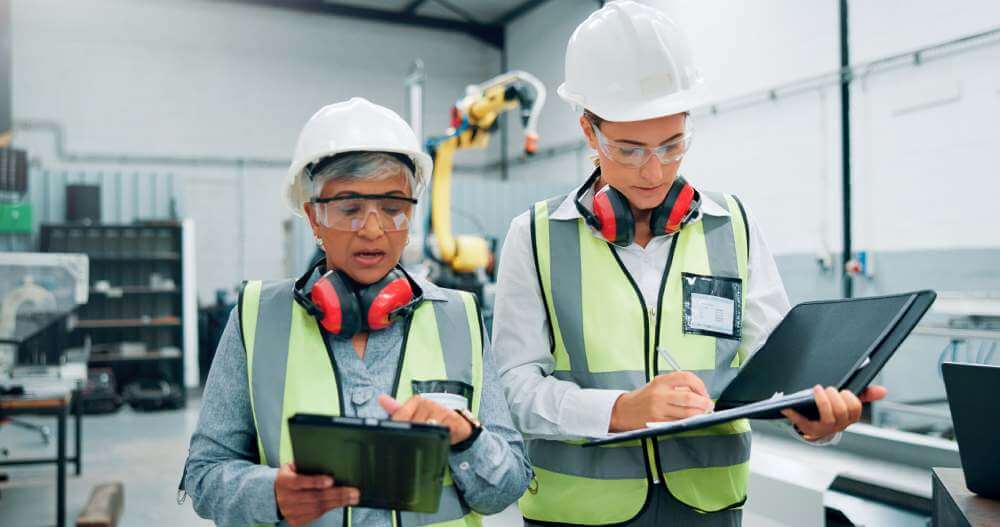
When a machine breaks, an operator scribbles a note on a clipboard, hands it to a supervisor, who then leaves it on a maintenance planner's desk.
By the time a mechanic actually reads the grease-stained paper ticket, the machine has been sitting idle for an hour, devastating your Overall Equipment Effectiveness (OEE).
To permanently eliminate this administrative latency and capture pristine engineering data, you must physically remove paper from your shop floor and deploy a unified digital execution engine.
What is CMMS software to eliminate paper work orders in manufacturing?
CMMS software to eliminate paper work orders in manufacturing is a cloud-based, mobile-first platform that digitizes the entire lifecycle of a maintenance task.
Instead of printing daily Preventive Maintenance (PM) schedules or relying on handwritten breakdown tickets, the software instantly pushes structured digital tasks directly to a technician's smartphone or rugged tablet.
By forcing data entry at the point of repair through QR code scanning, drop-down menus, and photo uploads, the system ensures that maintenance data is instantly logged, permanently searchable, and mathematically accurate.
The "Paper Black Hole" Liability
Legacy maintenance systems and traditional paper logs are the primary destroyers of industrial data integrity.
When a technician is handed a paper work order, the engineering data associated with that repair is instantly isolated from the rest of the factory.
Because management cannot see the status of a piece of paper in a technician's pocket, they have absolutely zero real-time visibility into the team's daily progress.
At the end of the shift, the exhausted technician sits down with a stack of twelve completed paper work orders and attempts to remember exactly how long each repair took.
Because human memory is flawed, the technician frequently guesses their labor hours and MRO spare parts usage, effectively "pencil whipping" the data just to go home on time.
When this fabricated data is eventually typed into a legacy spreadsheet by an administrative clerk days later, it becomes the flawed foundation for your enterprise's Total Cost of Ownership (TCO) calculations.
If your software requires humans to carry information across the factory floor on a piece of paper, your Mean Time To Repair (MTTR) will remain permanently inflated.
The Fabrico Framework: The Digital System of Action
To achieve world-class operational resilience, your execution data must move at the speed of your automated machinery.
We call this The Fabrico Framework, built on the absolute necessity of merging machine-validated OEE truth with a Field-Ready CMMS.
Fabrico acts as the central nervous system of your factory, instantly eradicating the paper clipboard by placing the entire engineering database into the pocket of your frontline worker.
When a condition-directed work order is generated, the technician receives a smart notification on their mobile device, completely bypassing the maintenance office.
The technician walks directly to the asset and scans its QR code, which immediately unlocks the digital work order, the asset's digital Bill of Materials (BOM), and the required safety Lockout/Tagout (LOTO) checklists.
Because the Fabrico app is fully offline-capable, this digital workflow functions flawlessly even deep inside concrete factory walls where Wi-Fi dead zones exist, entirely eliminating the excuse to use paper.
Replacing Handwritten Notes with Computer Vision
The most dangerous part of a paper work order is the vague, subjective text description written by the operator (e.g., "Machine jammed again").
Fabrico completely replaces this subjective storytelling using our proprietary Inefficiencies Zoom-In module.
By positioning industrial computer vision cameras above your critical assets, Fabrico continuously buffers video footage tied to your live production timeline.
When a machine crashes, the system automatically clips the exact video footage of the mechanical failure and attaches it directly to the digital work order.
The technician does not have to read a confusing handwritten note; they simply press play on their mobile device and watch the physical crash occur in high definition, allowing for a rapid, zero-error diagnosis.

OEE-Triggered Digital Workflows
Paper work orders rely entirely on humans noticing a problem and deciding to write it down.
Fabrico automates the creation of the digital work order by connecting directly to your machine PLCs and optical IoT sensors.
When an asset crosses a specific cycle-count threshold or drops below its engineered speed target, Fabrico automatically generates the work order and dispatches it to the mobile app.
This ensures that condition-directed maintenance is executed with mathematical precision, completely bypassing the flawed human filter.
The AI Roadmap: Autonomous Data Entry
Fabrico currently provides the most rigorous, paperless execution platform available to modern manufacturers.
However, we are actively engineering the next tier of intelligent industrial administration.
Currently on our product roadmap is the Fabrico Agent, a proprietary AI-driven optimization engine.
Once deployed, this AI Agent will autonomously analyze your digitized work order completion times, proactively identifying which specific technicians are executing repairs faster and suggesting their methods as the new global standard.
Additionally, our upcoming Fabrico Assistant (also on the roadmap) will serve as a generative AI copilot, allowing technicians to log their repair notes simply by speaking into their mobile device, allowing the AI to automatically transcribe and categorize the data into the machine's medical record.
By eliminating paper and digitizing your execution inside Fabrico today, you are building the exact, structured master dataset required to power these autonomous AI capabilities tomorrow.
Paper Work Orders vs. Mobile-Native CMMS
| Feature / Capability |
Paper Work Orders |
Fabrico (Mobile-Native CMMS) |
| Task Delivery |
Requires technicians to walk to an office. |
Instant smart notifications to mobile devices. |
| Data Integrity |
Highly prone to memory errors and pencil whipping. |
Flawless, time-stamped digital validation. |
| Diagnostic Context |
Vague handwritten notes. |
Video replays of mechanical faults via Computer Vision. |
| Real-Time Visibility |
Zero visibility until the paper is turned in. |
Live dashboard tracking of every open and active task. |
| Future AI Readiness |
Paper is entirely invisible to machine learning. |
Clean, structured digital data ready for AI Roadmap. |
Stop Managing by Clipboard
You cannot build an agile, continuous-flow manufacturing enterprise if your engineering data is trapped on a piece of paper in someone's pocket.
Your profitability depends entirely on the immediate, flawless transfer of information between your machines, your operators, and your mechanics.
By deploying a unified System of Action, you eradicate the administrative latency that artificially inflates your repair times and destroys your data.
Standardize your mobile execution workflows today, and permanently throw your paper clipboards in the trash.


 Login
Login
 Blog
Blog