Your most profitable machines are likely your biggest data liabilities.
In almost every manufacturing facility, there is a mix of brand-new, sensor-rich CNC machines sitting right next to 40-year-old stamping presses.
These legacy machines are fully depreciated workhorses that print money for the enterprise, but they are completely blind to the digital world.
Because they lack modern automation controls, plant managers assume it is impossible to track their Overall Equipment Effectiveness (OEE) or automate their maintenance schedules.
To protect your margins and extract the maximum remaining value from your aging fleet, you must deploy a software architecture that bridges the digital divide without requiring a massive hardware overhaul.
What is CMMS software for legacy manufacturing equipment?
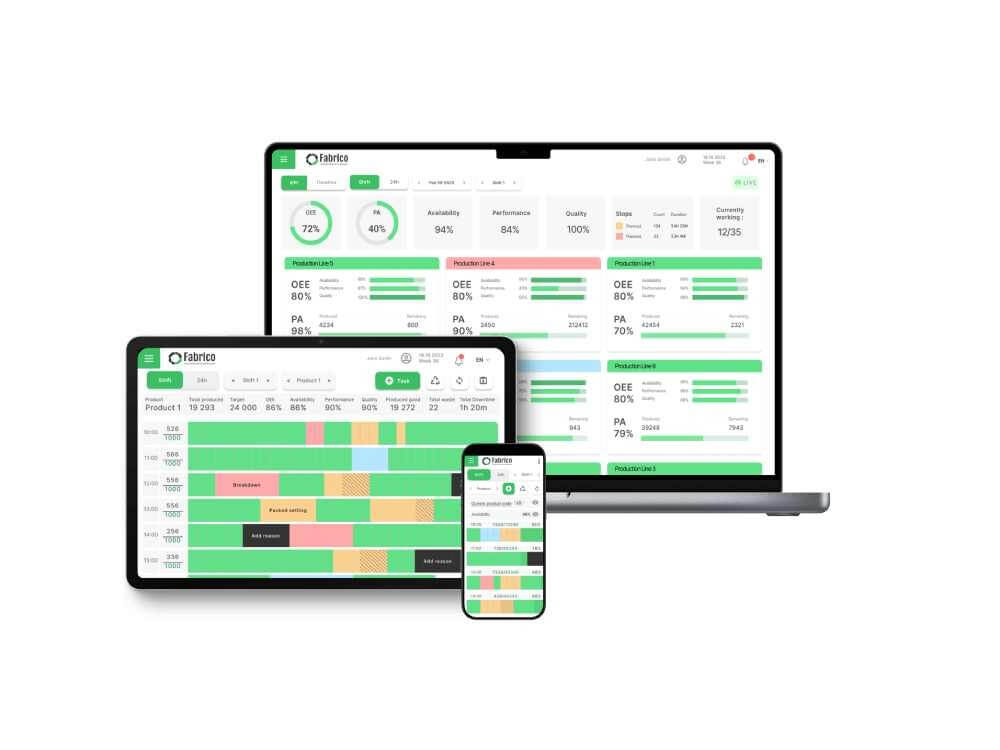
CMMS software for legacy manufacturing equipment is a digital maintenance platform designed to capture execution data from older, non-automated machinery through non-invasive retrofitting.
Instead of relying on a modern PLC connection, the software utilizes external IoT gateways, optical sensors, and industrial computer vision to monitor the physical movements of the vintage asset.
When these external sensors detect a speed loss, a micro-stop, or a completed cycle, the system instantly translates that physical reality into a digital work order, dispatching a technician before a catastrophic breakdown occurs.
The "Brownfield" Data Liability
Legacy Enterprise Asset Management (EAM) systems like SAP PM or IBM Maximo rely entirely on manual data entry to manage older equipment.
If a 30-year-old conveyor belt does not have a PLC to transmit its run hours, the EAM system assumes the machine is running perfectly until an operator walks to a computer and types in a failure report.
This creates a massive "Brownfield" liability, forcing your maintenance department to rely entirely on calendar-based Preventive Maintenance (PM).
Your technicians are dispatched to tear down these aging machines every 60 days, completely guessing whether the internal components actually need to be replaced.
This arbitrary tear-down process often introduces human error, creating "infant mortality" in machines that were previously running in a state of stable equilibrium.
If your software cannot physically monitor the usage of your legacy equipment, your reliability strategy is built entirely on dangerous assumptions.
The Fabrico Framework: Digitizing the "Dumb" Machine
To achieve world-class operational resilience, every machine on your shop floor must operate under a single standard of digital governance, regardless of its age.
We call this The Fabrico Framework, built on the absolute necessity of unifying OEE diagnostics with a Field-Ready CMMS.
Fabrico acts as the great equalizer across your factory floor, offering highly flexible connectivity options that completely bypass the need for a modern PLC.
For legacy equipment, our integration teams deploy non-invasive IoT gateways and simple optical sensors that count physical parts or detect mechanical strokes.
These sensors feed real-time cycle counts directly into the Fabrico platform, allowing you to instantly transition your oldest machines from calendar-based maintenance to highly precise, condition-directed maintenance.
Computer Vision: The Ultimate Retrofit
Some legacy machines involve complex, manual operator interactions that basic optical sensors cannot accurately capture.
Fabrico solves this challenge using our proprietary Inefficiencies Zoom-In module.
By positioning industrial computer vision cameras above your vintage equipment, the camera itself acts as the ultimate digital sensor.
The system continuously monitors the physical motion of the machine and the operator, automatically logging cycle times and detecting micro-stops without a single wire being connected to the machine's internal circuitry.
If the 40-year-old machine jams, the camera clips the time-stamped video footage and attaches it directly to the technician's mobile work order, providing instant visual root-cause analysis for equipment that was previously untrackable.
Equipping the Frontline for Aging Assets
Maintaining legacy equipment often relies heavily on the "tribal knowledge" of your most senior mechanics.
Fabrico extracts this knowledge by affixing digital QR codes directly to the physical steel of your vintage machines.
When a junior technician scans the code, they instantly unlock digitized OEM manuals, scanned schematics from the 1980s, and heavily detailed digital Standard Operating Procedures (SOPs).
This ensures that the specific quirks and safety requirements of your older machines are perfectly preserved and executed flawlessly by every generation of your workforce.
The AI Roadmap: Autonomous End-of-Life Prediction
Fabrico currently provides the most rigorous, retrofit-friendly execution platform available to modern manufacturers.
However, we are actively engineering the next tier of intelligent asset lifecycle management.
Currently on our product roadmap is the Fabrico Agent, a proprietary AI-driven optimization engine.
Once deployed, this AI Agent will autonomously analyze the escalating MRO parts consumption and downtime severity of your legacy equipment, automatically alerting the CFO when the machine has mathematically crossed from a profitable asset into a "Zombie Asset."
Additionally, our upcoming Fabrico Assistant (also on the roadmap) will serve as a generative AI copilot, allowing technicians to instantly ask complex troubleshooting questions based on the digitized historical logs of these vintage machines.
By retrofitting your brownfield assets into Fabrico today, you are building the exact master dataset required to power these autonomous AI capabilities tomorrow.
Manual Tracking vs. Retrofitted CMMS
| Feature / Capability |
Legacy CMMS (Manual Tracking) |
Fabrico (Retrofitted CMMS) |
| Data Collection |
Blind; relies entirely on human data entry. |
Automated via IoT optical sensors and Vision. |
| Maintenance Triggers |
Blind, calendar-based PM guessing. |
Condition-directed via exact physical cycle counts. |
| Root Cause Analysis |
Impossible without modern PLC fault codes. |
Video replays of mechanical failures via Computer Vision. |
| Tribal Knowledge |
Lost when senior mechanics retire. |
Preserved via QR-scannable digital SOPs and old manuals. |
| Future AI Readiness |
Paper logs on old machines prevent machine learning. |
Clean, digitized execution data ready for AI Roadmap. |
Stop Running Blind
You do not need to spend ten million dollars replacing your entire production line just to gain digital visibility.
Your vintage machines still hold immense financial value, provided you can accurately monitor their health and maintain them proactively.
By deploying a unified System of Action equipped with IoT and Computer Vision, you bring every asset in your factory into the modern era.
Standardize your legacy equipment tracking today, and eliminate the data black holes on your shop floor.


 Login
Login
 Blog
Blog