What is a Maintenance Shift Handover?
A maintenance shift handover is the critical transfer of operational data, open work orders, and asset status from an outgoing technician to an incoming technician.
In a world-class manufacturing facility, this process ensures total continuity of repair work without requiring the incoming shift to repeat diagnostic steps or search for missing spare parts.
When this process relies on analog communication, it creates a massive operational blind spot that severely delays the restoration of broken equipment.
The Financial Drain of the "Broken Telephone"
Most factories manage their shift handovers using dirty whiteboards, sticky notes, or hurried verbal conversations in the breakroom.
This analog approach guarantees that critical diagnostic context is lost the moment the first shift leaves the building.
If Shift A spends four hours tearing down a packaging line to identify a hydraulic leak, but fails to document their exact steps, Shift B starts their troubleshooting from zero.
The incoming technician will waste their first two hours re-diagnosing the same failure, tearing down the same components, and requesting the same MRO spare parts.
This duplicate labor artificially inflates your Maintenance Cost Per Unit and keeps your critical production lines offline for entirely preventable reasons.
You cannot maximize your facility's output if every shift change acts as a hard reset on your maintenance intelligence.
Eliminating Ambiguity with a Field-Ready CMMS
To eliminate the latency of shift changes, strategic leaders must transition to a digital system of action that maintains a continuous, live record of the shop floor.
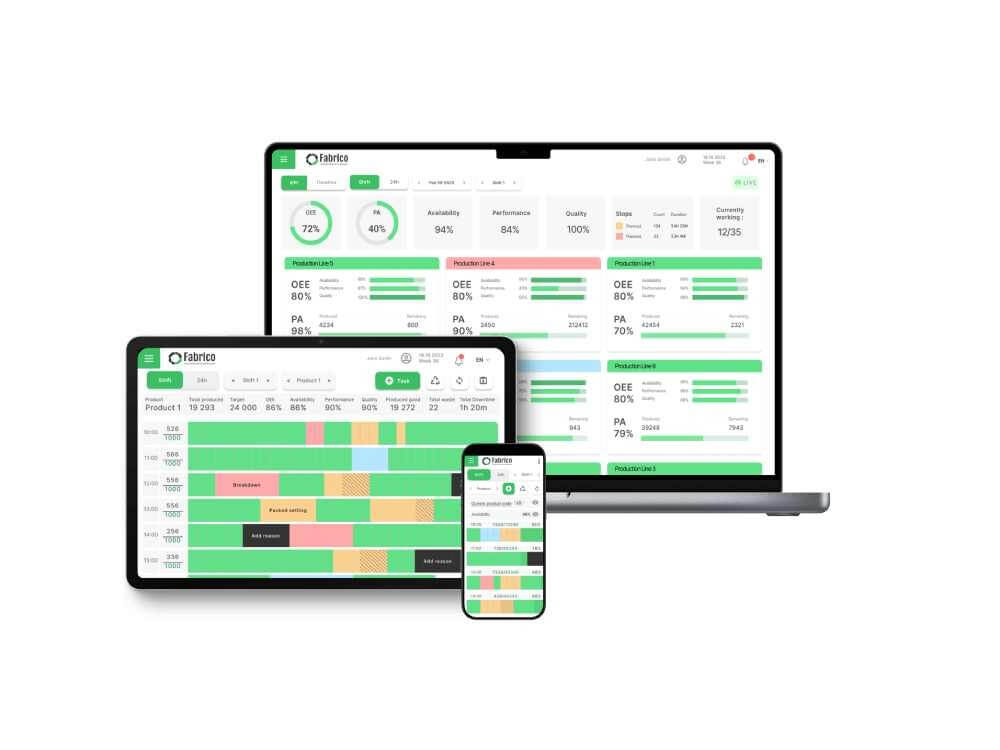
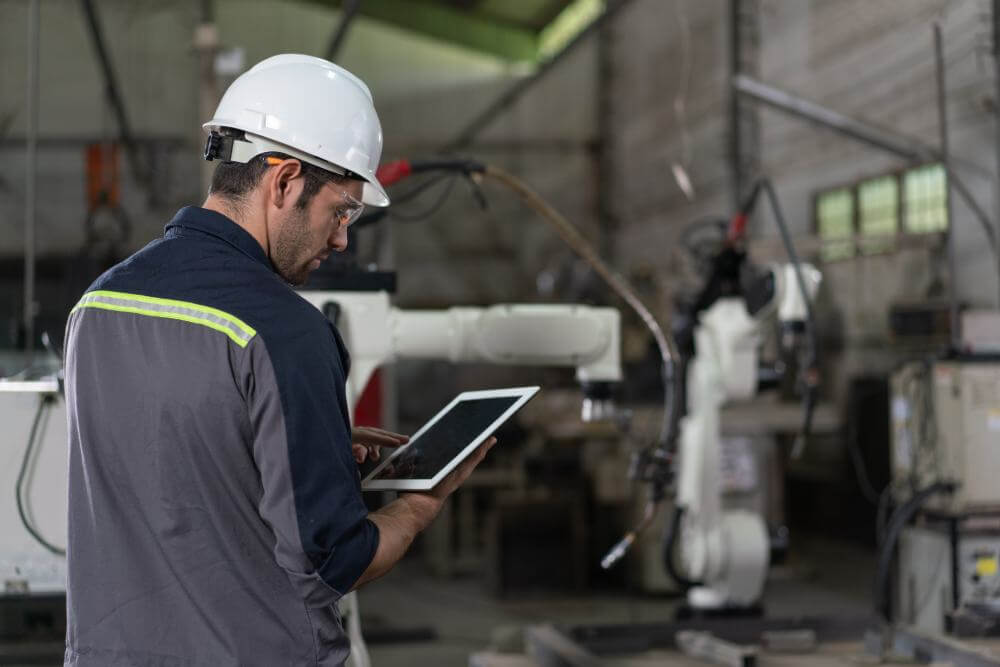
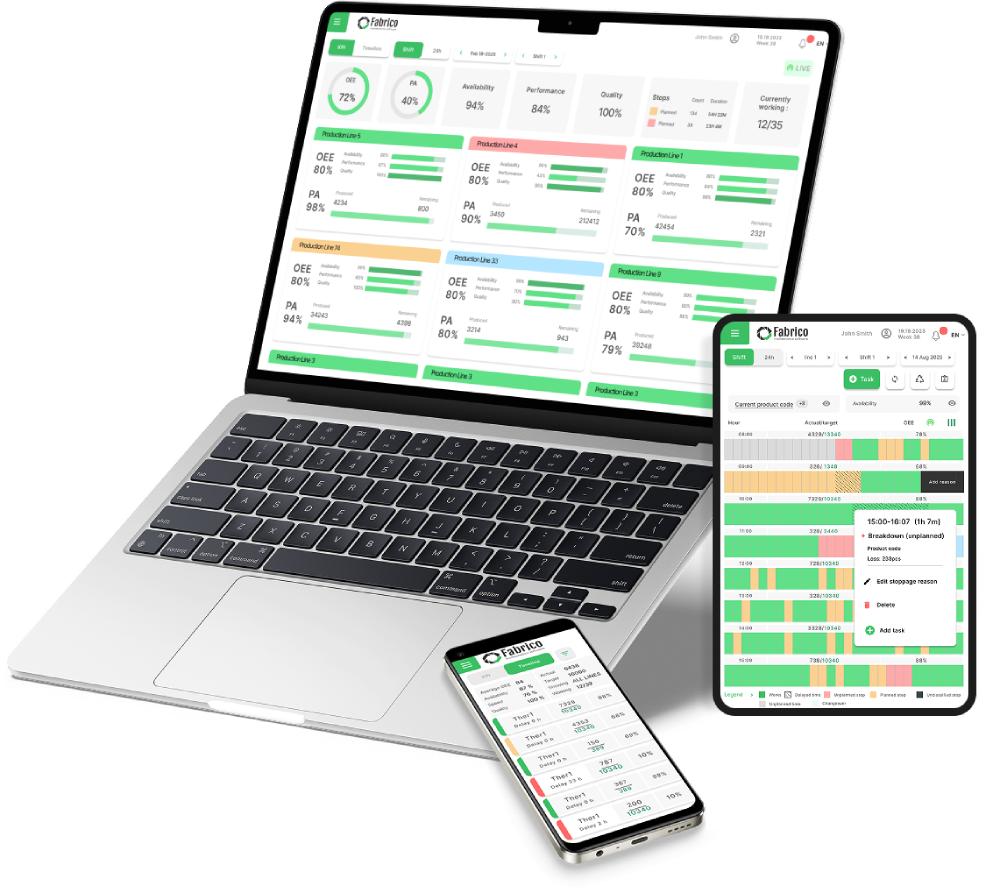
Fabrico achieves this by deploying a native, offline-capable mobile application directly to the hands of your frontline technicians.
This Field-Ready CMMS acts as a single, unalterable source of truth for every open work order, preventive task, and emergency breakdown.
Before Shift A clocks out, technicians digitally log their exact labor hours, input standardized failure codes, and write off the specific MRO spare parts they consumed.
When Shift B scans the physical QR code on the broken asset with their mobile device, they instantly inherit this exact digital context.
They immediately see which safety lockouts are active, which components have already been replaced, and what specific step of the version-controlled Standard Operating Procedure (SOP) to execute next.
Transferring Diagnostic Context with Visual RCA
A written log of a breakdown is helpful, but it cannot convey the exact physical reality of a catastrophic machine failure.
Traditional machine signals from a PLC might register a fault code during Shift A, but they do not show Shift B the exact mechanical jam that caused the stoppage.
Fabrico bridges this intelligence gap with its "Inefficiencies Zoom-In" module, utilizing overhead computer vision cameras to continuously monitor the production environment.
When a machine fails during the first shift, the system automatically flags the exact timestamp and links it to the corresponding video footage.
The incoming technician on Shift B can instantly watch a high-definition replay of the breakdown from their mobile device before they even open their toolbox.
This indisputable visual evidence perfectly aligns the two shifts, entirely eliminating the need for verbal interrogation or diagnostic guesswork.
Unifying Native OEE to Track Machine History
A flawless shift handover requires more than just knowing what is currently broken; the incoming shift must understand how the equipment was performing before the failure.
By unifying native OEE tracking within the core CMMS architecture, Fabrico links the machine's historical performance directly to the digital shift handover.
The system continuously captures real-time data from your PLCs, logging cycle counts, throughput variance, and minor speed losses leading up to the event.
Shift B can immediately see if the machine suffered a sudden catastrophic failure or if it experienced a steady 15% performance degradation over the previous eight hours.
This seamless integration of production data and maintenance execution ensures that incoming technicians possess the total operational context required to execute a permanent fix.
The 2026 Strategic Roadmap: Structuring Master Data for AI
Manufacturing boardrooms are aggressively pushing to deploy Artificial Intelligence to automate complex troubleshooting and streamline continuous improvement.
However, AI algorithms are fundamentally useless if they are trained on incomplete whiteboard notes and fragmented verbal handovers.
Before a factory can trust an AI to accurately summarize a machine's health for an incoming shift, it must establish at least 12 months of clean, verified master data.
By implementing Fabrico’s mobile CMMS and visual RCA architecture today, you are actively building the contextualized dataset that future automation requires.
Advanced capabilities, such as the Fabrico Agent for autonomous process optimization and the Fabrico Assistant for AI-driven troubleshooting guidance, are currently on our strategic roadmap.
Forcing digital execution and capturing visual downtime evidence right now is the mandatory first step toward an AI-ready, zero-latency manufacturing facility.


 Login
Login
 Blog
Blog