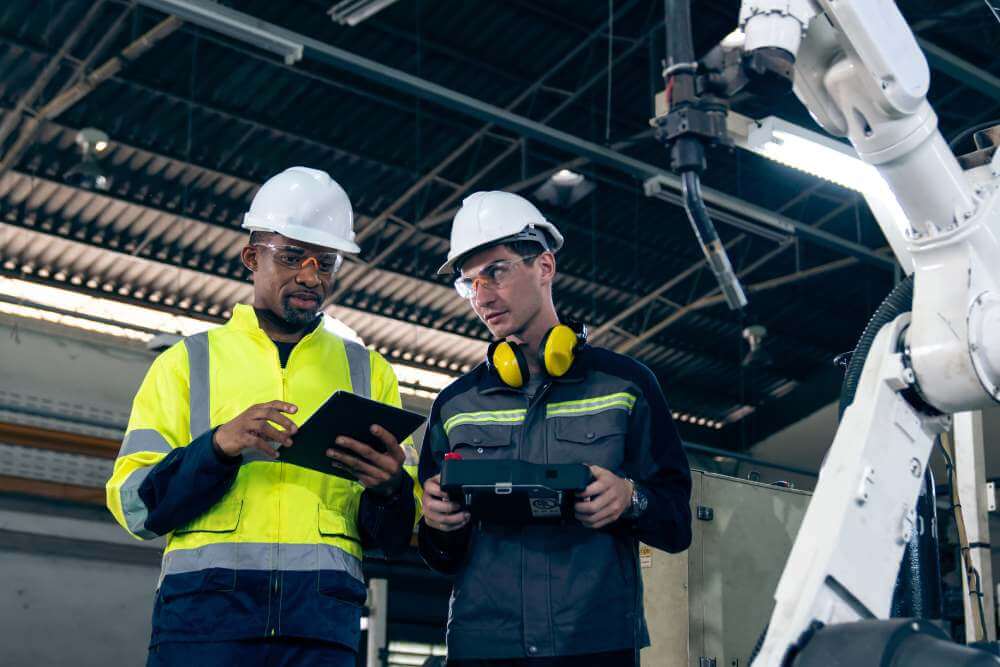
What is a Maintenance Time and Motion Study?
A maintenance time and motion study is a rigorous Lean reliability methodology used to scientifically measure, analyze, and optimize the exact physical movements required for a technician to complete a specific repair.
Instead of relying on estimated labor hours, this continuous improvement (CI) framework isolates every single micro-action—from gathering MRO spare parts to turning a wrench—to identify massive inefficiencies.
When meticulously executed through a digitized system of action, this study allows management to permanently engineer "walking waste" and administrative friction out of the maintenance department.
The Fiduciary Danger of the "Hawthorne Effect"
Most manufacturing executives actively bleed working capital because their labor efficiency metrics are based entirely on analog, inherently flawed observation methods.
When a continuous improvement engineer stands over a technician's shoulder with a physical stopwatch, the technician unconsciously works faster and follows procedures they normally ignore.
This psychological phenomenon, known as the Hawthorne effect, guarantees that the resulting time study is a mathematical lie that completely misrepresents the physical reality of the shop floor.
You cannot maximize your enterprise valuation if your boardroom is budgeting annual labor costs based on performative, best-case-scenario maintenance executions.
When leadership standardizes a 30-minute preventive maintenance (PM) window based on this flawed analog data, they mathematically guarantee catastrophic PM overruns during normal, unobserved shifts.
This subjective negligence artificially inflates your Maintenance Cost Per Unit (MCPU) and ensures your facility will continuously hemorrhage cash through unbudgeted overtime.
Digitizing Execution Timestamps with a Field-Ready CMMS
To completely eradicate observational bias, strategic leaders must transition from human timekeepers to mathematically forced digital telemetry.
Fabrico achieves this absolute operational discipline by deploying a native, offline-capable mobile application directly to the hands of your frontline reliability engineers.
When a technician arrives at an asset to execute a targeted repair, they are physically required to scan the machine's QR code using their mobile device.
This single scan via the Field-Ready CMMS establishes a mathematically flawless, time-stamped starting line for the repair that cannot be fraudulently altered.
Upon completion, the technician digitally signs off on the exact version-controlled Standard Operating Procedure (SOP), instantly stamping the exact duration of the job.
This strict digital accountability completely eliminates the reliance on end-of-shift paper logs, providing the baseline duration data required to execute a world-class time study.

Exposing "Walking Waste" via Computer Vision RCA
Tracking the exact total duration of a repair is highly valuable, but the CI team must also understand exactly how the technician spent those minutes to eliminate wasted motion.
Traditional PLCs will verify that the machine remained offline for an hour, but they cannot tell management that the technician spent forty minutes walking back to the tool crib for missing parts.
Fabrico eliminates this diagnostic black hole with its "Inefficiencies Zoom-In" module, deploying overhead computer vision cameras to continuously monitor the physical production environment.
When a digital work order is initiated, the system automatically flags the exact timestamp and links it to the corresponding high-definition video footage.
Reliability engineers can instantly watch a replay of the maintenance execution, visually confirming severe ergonomic wastes, disorganized tool deployment, and excessive walking.
This indisputable visual evidence completely removes subjective assumptions, providing the exact mechanical intelligence required to drastically restructure how the technician approaches the asset.
Validating the Optimized SOP with Native OEE
Once the computer vision identifies the physical waste, the engineering team rewrites the Digital SOP to include pre-kitted MRO parts and highly optimized wrenching sequences.
However, reducing the repair time provides zero financial ROI if the new, faster procedure compromises the physical integrity of the restored machine.
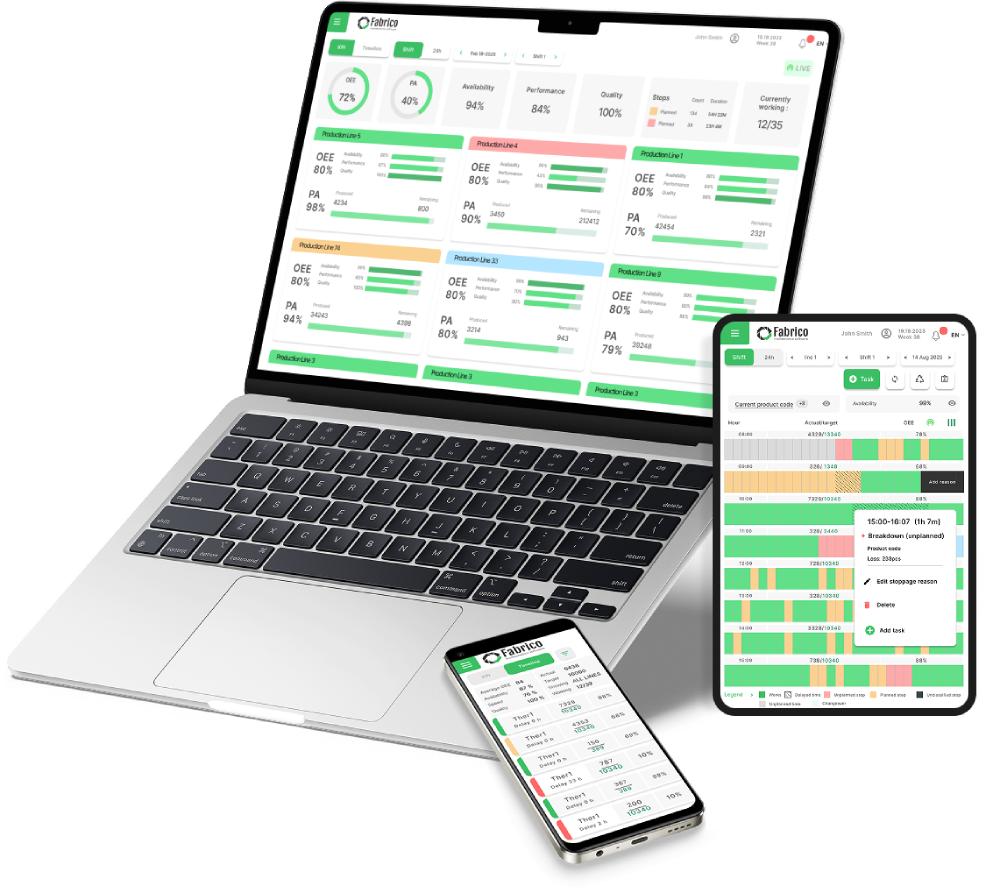
By unifying native OEE tracking directly within the core CMMS architecture, Fabrico allows you to mathematically validate the effectiveness of the optimized repair.
The system continuously captures real-time data from your PLCs, monitoring the exact cycle counts and minor speed losses the moment the machine resumes production.
If the newly optimized time study successfully reduced the MTTR without degrading the machine's OEE performance, the boardroom receives mathematical proof of a permanent capacity increase.
The 2026 Strategic Roadmap: Building Master Data for AI
Industrial boardrooms are aggressively pushing to deploy Artificial Intelligence to autonomously balance maintenance workloads and perfectly predict labor duration.
However, AI algorithms are fundamentally useless and highly dangerous if they are trained on a CMMS database filled with pencil-whipped labor hours and biased stopwatch studies.
Before an enterprise can trust an AI to accurately forecast a multi-million-dollar plant shutdown, it must establish at least 12 months of clean, visually verified master data.
By implementing Fabrico’s visual RCA and mobile CMMS architecture today, you are actively building the contextualized execution dataset that future automation requires.
Advanced capabilities, such as the Fabrico Agent for autonomous process optimization and the Fabrico Assistant for AI-driven troubleshooting guidance, are currently on our strategic roadmap.
Forcing digital execution and capturing exact motion telemetry right now is the mandatory first step toward an AI-ready, hyper-efficient manufacturing facility.


 Login
Login
 Blog
Blog