If a machine stops in an automotive plant, the steel door panel waits on the conveyor. It doesn't rot. It doesn't sour. It doesn't require a 2-hour sanitation cycle before the line can restart.
In Food & Beverage (F&B) Manufacturing, the rules of downtime are different.
A stop on a dairy pasteurizer can mean dumping thousands of liters of milk. A jam on a high-speed bottling line can shatter glass and contaminate the batch.
The cost of downtime in F&B is often 30% to 50% higher than in discrete manufacturing because of Spoilage and Startup Friction.
Reducing downtime in this environment requires more than just fixing machines faster. It requires a holistic strategy that connects Maintenance Reliability, Food Safety, and Production Speed.
Here is the 2026 playbook for recovering capacity in your food plant.
Phase 1: Diagnosing the "Double Hit"
Before you can reduce downtime, you must calculate its true cost. In F&B, downtime hits you twice:
-
The Operational Hit: The minutes the machine is not running (Lost OEE).
-
The Yield Hit: The raw material that must be scrapped because it sat too long, or the "startup scrap" produced while dialing the machine back in.
The Strategy: Stop tracking "Minutes Down." Start tracking "Cost per Minute."
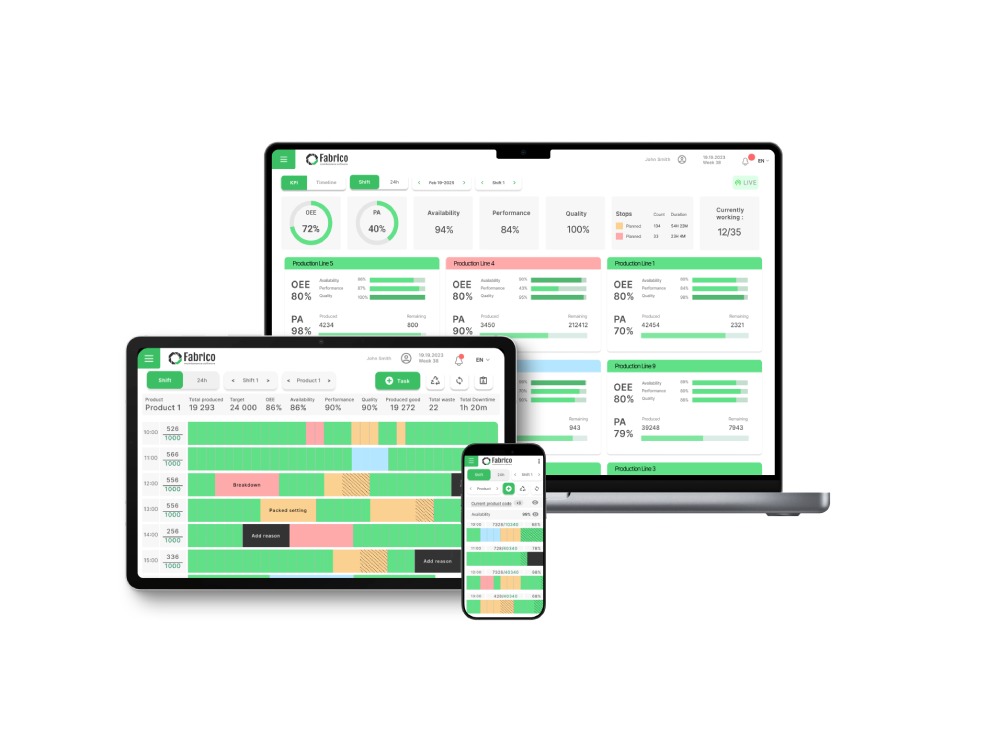
When technicians understand that a 10-minute stop costs €5,000 in ingredients, their urgency changes. Use your OEE software to visualize this financial impact in real-time.
Phase 2: Conquering the Micro-Stop (The Silent Killer)
In high-speed F&B lines (canning, bottling, wrapping), the biggest thief of OEE is rarely a blown motor. It is the Micro-Stop.
These stops last 30 seconds. The operator clears the jam and resets. It happens 100 times a shift. At the end of the day, you have lost 50 minutes of production, but no "Breakdown" was logged.
How to Fix It:
-
Automated Counting: You cannot fix what you don't count. You must connect the machine's PLC to a monitoring system that logs every stop, even if it’s only 5 seconds.
-
Visual Root Cause Analysis: Operators are too busy clearing the jam to analyze it. This is where tools like Fabrico help. By using cameras to record the line ("Inefficiencies Zoom-In"), you can review the video footage later. You might discover that the jam isn't random, it happens every time the "Blue Material" is used.
-
The Fix: Address the material quality or adjust the guide rails. You eliminate 100 stops with one adjustment.
Phase 3: Surviving the Washdown
Sanitation is critical for food safety, but it is brutal on equipment.
High-pressure water and caustic chemicals (Caustic Soda/Acid) degrade seals, rust bearings, and short-circuit sensors.
Many F&B breakdowns happen immediately after startup following a cleaning shift.
How to Fix It:
-
Map Your "Wet Zones": Identify assets that are hit hardest during washdown.
-
Post-Washdown PMs: Do not just restart the line. Schedule a specific "Pre-Flight" inspection task immediately after sanitation.
-
Digital Handovers: Use a digital logbook to force a handshake between the Sanitation Team and the Maintenance Team. Sanitation must sign off that the area is dry; Maintenance must sign off that the machine is ready.
Phase 4: The HACCP Handshake
In F&B, a repair isn't finished until it is Safe.
If a technician replaces a hydraulic hose over a food conveyor, the job isn't done when the hose is tight. It is done when the area is cleaned, sanitized, and inspected for foreign objects (nuts, bolts, shavings).
How to Fix It:
-
Enforced Workflows: Your maintenance software should not allow a Work Order to be closed until a "Sanitation Verification" step is completed.
-
Tool Accountability: To prevent physical contamination, implement "Tool Check-In / Check-Out" logs within the repair ticket.
-
Audit Readiness: Auditors (BRCGS/SQF) love to find maintenance gaps. By digitizing these checks, you create an unalterable audit trail. When an auditor asks, "Was this line cleaned after the motor failure?", you show them the timestamped photo instantly.
Phase 5: Inventory Management for Perishables
In other industries, if you lack a spare part, the line waits. In F&B, if the line waits, the product dies.
You cannot afford "Stockouts" on critical spares for the bottleneck assets (e.g., the Pasteurizer or the Freezer).
How to Fix It:
-
Criticality Analysis: Identify the machines that handle perishable goods.
-
Min/Max Automation: Use software to auto-alert purchasing when spares for these critical assets hit minimum levels.
-
The "Squirrel Stash": Technicians hoard parts because they fear stockouts. Counter this by implementing a reliable, mobile-scanned inventory system so they trust the crib again.
Conclusion: Reliability IS Food Safety
In 2026, the best Food & Beverage plants realize that Maintenance and Quality are the same department.
A reliable machine runs steady. A steady machine produces consistent quality. Consistent quality reduces waste.
Reducing downtime starts with visibility. You need to see the micro-stops, track the washdown damage, and enforce the hygiene protocols.
Stop the spoilage.
Building a digital foundation is the first step toward a safer, more profitable plant.


 Login
Login
 Blog
Blog