What is Preventive Maintenance (PM) Compliance?
Preventive Maintenance (PM) Compliance is a critical reliability metric that calculates the percentage of scheduled maintenance tasks successfully completed within their assigned time window.
In asset-intensive manufacturing facilities, maintaining a PM Compliance rate above 90% is the only mathematically proven method to suppress emergency breakdowns and stabilize production throughput.
When this metric relies on subjective, analog reporting, leadership operates under a false sense of security while the physical machinery rapidly degrades.
The Fiduciary Danger of "Pencil Whipping"
Most manufacturing executives believe their preventive maintenance program is world-class simply because their legacy system of record shows a high completion rate.
However, when technicians are burdened with paper checklists and overwhelming reactive workloads, they inevitably resort to "pencil whipping" their preventive tasks.
A technician will simply check off a lubrication route or a belt inspection on a clipboard at the end of their shift without ever physically touching the machine.
This analog reporting creates a catastrophic blind spot for the boardroom, inflating the perceived health of the factory while introducing massive risk to the P&L.
You cannot maximize your enterprise valuation if your maintenance data is fundamentally based on the honor system.
When a critical packaging line suffers a catastrophic motor failure because a bearing was never actually greased, the financial fallout instantly destroys your operating margins.
Forcing Accountability with a Field-Ready CMMS
To eliminate the subjectivity of paper logs, strategic leaders must transition their reliability departments to a system of action that digitally enforces execution at the point of work.
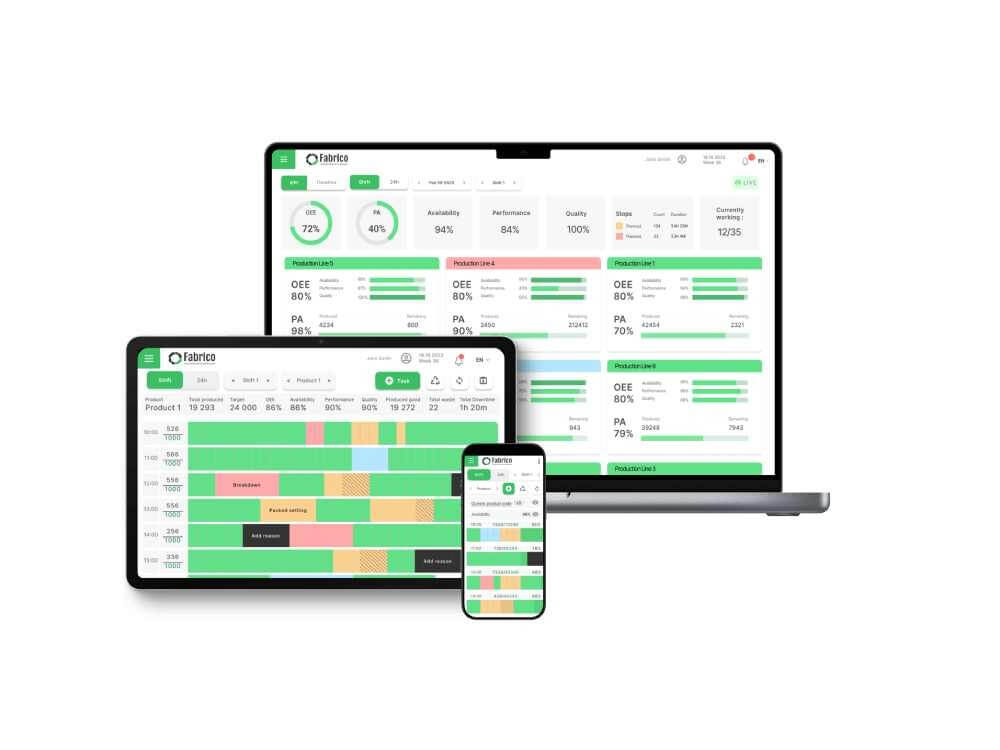
Fabrico achieves this operational discipline by deploying a native, offline-capable mobile application directly to the hands of your frontline technicians.
This Field-Ready CMMS completely removes the option for retroactive data entry from a breakroom or remote office.
When a technician is dispatched to perform a critical PM, they must physically stand in front of the asset and scan its unique QR code using their mobile device.
This single scan validates their exact location, timestamps the start of the job, and unlocks the version-controlled Standard Operating Procedure (SOP) required for that specific machine.
As the technician executes the task, they digitally sign off on each step and write off consumed MRO spare parts, creating an unalterable digital audit trail that proves the work was done to standard.

Triggering PMs with Native OEE Data
A world-class PM Compliance rate provides zero financial ROI if you are rigorously executing the wrong maintenance tasks at the wrong time.
Calendar-based maintenance schedules force technicians to tear down perfectly healthy equipment simply because thirty days have passed.
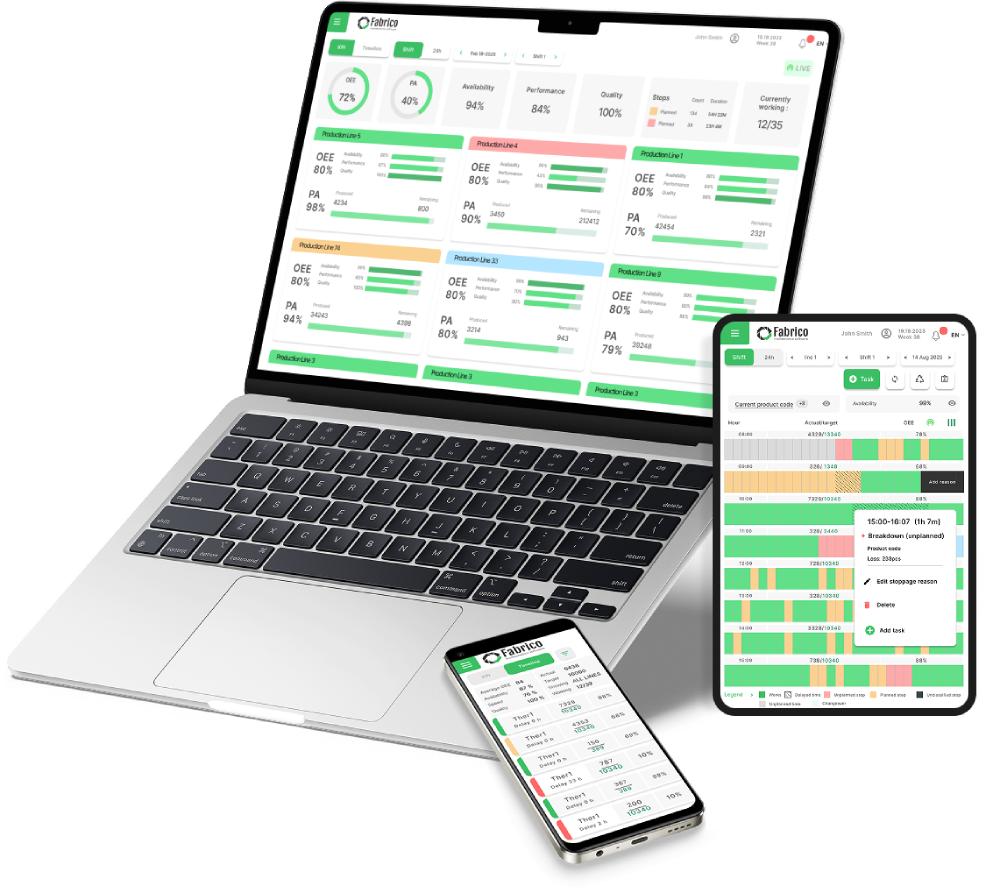
By unifying native OEE tracking within the core CMMS architecture, Fabrico allows you to transition to highly efficient Condition-Based Maintenance (CBM).
The system continuously captures real-time signals from your PLCs, monitoring exact cycle counts, total operating hours, and minor speed losses.
When an asset crosses a highly specific operational threshold, the system automatically generates a prioritized preventive work order.
This usage-based trigger ensures your highly skilled technicians are only deployed when mathematically justified, preserving your maintenance budget and preventing human-induced "infant mortality" failures.
Validating PM Effectiveness with Computer Vision
The final step of a successful preventive maintenance program is proving that the completed intervention actually stabilized the machine's performance.
Traditional PLCs will register that the machine is running again, but they cannot visually confirm if the mechanical adjustments eliminated underlying process vibrations or micro-stops.
Fabrico eliminates this diagnostic blind spot with its "Inefficiencies Zoom-In" module, deploying overhead computer vision cameras to continuously monitor the production environment.
If an asset experiences a performance drop immediately after a PM is completed, the system automatically flags the timestamp and links it to the corresponding video footage.
Reliability engineers can instantly watch a high-definition replay of the machine's operation to visually confirm if the preventive maintenance was executed correctly.
This indisputable visual evidence holds both the production and maintenance teams accountable, ensuring that every PM task delivers a permanent return on investment.
The 2026 Strategic Roadmap: Building Master Data for AI
Industrial boardrooms are aggressively pushing to deploy Artificial Intelligence to autonomously schedule maintenance and predict catastrophic asset failures.
However, AI algorithms are fundamentally useless if they are trained on falsified paper checklists and arbitrary calendar dates that do not reflect actual machine usage.
Before a factory can trust an AI to accurately forecast an asset's remaining useful life, it must establish at least 12 months of clean, verified condition-based master data.
By implementing Fabrico’s unified OEE and mobile CMMS architecture today, you are actively building the contextualized dataset that future automation requires.
Advanced capabilities, such as the Fabrico Agent for autonomous process optimization and the Fabrico Assistant for AI-driven troubleshooting guidance, are currently on our strategic roadmap.
Forcing digital execution and capturing visual performance evidence right now is the mandatory first step toward an AI-ready, self-optimizing manufacturing facility.


 Login
Login
 Blog
Blog