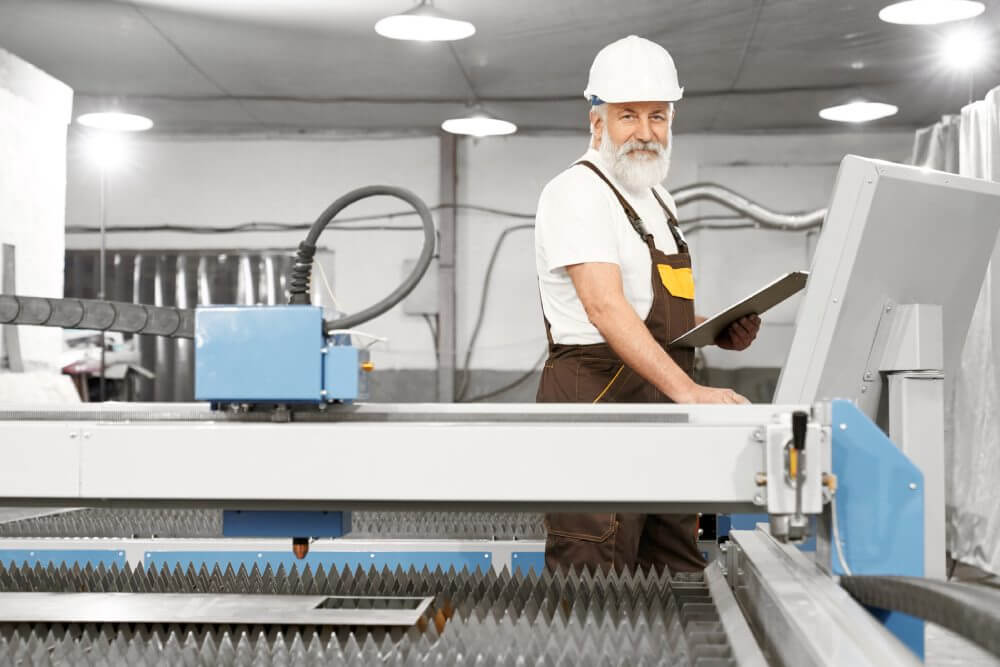
In many factories, the "Machine History" lives in one place: Bob's head.
Bob has been there for 20 years. He knows that Press #4 makes a specific thumping noise before it jams. He knows you have to shim the guide rail just right.
But what happens when Bob is sick? Or when Bob retires?
You lose that asset's history. The new technician starts from zero, guessing at the root cause, trying fixes that Bob already proved didn't work 5 years ago.
Machine History Tracking Software solves this by creating a "Digital Medical Record" for every asset. Just as a doctor reviews a patient's chart before prescribing medicine, a technician reviews the machine's history before opening the toolbox.
Here is how Fabrico uses AI and Video to turn static history into active intelligence.
Why Excel and Paper Fail at History
A spreadsheet can list dates and parts. But it lacks Context.
Without context, history is just data. You need Intelligence.
3 Features That Modernize Asset History
1. GenAI Retrieval (The "Fabrico Assistant")
The problem with digital history is volume. A 10-year-old machine might have 5,000 log entries. No technician has time to read them.
Fabrico Assistant solves this using Generative AI.
-
The Workflow: The technician stands at the machine and asks the app: "Has this hydraulic pump failed in the last 6 months?"
-
The Answer: The AI instantly scans the entire history and replies: "Yes, 3 times. All failures occurred during the startup sequence. The fix was usually replacing the seal."
-
The Value: Instant pattern recognition without the manual searching.
2. Video History (The "Zoom-In" Record)
Text is subjective. Video is objective.
-
The Feature: Fabrico’s "Inefficiencies Zoom-In" links production video clips to maintenance logs.
-
The Scenario: You are diagnosing a recurring jam. You look at the history.
-
The Difference: Instead of reading "Cleared Jam," you watch a 10-second clip of the jam happening last week. You see the box hitting the guard rail at an angle.
-
The Fix: You realize it’s an alignment issue, not a sensor issue. History provided the clue.
3. The Lifecycle Cost Aggregator
History isn't just about repairs; it's about money.
Fabrico tracks the Cumulative Cost of every event in the machine's life.
-
The View: You open the "Asset Health" tab.
-
The Data: You see a timeline showing the Total Cost of Ownership (TCO) rising.
-
The Insight: You see that in 2025, you spent 40% of the asset's replacement value on emergency repairs. History proves it is time to decommission the asset.
Comparison: Memory vs. Logbook vs. Fabrico
| Feature |
Fabrico (Intelligent History) |
Excel / Paper Log |
Tribal Knowledge (Memory) |
| Searchability |
Instant (AI-Powered) |
Slow (Ctrl+F or Page flip) |
Instant (but unreliable) |
| Media |
Video & Photos |
Text Only |
None |
| Context |
Linked to OEE/Downtime |
Isolated |
None |
| Permanence |
Cloud (Forever) |
Fragile (Lost/Deleted) |
Gone when staff leaves |
| Auditability |
High (Immutable) |
Low |
Zero |
The Fabrico Framework: Building the Knowledge Base
-
Capture: Technicians must take a photo or attach a video for every "Major" breakdown.
-
Tag: Use standardized Failure Codes so the AI can group similar issues.
-
Review: Before starting any Work Order, the technician spends 30 seconds reviewing the "Last 5 Issues" via the Assistant.
-
Analyze: Reliability Engineers review the "Bad Actor" history monthly to find chronic issues.
Conclusion: Institutionalize Your Knowledge
Your factory's competitive advantage isn't just your machines; it's your knowledge of how to run them efficiently.
Don't let that knowledge walk out the door. Capture it, index it, and make it searchable.
Build your Digital Medical Records.
[Request a Demo] and see Fabrico’s AI Assistant in action.


 Login
Login
 Blog
Blog