Moving from paper tickets to a digital application is no longer a competitive advantage. It is a baseline survival requirement for modern manufacturing. However, plant managers are quickly discovering that simply digitizing a bad process does not yield operational excellence.
Generic task management apps are flooding the market. These tools look great on a smartphone but fail to understand the complex realities of a high-speed production line.
Here is the strategic guide to evaluating maintenance work order software for 2026. We will explore why replacing paper is only the first step toward true factory reliability.
What is Maintenance Work Order Software?
Maintenance work order software is a digital platform used to create, assign, track, and complete repair and inspection tasks. It allows facility managers to organize their backlog and transition away from manual spreadsheets.
The primary goal is to increase technician wrench time and improve overall equipment reliability.
The Problem with Generic Task Management Apps
Many operations directors purchase basic work order apps because they are cheap and deploy quickly. This is a massive strategic mistake.
Generic applications operate completely blind to your production reality.
They treat a broken conveyor belt the exact same way they treat a leaky office faucet. There is no industrial context regarding machine health, cycle times, or production schedules.
When your work order system is disconnected from your machine data, you suffer from a severe intelligence gap. Technicians are dispatched based on human complaints rather than validated equipment conditions.
This reactive firefighting destroys your Wrench Time metrics and inflates your Mean Time To Repair (MTTR).
The Manufacturing Standard: A Unified System of Action
To protect your profit margins, your maintenance software must be directly wired into your production signals. You need a system that acts as a single source of truth for both operators and engineers.
Triggering Action with Native OEE
Your maintenance strategy should be dictated by how your assets are actually performing. Calendar-based preventive maintenance often leads to over-servicing and wasted inventory capital.
By deploying Native OEE tracking, you monitor Availability, Performance, and Quality in real time. When the system detects a performance drop or a recurring micro-stop, it does not just update a dashboard graph. It automatically generates a prioritized request in your Field-Ready CMMS.
This ensures technicians address the root cause before the asset suffers a functional failure.
Visual Context with Computer Vision
Technicians waste hours every week trying to diagnose problems based on vague operator descriptions. "Machine is making a weird noise" is not a helpful diagnostic starting point.
You can eliminate this guesswork by utilizing Computer Vision. Cameras positioned over your assembly lines capture video clips of every downtime event. When a work order is generated, engineers can use this "Inefficiencies Zoom-In" feature to watch a replay of the exact failure. Giving technicians absolute visual proof drastically accelerates the fault-to-fix cycle.
Mobile Execution and High PM Compliance
The success of any maintenance platform relies entirely on shop floor adoption. If the software is clunky, your team will simply pencil whip the data.
A native mobile application allows technicians to execute tasks directly at the machine. They simply scan a QR code to access digital CILs (Clean, Inspect, Lubricate), equipment schematics, and required spare parts. This eliminates unnecessary trips to the maintenance office.
By forcing mandatory photo uploads and digital signatures, you guarantee absolute PM Compliance. Management receives a perfect audit trail for ISO and FDA regulatory standards.
Maintenance Software Comparison Matrix
Understanding the difference between a basic app and a manufacturing platform is critical for your boardroom ROI.
| Feature Category |
Generic Work Order Apps (e.g., MaintainX, UpKeep) |
Fabrico Unified Platform |
| System Philosophy |
Isolated task management |
Unified System of Action |
| Work Order Triggers |
Manual requests and calendar schedules |
Automated via Native OEE data |
| Root Cause Diagnostics |
Text-based operator descriptions |
Computer Vision with video replay |
| Production Alignment |
Completely disconnected |
Interactive Planning Board reacts to repairs |
| Shop Floor Execution |
Basic mobile checklists |
Field-Ready CMMS with QR scanning and Digital CILs |
Protecting Your Production Schedule
A work order does not exist in a vacuum. When a critical asset goes down for a two-hour repair, your entire supply chain is impacted.
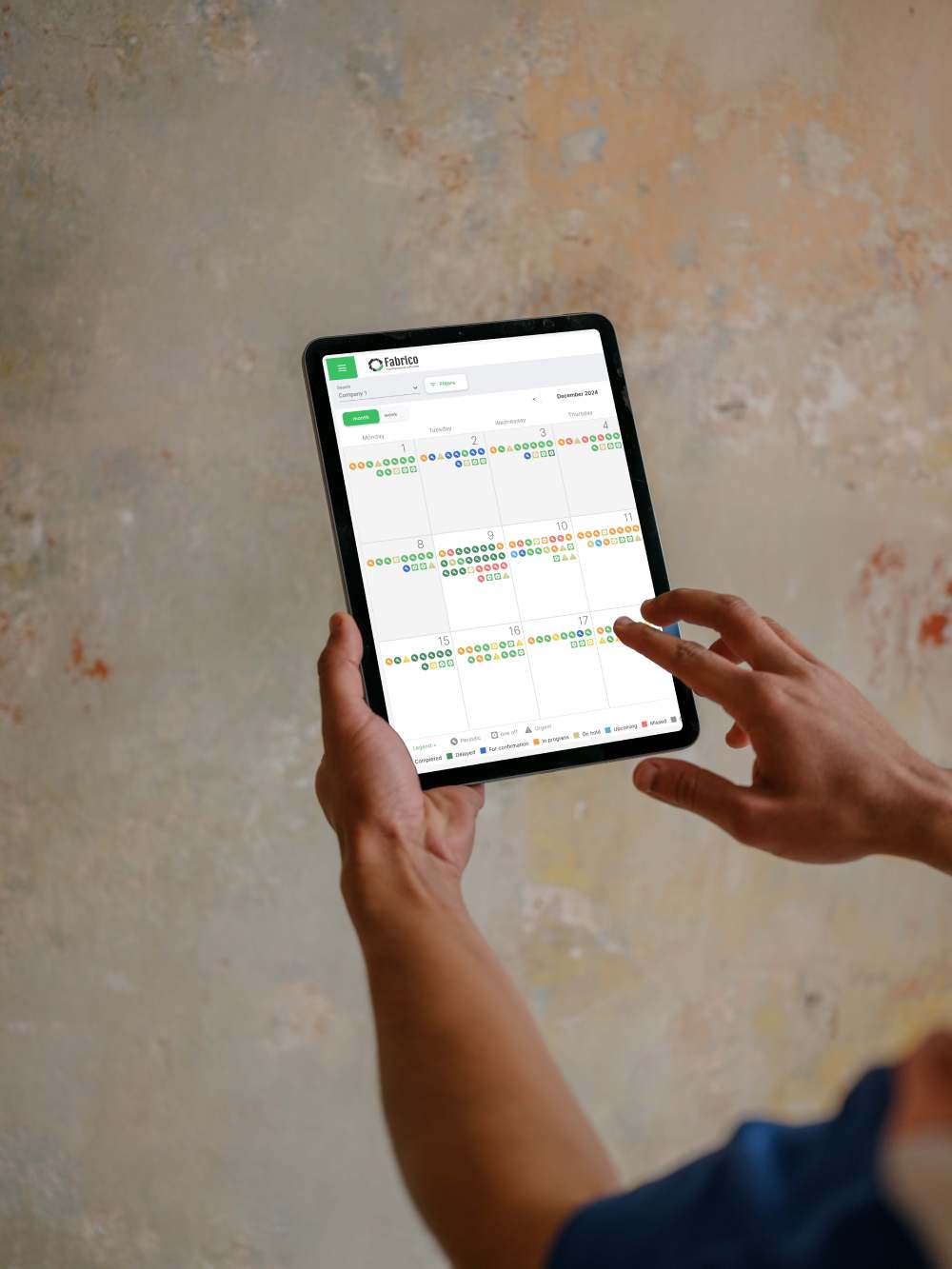
Basic apps leave your production planners completely in the dark. Fabrico solves this operational latency through its Interactive Planning Board. This drag-and-drop scheduling tool reacts instantly to real-time machine availability. If a work order takes a machine offline, the planning board automatically adjusts the upcoming production runs.
Looking forward, the integration of artificial intelligence will make this process even faster.
The Fabrico Agent is an AI engine currently in beta on our roadmap. It will soon analyze historical maintenance data to autonomously suggest schedule refinements and create continuous improvement tasks. Concurrently, the upcoming Fabrico Assistant will allow technicians to query equipment manuals using natural language directly from the shop floor.

Securing Yield Integrity in 2026
Consolidating your technology stack is the most effective way to eliminate hidden factory losses. You cannot optimize your factory if your production data and maintenance actions live in separate silos.
By choosing a unified platform that bridges OEE diagnostics with mobile work execution, you empower your workforce. You eliminate decision latency, ensure accurate inventory control, and turn your maintenance department into a highly profitable reliability engine.


 Login
Login
 Blog
Blog