In 2026, manufacturing margins are under attack. Energy costs are up. Material costs are volatile. Labor is expensive.
The knee-jerk reaction from the Boardroom is: "Cut Costs."
Usually, this leads to the "Salami Slicer" approach, cutting 10% from every department.
-
Maintenance cuts spare parts (Risk increases).
-
Production cuts training (Errors increase).
-
Quality cuts inspection (Returns increase).
This is Cutting Muscle. It weakens the factory.
To survive, you need to Cut Fat.
Fat is waste. Fat is inefficiency. Fat is data you don't use and machines that idle.
Here are the 10 Strategic Levers for reducing manufacturing costs sustainably, and how to use software to pull them.
1. Eliminate the "Micro-Stop" Tax
We obsess over the 4-hour breakdown. We ignore the 2-minute jam.
But if your line stops for 2 minutes, 30 times a day, you lose 1 hour of production daily.
-
The Cost: You pay for 8 hours of labor/energy but get 7 hours of product.
-
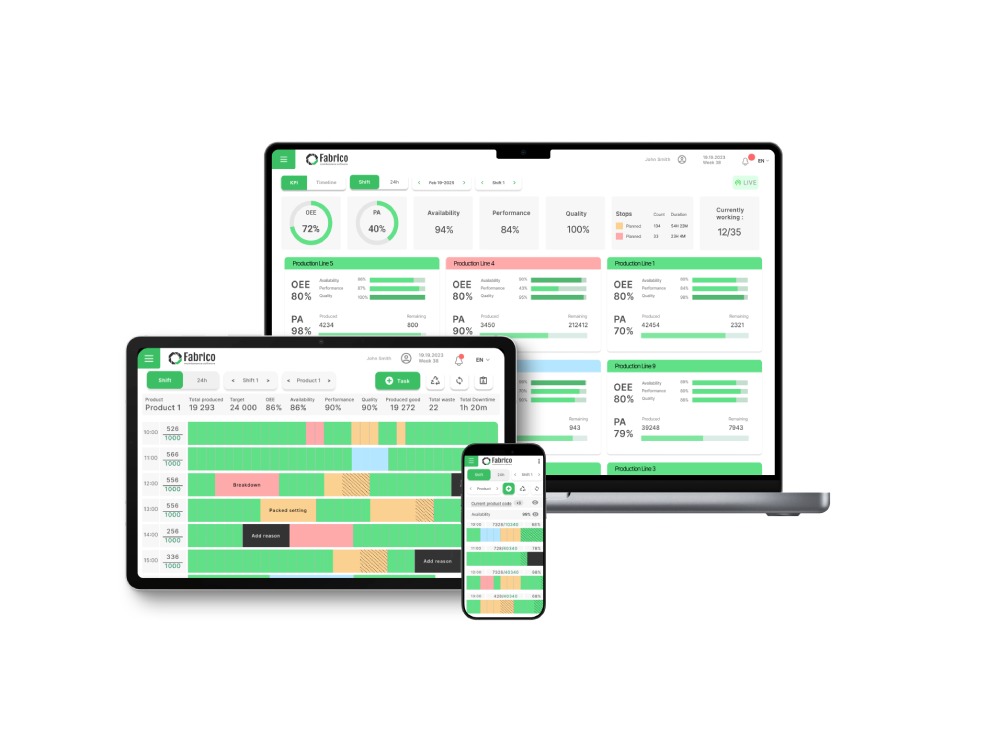
The Fix: Use OEE Software to auto-log these stops. Use Video Analysis ("Zoom-In") to find the root cause (e.g., a sticky guide rail) and eliminate it.
2. Optimize Spare Parts (Stop the Hoarding)
Inventory is cash sitting on a shelf.
If you have $1M in parts, but $200k is obsolete or duplicated ("Squirrel Stashes"), you are wasting working capital.
3. Reduce Energy "Idling"
A machine idling (running but not producing) consumes ~80% of its full-load power.
This happens during changeovers, breaks, or upstream blockages.
4. Extend Asset Life (The "Forever" Machine)
Buying a new machine costs millions (CapEx). Keeping the old one running costs thousands (OpEx).
5. Slash Overtime via "Wrench Time"
Technicians spend 65% of their day walking, searching, and waiting.
This inefficiency forces you to pay overtime to get the work done.
-
The Fix: Mobile CMMS.
-
Give technicians the Work Order, Manual, and History on a tablet.
-
They stop walking. Wrench time doubles. Overtime drops to zero.

6. Reduce Scrap with Visual Quality
Producing a bad part costs you three times: Material, Energy, and Disposal.
7. Compress Changeover Times (SMED)
If a changeover takes 60 minutes, you are paying your crew to wait.
8. Recover Warranty Claims
You pay for repairs on machines that are still under warranty because nobody tracks the dates.
9. Standardize Training (The Skills Gap)
Mistakes cost money. A junior tech greasing the wrong zerk can ruin a motor.
10. Audit-Proof Your Compliance
Fines are expensive. Losing a customer because you failed a quality audit is catastrophic.
Conclusion: Data is the Cost Cutter
You cannot starve a factory into profitability. You have to optimize it.
To pull these 10 levers, you need visibility. You need a system that connects the money (Cost) to the machine (Reliability).
Stop cutting muscle.
[Request a Demo] and let Fabrico show you where the fat is hiding in your factory.


 Login
Login
 Blog
Blog