Legacy Equipment is the backbone of the manufacturing world.
Walk into almost any factory, and you will see machines that are 20, 30, or even 50 years old. These machines are paid for, they are sturdy, and they produce good parts.
However, for a Plant Manager, they are a "Black Box." They don't generate data. They don't warn you before they fail. They require operators with decades of tribal knowledge to run them.
The pressure to "Go Digital" often leads to the assumption that you must buy expensive new equipment. This is false.
You can teach old iron new tricks. Modernizing legacy equipment is a strategy of Retrofitting, Connecting, and Digitizing.
Here are 5 data driven strategies to modernize your legacy manufacturing equipment in 2026.
1. Retrofit with Non-Invasive Sensors (IIoT)
The biggest problem with old machines is that they don't have sensors. Or if they do, the data is locked inside an obsolete controller.
You don't need to rewrite the PLC code to get data.
The Strategy:
-
The "Sidecar" Approach: Install independent sensors that do not touch the machine's control logic.
-
Vibration & Temperature: Stick a wireless vibration sensor on the main motor. It tells you if the bearing is failing without needing to talk to the PLC.
-
Current Transducers (CTs): Clip a CT clamp around the power cable. It measures "Amps." If Amps are > 0, the machine is running. If Amps are 0, it is down. This gives you instant OEE data from a "dumb" machine.
2. Digitize the Operational Logbook
Legacy machines run on paper. Shift logs, setup sheets, and maintenance records are kept in binders that act as "Data Coffins." Information goes in, but it never comes out to provide insights.
Modernization starts by removing the paper, even if the machine itself stays analog.
The Strategy:
-
Tablet Interfaces: Place a tablet at the legacy machine. Operators log counts, downtime reasons, and quality checks digitally.
-
Searchable History: When the machine breaks, the technician can search "Drive Fault" and see every time it happened in the last 5 years. Paper cannot do that.
-
Standardized Inputs: Stop operators from writing "Broken." Force them to pick from a list: "Motor," "Sensor," "Jam." This creates structured data you can analyze.
3. Implement Visual Monitoring (Computer Vision)
Old machines don't have error codes. When they jam, they just stop.
If you don't have a data port to plug into, use a camera. Computer Vision is the ultimate universal translator for legacy equipment.
The Strategy:
-
Watch the Stack Light: Point a camera at the Andon light (Red/Green/Yellow). The software analyzes the video feed. Green = Running. Red = Stopped. You now have automated downtime tracking.
-
Watch the Product: Use a camera to count products moving down the conveyor. This gives you an accurate production count without wiring into the machine counter.
-
The "Zoom In" Feature: When the machine stops, capture the video clip. This allows you to see the mechanical cause of the jam, which the old PLC would never capture.
4. Bridge the "Air Gap" with IoT Gateways
Many legacy machines have PLCs (like Allen-Bradley SLC 500s or old Siemens S5s), but they are not connected to the network. They are islands of automation.
Connecting them gives you access to the rich data that is already inside.
The Strategy:
-
IoT Gateways: Use a hardware gateway that speaks the old protocols (Modbus, Data Highway Plus) and translates them into modern protocols (MQTT, HTTP).
-
Extract Critical Tags: You don't need everything. Just pull the "Run Status," "Cycle Count," and "Fault Code" tags.
-
Unified Dashboard: Feed this data into a modern platform so you can see your 1995 press running right next to your 2025 robot on the same screen.
5. Shift from Reactive to Condition Based Maintenance
Legacy machines are usually maintained on a "Break/Fix" or "Calendar" schedule. This is inefficient.
Because old machines wear out differently than new ones, applying a modern Condition Based Maintenance (CBM) strategy is the best way to extend their life.
The Strategy:
-
Baseline the Asset: Determine the "Normal" operating temperature and vibration for the old machine.
-
Set Alerts: Configure your software to text you if the parameters drift.
-
Targeted Upgrades: Instead of rebuilding the whole machine, use the data to identify the specific sub-systems (e.g., the hydraulic pump) that are degrading and upgrade only those components.
The Fabrico Framework: Intelligence for Every Asset
A "Smart Factory" isn't a factory full of new machines. It is a factory where Every Machine contributes data.
Fabrico specializes in connecting the unconnected.
-
We Connect: Our system integrates with IoT sensors and gateways to pull data from any vintage of equipment.
-
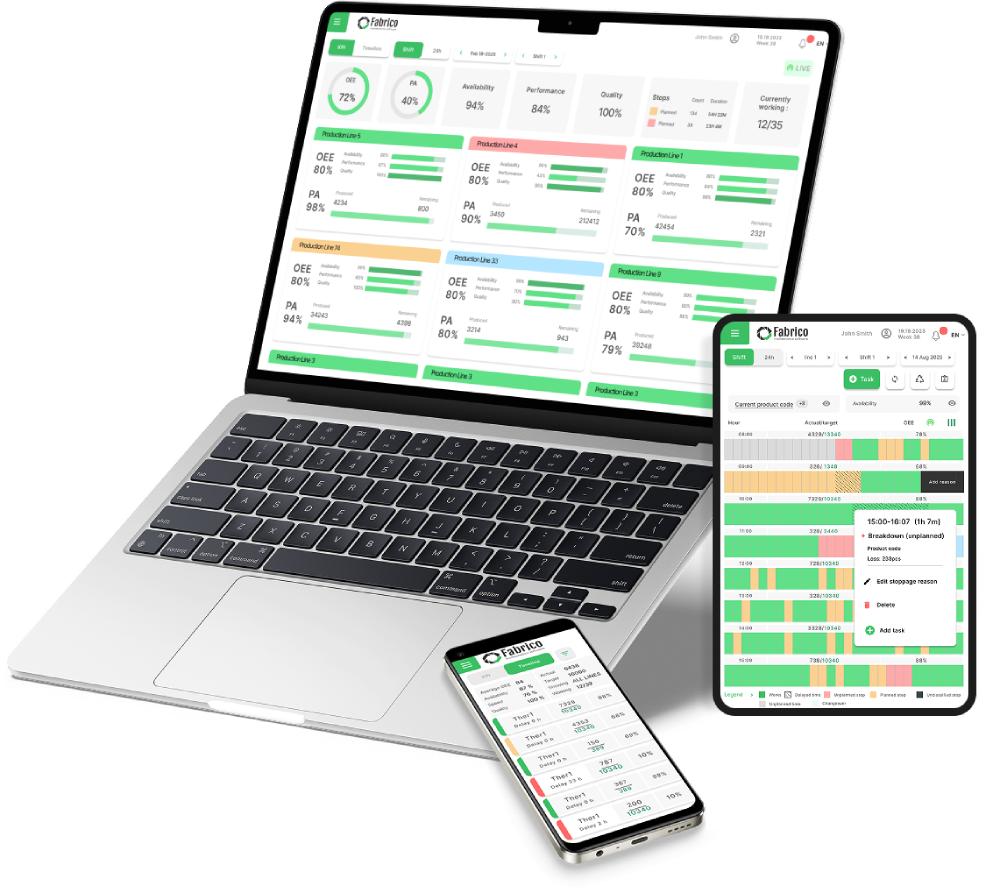
We Digitize: We replace the paper logbooks with a mobile app that operators love.
-
We Visualize: We bring your legacy assets into the light, so you can manage them with modern precision.
Ready to upgrade without overspending?
Give your legacy machines a voice. [Request a Demo] to see how Fabrico modernizes your manufacturing floor.


 Login
Login
 Blog
Blog