Walk into any factory board room, and you will see a poster about Operational Excellence (OpEx).
It usually talks about "Continuous Improvement," "Respect for People," and "Zero Defects."
These are noble goals. Yet, the vast majority of OpEx initiatives fail to stick.
They start strong. The "Kaizen Event" fixes a line. Efficiency jumps.
But six months later, the discipline erodes.
The clipboards aren't filled out. The whiteboard isn't updated. The efficiency drops back to baseline.
Why does this happen?
It happens because leadership treats OpEx as a Project, not a System.
They ask their people to work harder, count faster, and write more reports. Eventually, the people get tired.
In 2026, you cannot achieve Operational Excellence with analog tools. You need a Digital Nervous System.
Here is the strategic framework for building an OpEx program that actually survives.
1. The Missing Leg: The Platform
Think of your factory operation as a three-legged stool.
-
People: Your technicians, operators, and managers. (The Talent).
-
Process: Your Lean methodology, Six Sigma, and SOPs. (The Rules).
-
Platform: The technology that connects them. (The Infrastructure).
Most factories have great People and decent Processes. But their Platform is... Excel. Or a whiteboard.
Or a fragmented legacy ERP.
If the "Platform" leg is weak, the People have to carry the weight of the Process.
They have to manually collect data, manually report issues, and manually analyze trends.
This leads to burnout.
The Solution:
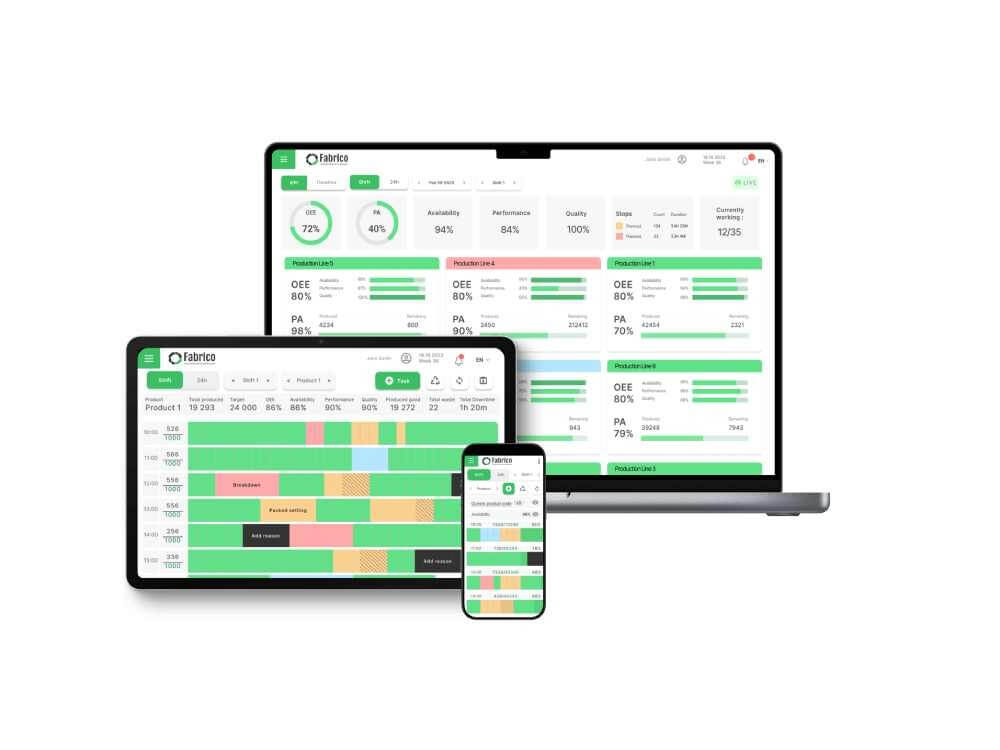
Implement a Unified Operations Platform (like Fabrico).
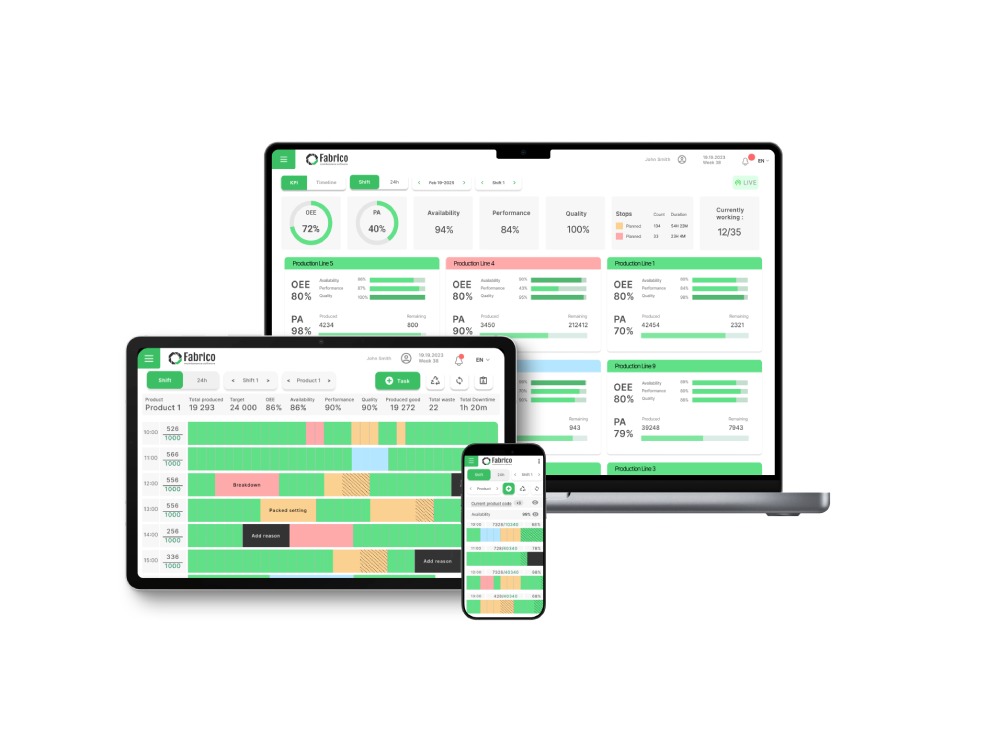
When the software handles the heavy lifting, collecting OEE data, triggering work orders, and tracking inventory, the People are free to focus on solving problems, not just reporting them.
2. From "Blame" to "Fact"
One of the biggest barriers to Excellence is the "Blame Game."
Without data, every problem is an argument. Arguments kill culture.
Digital tools bring objectivity.
When you have a Video Record ("Zoom-In") of the breakdown and a Data Log of the motor amperage, there is no argument.
Now, it’s not "Operator vs. Technician." It is "Team vs. The Problem." This is the foundation of a true Continuous Improvement culture.
3. The "Valley of Death" (Sustainment)
In Six Sigma, we talk about DMAIC (Define, Measure, Analyze, Improve, Control).
The hardest step is Control.
How do you ensure the improvement lasts?
-
Analog Control: "Post a new Standard Operating Procedure (SOP) on the wall and hope people read it." (Fails).
-
Digital Control: "Update the digital checklist in the app. The system forces the new workflow immediately." (Succeeds).
If you want your Kaizen wins to stick, you must "lock" them into the software.
-
Did we decide to clean the sensor every 4 hours?
-
Program it into the Digital CIL route. If it isn't scanned, the supervisor gets an alert.
The software becomes the "ratchet" that prevents performance from slipping back.
4. Visibility Speed (Leading vs. Lagging)
Traditional OpEx relies on "Month-End Reports."
By the time you see the red number, the month is over. You can't fix it.
World Class OpEx relies on Real-Time Visibility.
-
The Dashboard: Displays OEE live on the shop floor TV.
-
The Reaction: If the line slows down at 10:00 AM, the shift lead reacts at 10:05 AM.
-
The Result: You save the shift during the shift.
Conclusion: Give Your People a Chance
You cannot demand excellence if you give your team mediocre tools.
If you ask them to win a Formula 1 race, don't give them a bicycle.
Give them a platform that automates the mundane, visualizes the hidden, and sustains the improvements.
That is how you turn "Operational Excellence" from a poster into a reality.
Build the system.
[Request a Demo] and see how Fabrico becomes the backbone of your OpEx strategy.


 Login
Login
 Blog
Blog