Your highly skilled maintenance technicians are likely wasting their shifts executing low-level tasks.
Across the manufacturing industry, there is a severe shortage of qualified reliability engineers and mechanics.
Despite this critical skills gap, plant managers routinely dispatch their best technicians to wipe down photo-eyes, tighten basic bolts, and grease easily accessible bearings.
This misallocation of labor inflates your Maintenance Cost per Unit and guarantees that your backlog of complex, critical repairs will continue to grow.
To systematically improve your Overall Equipment Effectiveness (OEE) and protect your margins, you must shift basic equipment care back to the people who run the machines every single day.
What is operator driven reliability software in manufacturing?
Operator driven reliability software in manufacturing is a digital execution platform that transfers routine preventive maintenance and machine inspections (such as Clean, Inspect, Lubricate routes) to the frontline machine operator.
By replacing paper clipboards with a mobile application or rugged tablet, operators are guided through highly structured, visual Standard Operating Procedures (SOPs) at the start of every shift.
If an operator identifies a degradation or a fluid leak during this routine inspection, the software instantly converts that observation into a prioritized work order for the maintenance department.
The Paper Checklist Liability
The concept of Autonomous Maintenance (AM) or Operator-Driven Reliability (ODR) is a foundational pillar of Total Productive Maintenance (TPM).
However, most factories attempt to execute this strategy using paper binders attached to the side of the machine.
Paper checklists offer zero validation that the operator actually performed the inspection.
This creates a culture of "pencil whipping," where an operator rapidly checks every box at the end of their shift just to satisfy the production supervisor.
Furthermore, a paper checklist is a massive data silo; if an operator notes a frayed belt on a piece of paper, the maintenance team will not see that note until the clipboard is manually audited weeks later.
By the time the maintenance manager reads the warning, the belt has already snapped, causing a catastrophic, unplanned shutdown.
The Fabrico Framework: Bridging Production and Maintenance
To eliminate administrative latency, your operators and your mechanics must operate within the exact same digital ecosystem.
We call this The Fabrico Framework, built on the philosophy that true reliability requires a unified System of Action.
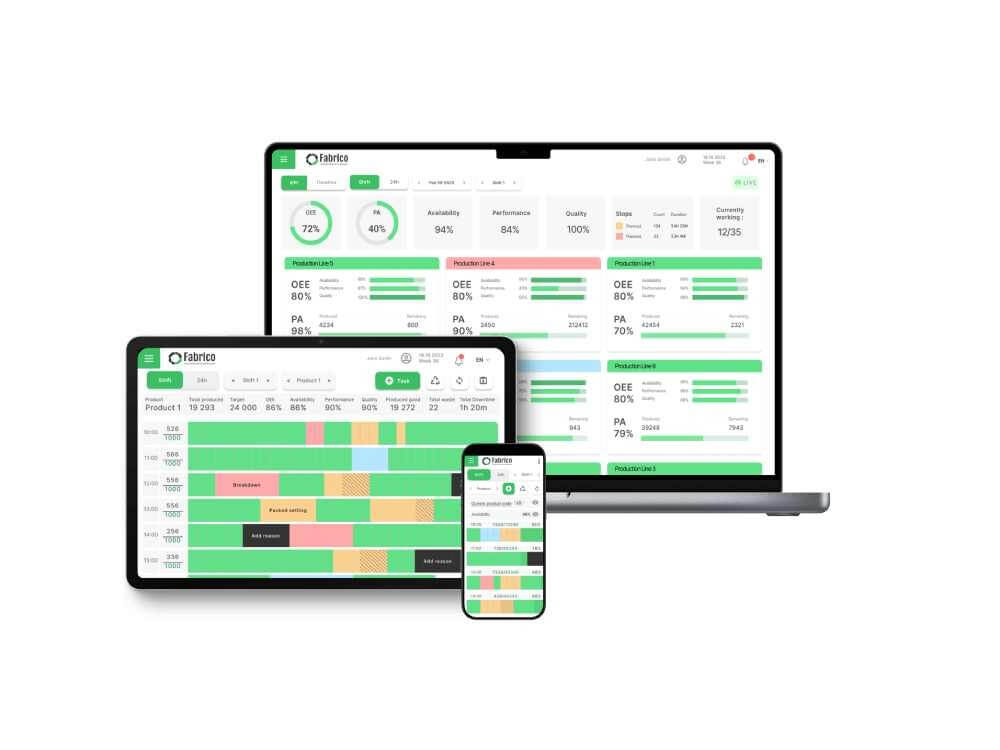
Fabrico completely eliminates paper clipboards by embedding Digital CILs and Autonomous Maintenance routines directly into the operator's daily workflow.
When an operator starts their shift, they scan the machine's QR code using their mobile device, instantly bringing up the required safety and inspection checks.
Fabrico forces the operator to acknowledge each step, utilizing mandatory photo uploads to prove that specific gauges were checked or specific rails were lubricated.

Instant Fault-to-Fix Escalation
The true power of Fabrico's ODR functionality is what happens when an operator actually finds a defect.
If the operator spots a leaking pneumatic valve during their morning CIL, they simply tap a button on their screen to flag the anomaly.
Fabrico instantly triggers a condition-directed work order and pushes a smart notification to the correct maintenance technician's mobile device.
The technician arrives at the machine knowing exactly what the problem is, carrying the correct MRO spare parts required to execute the fix.
This immediate escalation completely closes the communication gap between production and maintenance, applying the 80/20 rule to keep your technicians focused only on critical interventions.
Visual Safety Nets via Computer Vision
Even the best operators will occasionally miss a developing mechanical issue.
Fabrico acts as an uncompromising safety net using our proprietary Inefficiencies Zoom-In module.
By positioning computer vision cameras over your critical assets, Fabrico continuously monitors the production timeline for micro-stops and speed losses.
If a machine faults because an operator missed a material jam during their setup routine, the system captures a video replay of the exact moment of failure.
This visual evidence allows supervisors to retrain operators on proper setup procedures, driving continuous improvement on the shop floor.
The AI Roadmap: Autonomous Standard Work
Fabrico currently provides the most robust, operator-friendly digital execution platform available to modern manufacturers.
However, we are actively engineering the next frontier of intelligent shop-floor management.
Currently on our product roadmap is the Fabrico Agent, a proprietary AI-driven optimization engine.
Once deployed, this AI Agent will autonomously analyze operator inspection times and CIL completion rates, proactively identifying shifts or individuals who may be pencil-whipping their digital routines.
Additionally, our upcoming Fabrico Assistant (also on the roadmap) will serve as a generative AI copilot, allowing operators to instantly ask complex setup questions directly from the machine's technical manual.
By digitizing your frontline operators in Fabrico today, you are building the clean, unalterable master dataset required to deploy these AI features tomorrow.
Stop Wasting Your Best Mechanics
You cannot achieve world-class reliability if your highly paid technicians are acting as janitors.
Your operators know the sounds, vibrations, and quirks of their machines better than anyone else in the factory.
By deploying a unified System of Action, you empower your production workers to take true ownership of their assets.
Standardize your Autonomous Maintenance routines today, and free your maintenance team to focus on the work that actually protects your bottom line.


 Login
Login
 Blog
Blog