Confusing a process with a procedure is a costly mistake in modern manufacturing.
Operations directors often use these two terms interchangeably during boardroom meetings.
This fundamental misunderstanding creates severe operational latency across the factory floor.
When leadership fails to distinguish between the two, they purchase the wrong technology stack for their frontline workers.
Here is the strategic 2026 guide to understanding this critical operational difference.
We will explore why you must unite your high level processes with your step by step procedures to protect your profit margins.
What is the Difference Between a Process and a Procedure?
In manufacturing, a process is a high level continuous flow of activities that transforms raw materials into finished goods. A procedure is a highly specific, step by step instruction that a technician or operator must follow to successfully complete a single task within that broader process.
Processes dictate what needs to happen, while procedures dictate exactly how to do it.
The Danger of Disconnected Systems
The enterprise software market is currently flooded with lightweight task management applications.
These generic applications are excellent at managing simple procedures like cleaning a restroom.
However, they operate completely blind to the actual manufacturing process occurring on the assembly line.
If a technician executes a repair procedure, the generic app cannot tell you how that repair impacted the overall production process.
Conversely, legacy enterprise resource planning tools track your high level processes perfectly.
Unfortunately, these bloated financial ledgers provide absolutely zero support for the technicians trying to execute a daily procedure.
When your processes and your procedures live in separate software silos, your engineers are forced to make decisions based on guesswork.
Monitoring the Process with Native OEE
You cannot optimize a manufacturing process if you rely on manual human data entry.
Tired operators do not have the time to log every ten second micro stop on a paper clipboard.
To achieve world class reliability, your software must be wired directly into your production signals.
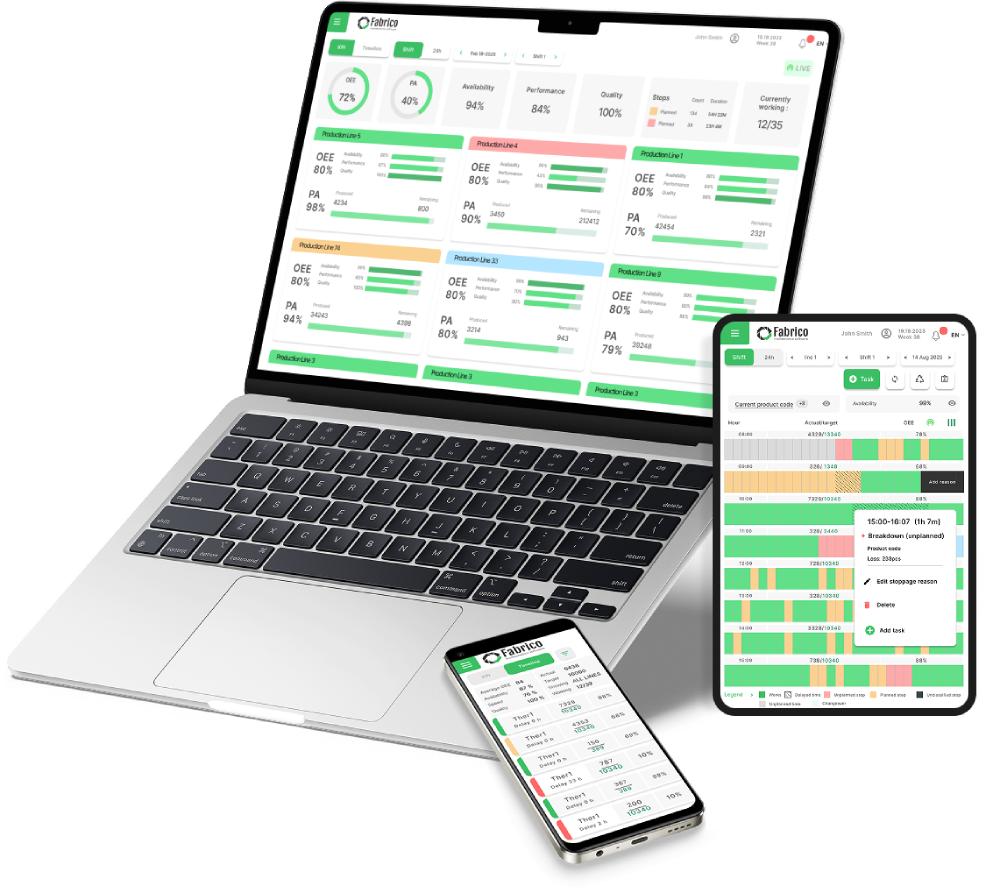
A unified manufacturing platform solves this intelligence gap by deploying Native OEE tracking.
By connecting directly to your logic controllers, the system monitors Availability, Performance, and Quality automatically.
This machine validated truth provides your leadership team with a flawless baseline of your continuous manufacturing process.
When a critical asset begins to degrade and slow the process down, the system detects the anomaly instantly.
Enforcing the Procedure with a Field Ready CMMS
Identifying a process failure adds zero value to your bottom line if you cannot execute the corrective procedure immediately.
We firmly believe that Native OEE data diagnoses the process, while a modern CMMS executes the procedural cure.
Our unified platform automates the transition from process monitoring to physical maintenance action.
When the system detects a performance drop, it automatically generates a prioritized condition based work order.
A mobile alert is dispatched directly to the nearest technician via the Field Ready CMMS.
The technician scans a QR code on the machine to unlock the specific digital standard operating procedure required for the repair.
By forcing mandatory photo uploads on Digital CILs, you guarantee the procedure was executed to your exact ISO standards.

Visualizing the Gap with Computer Vision
Sensors are highly effective at registering when a manufacturing process slows down.
Unfortunately, raw sensor data cannot explain why a specific operator failed to follow the correct assembly procedure.
Leading factories solve this diagnostic mystery by demanding Computer Vision capabilities.
Industrial cameras mounted above your production lines act as an objective digital witness.
When a process downtime event occurs, engineers use the Inefficiencies Zoom In feature to watch a high definition video replay.
You gain absolute visual proof of whether the bottleneck was a mechanical process failure or a flawed human procedure.
This completely eliminates the need for departmental finger pointing and accelerates your root cause analysis.
Process and Procedure Software Comparison Matrix
Selecting the right technology stack dictates the financial success of your continuous improvement program.
Fragmented point solutions will continually force your production and maintenance teams into reactive firefighting.
| Feature Category |
Generic Task Apps |
Legacy ERP Modules |
Fabrico Unified Platform |
| System Philosophy |
Isolated procedures |
Financial process tracking |
Unified processes and procedures |
| Data Collection |
Manual human entry |
Manual desktop entry |
Automated Native OEE tracking |
| Diagnostic Method |
Operator guesswork |
Vague text logs |
Computer Vision with video replay |
| Shop Floor Execution |
Basic digital checklists |
Clunky desktop interfaces |
Field Ready CMMS with QR scanning |
| Production Alignment |
Blind to the overall process |
Blind to factory floor reality |
Interactive Planning Board reacts to repairs |
Dynamic Production Scheduling
Maintenance procedures directly impact your overall manufacturing process and factory output.
When a technician takes a primary asset offline for a repair procedure, your production planners must know instantly.
Disconnected facility software leaves your logistics team completely blind to these maintenance realities.
The Interactive Planning Board eliminates this operational latency by reacting dynamically to real time asset health.
This drag and drop scheduling tool automatically adjusts upcoming production processes based on active maintenance constraints.
Your leadership team never has to overpromise to supply chain partners because the schedule reflects the actual reality of the shop floor.
The Autonomous Reliability Roadmap
The next generation of industrial maintenance will rely entirely on automated intelligence.
We are actively developing advanced capabilities to support your frontline technicians.
The Fabrico Agent is an artificial intelligence engine currently in beta on our product roadmap.
It will autonomously analyze your historical OEE processes to suggest predictive maintenance schedules and procedural improvements.
Concurrently, the upcoming Fabrico Assistant will serve as a generative AI troubleshooting guide.
Technicians will be able to query complex equipment procedures using natural language directly from their smartphones.
Securing Your Enterprise Valuation
You cannot achieve world class manufacturing efficiency using disconnected task applications built for office buildings.
Your maintenance department requires immediate access to the exact performance metrics of your production processes.
By choosing a unified platform that combines machine validated process data with mobile procedural execution, you eliminate decision latency.
This integrated strategy maximizes your scheduled capacity and ensures your factory remains a highly profitable asset.


 Login
Login
 Blog
Blog