For many manufacturers, energy is the third largest variable cost after materials and labor.
Yet, it is often treated as a fixed overhead, a bill that just gets paid every month.
This is a mistake. In a typical factory, 20% to 30% of energy is wasted due to inefficient equipment, poor operational habits, and lack of visibility.
For a Plant Manager, cutting energy costs is a dual win: you improve your operating margins and you meet your corporate sustainability (ESG) goals.
You don't need solar panels or wind turbines to start saving. You just need to optimize the assets you already have.
Here are 5 data driven strategies to reduce manufacturing energy costs in 2026.
1. Eliminate the "Phantom Load" (Idle Time)
Walk through your factory during a lunch break or a shift change. How many motors are humming? How many conveyors are running empty?
This "Phantom Load" is energy paid for but not used.
The Strategy:
-
Compare OEE to Energy: Overlay your OEE Availability data with your energy meter data. If the machine was "Down" or "Idle" for 4 hours, but energy consumption stayed high, you have a discipline problem.
-
Auto-Shutoff Protocols: Program conveyors and auxiliary equipment to go into "Sleep Mode" if no product is detected for 5 minutes.
-
Digital Shutdown Checklists: Ensure operators follow a specific sequence to power down non-essential systems at the end of a shift.
2. Fix Compressed Air Leaks Aggressively
Compressed air is one of the most expensive forms of energy in a plant. It takes about 7 to 8 horsepower of electricity to produce 1 horsepower of air force.
A single 1/4 inch leak can cost you over $2,500 per year. Most plants have dozens of them.
The Strategy:
-
Leak Tagging: Schedule regular "Leak Hunts" using ultrasonic detectors.
-
Digital Follow-up: Don't just tag the leak; create a Work Order immediately on a mobile device. Take a photo of the tag.
-
Track the Backlog: Treat air leaks like any other equipment defect. If they are not fixed, your compressors work harder, use more energy, and burn out faster.
3. Restore Asset Efficiency (Clean & Lubricate)
Friction and resistance are the enemies of efficiency.
A motor with dry bearings works harder (pulls more amps) to turn the shaft. A boiler with scale on the tubes requires more gas to heat the water. A clogged HVAC filter forces the fan to run at a higher load.
The Strategy:
-
Amp Draw Monitoring: Track the amperage of your large motors. A rising trend often indicates a lubrication issue or misalignment long before the motor fails.
-
Heat Transfer Maintenance: Prioritize the cleaning of heat exchangers, chillers, and boilers. A 1mm layer of soot or scale can reduce heat transfer efficiency by 10%.
-
Filter Compliance: Use digital checklists to prove that air and fluid filters are actually changed on schedule.
4. Optimize Motor Systems
Electric motors consume the vast majority of industrial electricity.
Many factories are full of oversized motors running at partial load, or old motors that have been rewound multiple times, losing efficiency with each repair.
The Strategy:
-
VFD Implementation: Install Variable Frequency Drives (VFDs) on pumps and fans. Running a fan at 80% speed uses 50% less energy than running it at 100% speed.
-
Replace vs. Rewind: When an old standard efficiency motor fails, do the math. Replacing it with a high efficiency model often pays back in energy savings in less than 2 years.
-
Alignment: Precision laser alignment of shafts reduces energy loss through vibration and friction.
5. Digitize the "Startup" Sequence
Peak Demand Charges can make up 30% of your electricity bill. These charges are based on the highest 15-minute spike in usage during the month.
This spike often happens on Monday morning when every machine, oven, and compressor is turned on at the exact same time.
The Strategy:
-
Staggered Startups: Create a digital schedule for Monday morning. Start the large loads (ovens/compressors) in 15 minute intervals rather than all at once.
-
Process Verification: Use a mobile app to guide the startup crew. They must confirm "Oven 1 is at temp" before turning on "Oven 2."
-
Visual Monitoring: Watch your real time energy monitor during startup. If you see a spike approaching your demand limit, delay the next machine start.
The Fabrico Framework: Efficiency is Maintenance
Energy efficiency is not a separate project; it is the result of good maintenance and operations.
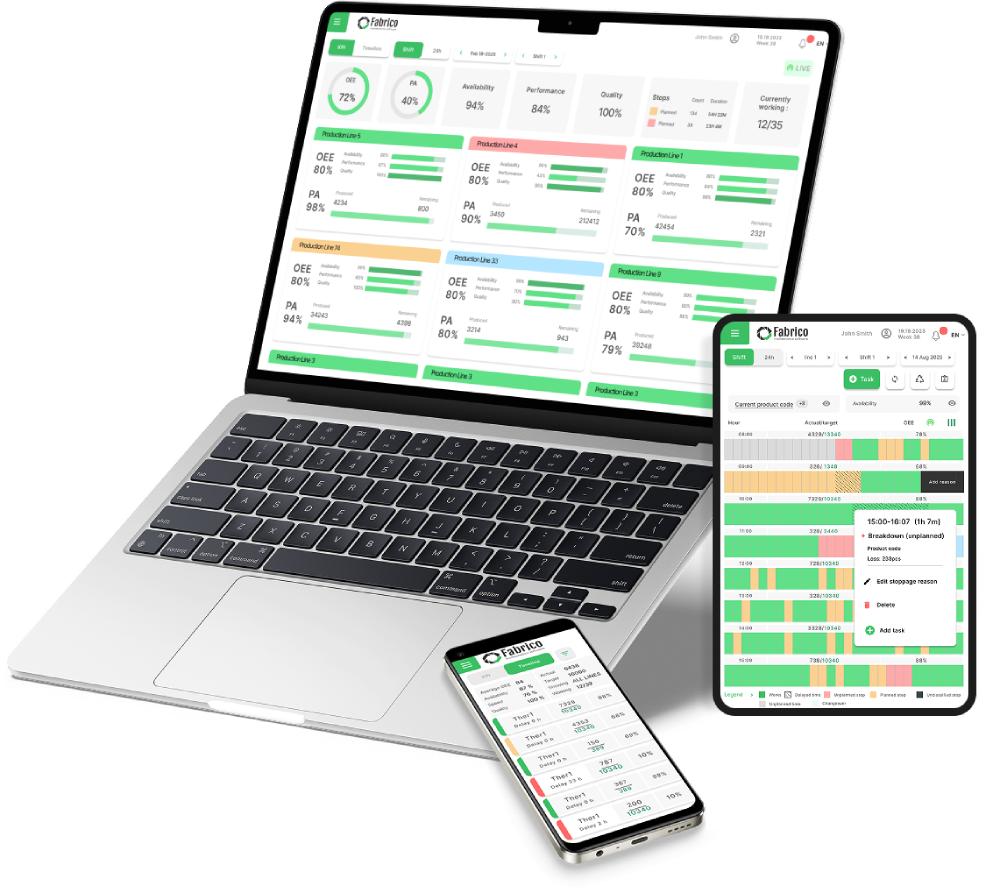
Fabrico helps you control the variables that drive energy costs.
-
We Track Idle Time: OEE data shows you where you are wasting power.
-
We Manage Repairs: Leak tags become work orders, not lost notes.
-
We Enforce Standards: Digital checklists ensure startup sequences are followed to avoid demand spikes.
Ready to lower your utility bill?
Stop paying for wasted energy. [Request a Demo] to see how Fabrico helps you run a leaner, greener factory.


 Login
Login
 Blog
Blog