Manufacturing Variability is the deviation from the standard. It is the reason why you miss shipments, scrap parts, and pay overtime.
For a Plant Manager, variability is stressful. It makes the factory unpredictable. You cannot promise a delivery date to a customer if you don't know whether your line will run at 80% or 40% efficiency today.
The goal of modern manufacturing is boring predictability. You want every shift, every machine, and every product to look exactly the same.
Here are 5 data driven strategies to reduce manufacturing variability in 2026.
1. Eliminate Human Variation with Digital Standard Work
The biggest source of variability is often the "Human Factor."
Operator A sets the temperature to 200 degrees. Operator B sets it to 205 because "it runs better that way." Operator C skips the cleaning step because they are in a hurry.
This inconsistency leads to variable quality and variable cycle times.
The Strategy:
-
Digitize the Standard: Move Standard Operating Procedures (SOPs) from paper binders to tablets.
-
Enforce Compliance: Use digital checklists that require operators to verify critical settings (Centerlining) before the line starts.
-
One Way: Establish that there is only one "Best Way" to run the machine. If an operator finds a better way, update the digital standard for everyone. Do not allow "pocket notebooks" with secret settings.
2. Stabilize Asset Health (Condition Based Maintenance)
A machine that is deteriorating introduces variability into the product.
A worn bearing might cause the cutting tool to chatter. A clogged filter might cause air pressure to fluctuate. These issues might not stop the machine, but they make the process unstable.
The Strategy:
-
Monitor Process Parameters: Track the machine's "heartbeat" (temperature, vibration, pressure).
-
Maintenance Triggers: Set alerts for when a parameter drifts out of the "Green Zone." Fix the machine when it starts to vary, not when it breaks.
-
Precision Maintenance: Ensure repairs are done to a precise standard. A shaft aligned to 0.05mm will run with less variability than one aligned to 0.50mm.
3. Automate Data Collection to Remove Measurement Error
If you rely on operators to write down downtime codes and production counts, your data is contaminated by human bias.
Operators often round times (e.g., "15 minutes" instead of "12 minutes") or ignore short stops entirely. This creates "Data Variability." You might think your process is stable because the paper log looks clean, but the reality is chaotic.
The Strategy:
-
Sensors and PLCs: Pull data directly from the machine. The machine does not lie, and it does not get tired.
-
Real Time granularity: Look at data in second by second increments to spot micro stops and speed losses that manual tracking misses.
-
Single Source of Truth: Ensure Production, Quality, and Maintenance are all looking at the same automated dataset.
4. Standardize Changeovers (SMED)
Changeovers are a high risk period for variability.
If the setup is not done perfectly, the first hour of production will be plagued by adjustments, tweaks, and scrap. This "ramp up" period destroys your stability.
The Strategy:
-
Fixed Settings: Mark the machine with physical indicators (gauges, rulers) for where guides and rails should be set for each product.
-
Digital Setup Sheets: Provide the setup crew with a photo based guide. They should not have to guess the settings.
-
First Piece Success: Measure how long it takes to get a "good part" after a changeover. If it takes 30 minutes of tweaking, your setup process is too variable.
5. Control the Inputs (Material and Environment)
Sometimes the process is perfect, but the input is variable.
If the raw material hardness changes, or the humidity in the room spikes, your output will vary. While you cannot always control the supplier, you can control how you react to it.
The Strategy:
-
Incoming Inspection: Verify material properties before they hit the line.
-
Environmental Monitoring: Track temperature and humidity in the plant.
-
Adaptive Standards: If the humidity is high, have a specific "High Humidity" digital setting for the machine. Don't let operators guess how to compensate; give them a standard adjustment protocol.
The Fabrico Framework: Consistency Through Control
Variability hides in the dark. It thrives in tribal knowledge, paper logs, and unmonitored machines.
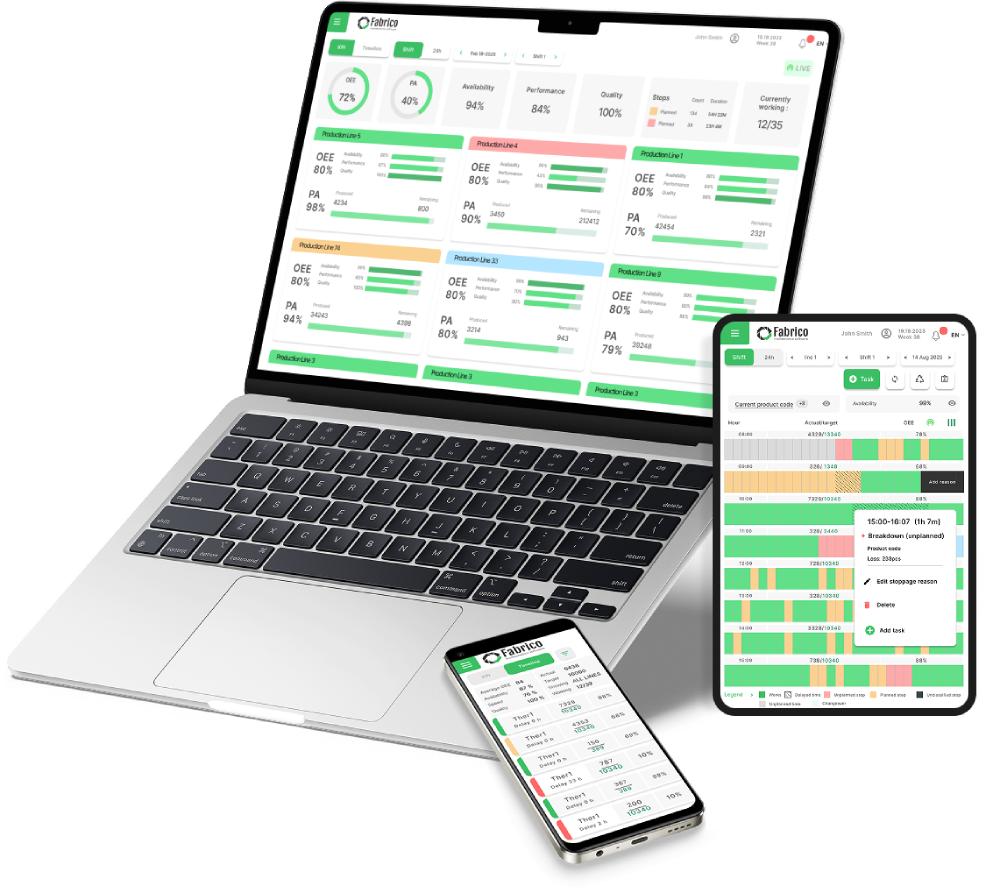
Fabrico shines a light on the process to drive consistency.
-
We Standardize Execution: Digital workflows ensure every shift performs tasks the same way.
-
We Monitor Health: Asset tracking ensures machines don't drift out of spec.
-
We Unified Data: Automated OEE reporting gives you the honest truth about your stability.
Ready to get boringly predictable?
Stop the roller coaster performance. [Request a Demo] to see how Fabrico helps you reduce manufacturing variability.


 Login
Login
 Blog
Blog