"We can't afford a new compressor. Just patch the old one again."
This decision sounds prudent. It saves capital expenditure (CapEx) this quarter. But it is often a financial disaster.
When you patch an asset past its useful life, you create a "Zombie Asset." It shambles along, eating spare parts, consuming excessive energy, and demoralizing technicians, all while producing sub-par product.
The problem in most factories is that the True Cost of Ownership (TCO) is hidden. The spare parts come from a general budget. The overtime is buried in payroll. The scrap is written off.
To stop the bleeding, you need to expose the Zombie. Here is how to perform a data-driven Repair vs. Replace analysis that the CFO cannot ignore.
The 3 Signs You Have a Zombie
1. The "Frequency" Spike (MTBF Drop)
Healthy machines fail randomly. Zombies fail predictably and often.
-
The Signal: If the Mean Time Between Failure (MTBF) drops by 20% year-over-year, the asset is in terminal decline.
-
The Data Gap: Paper logs don't show trends. A digital CMMS visualizes the downward slope of reliability instantly.
2. The Maintenance-to-Value Ratio
This is the "Golden Ratio" of asset management.
-
Formula: (Annual Maintenance Cost + Cost of Downtime) / Replacement Asset Value (RAV).
-
The Benchmark: If this ratio exceeds 15-20%, you are in the danger zone. If it hits 50%, you are burning cash.
-
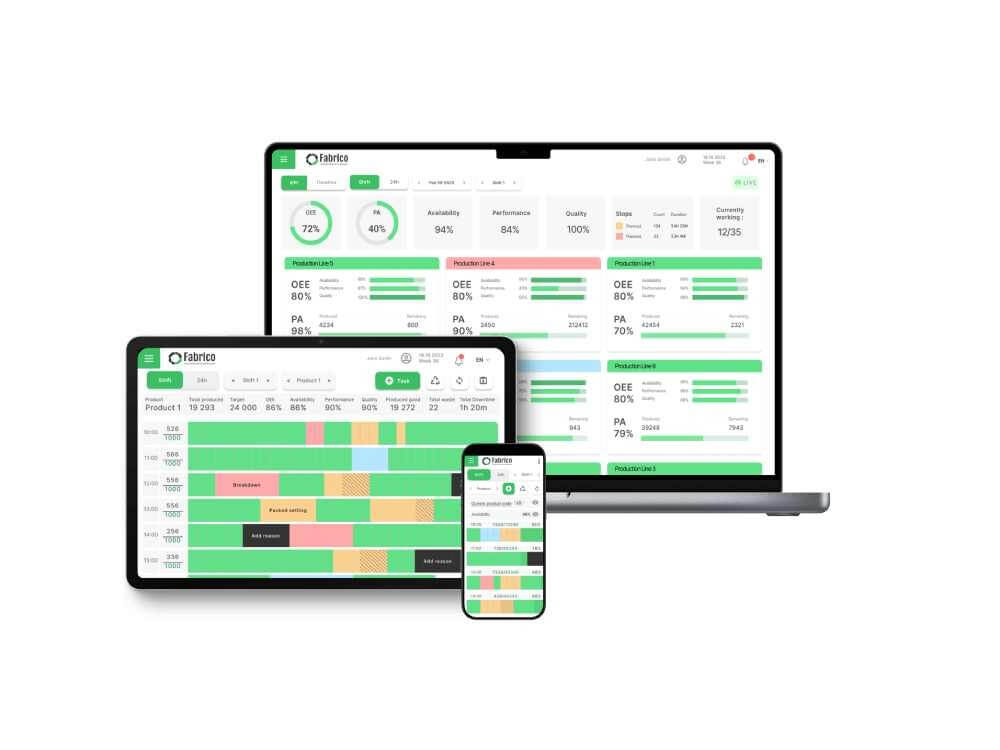
The Fabrico Fix: Fabrico automatically tallies "Parts Cost + Labor Hours" for every asset. You can see instantly that "Pump A" cost $12,000 to maintain last year, even though a new pump costs $15,000.
3. The "Quality" Tax
Zombies are loose. They vibrate. They run hot. This affects process capability (Cpk).
-
The Signal: The machine runs, but it produces 2% more scrap than it did five years ago.
-
The Cost: In high-volume manufacturing, that 2% yield loss often exceeds the cost of a new machine within 12 months.
Why Paper Maintenance Hides the Truth
Why do smart managers keep Zombies alive? Because they don't know the cumulative cost.
On paper/Excel, you see individual work orders:
-
Jan: Replaced Seal ($200).
-
Feb: Replaced Bearing ($400).
-
Mar: Replaced Motor ($1,200).
In isolation, these look like cheap fixes. "It was only $200!"
But a Unified Platform (Fabrico) aggregates them. It shows you the "Life-to-Date" cost. It screams: "You have spent $15,000 fixing this $10,000 machine!"

The Strategy: Build the "Divestment" Case
Don't just ask for a new machine. Build a business case.
-
Digitize the History: Use Fabrico to capture every minute of downtime and every dollar of parts for 90 days.
-
Calculate the TCO: Add Energy + Maintenance + Downtime + Scrap.
-
Present to Finance: "CFO, this machine costs us $5,000/month to keep. A lease on a new one is $2,000/month. We are losing $3,000/month by not buying it."
Conclusion: Mercy Kill the Zombie
Stop throwing good money after bad.
The most profitable maintenance action you can take is sometimes Decommissioning. But you need the data to pull the trigger.
Use Fabrico to find the Zombies and reclaim your budget.


 Login
Login
 Blog
Blog