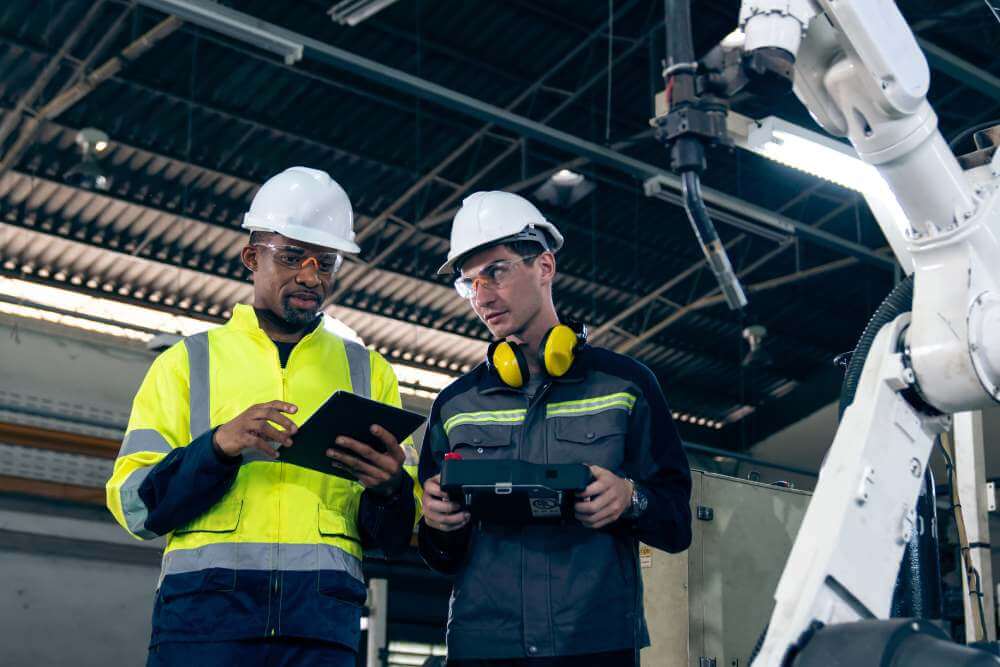
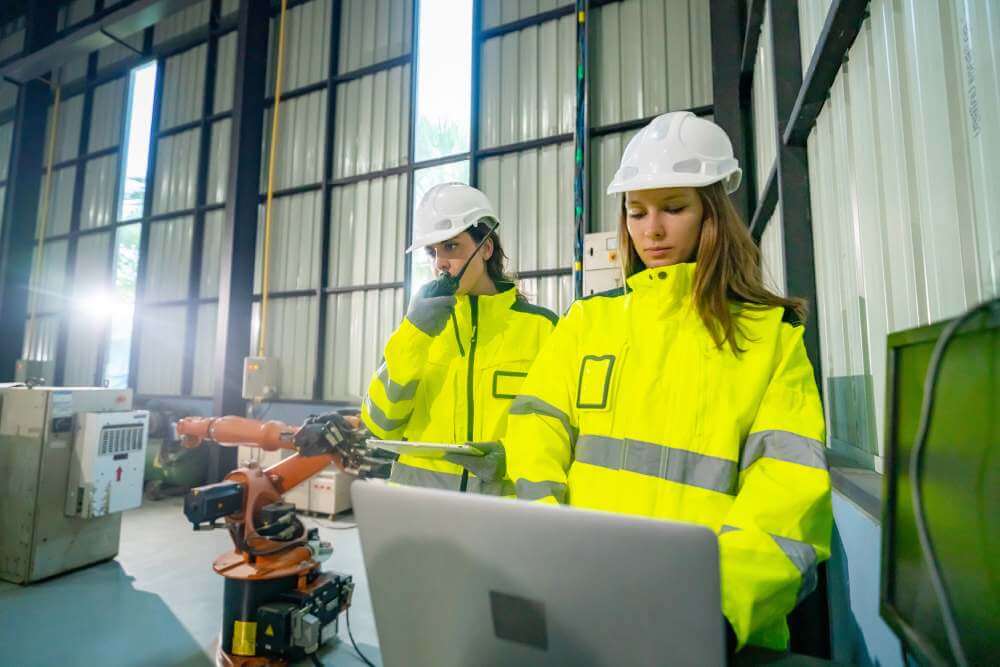
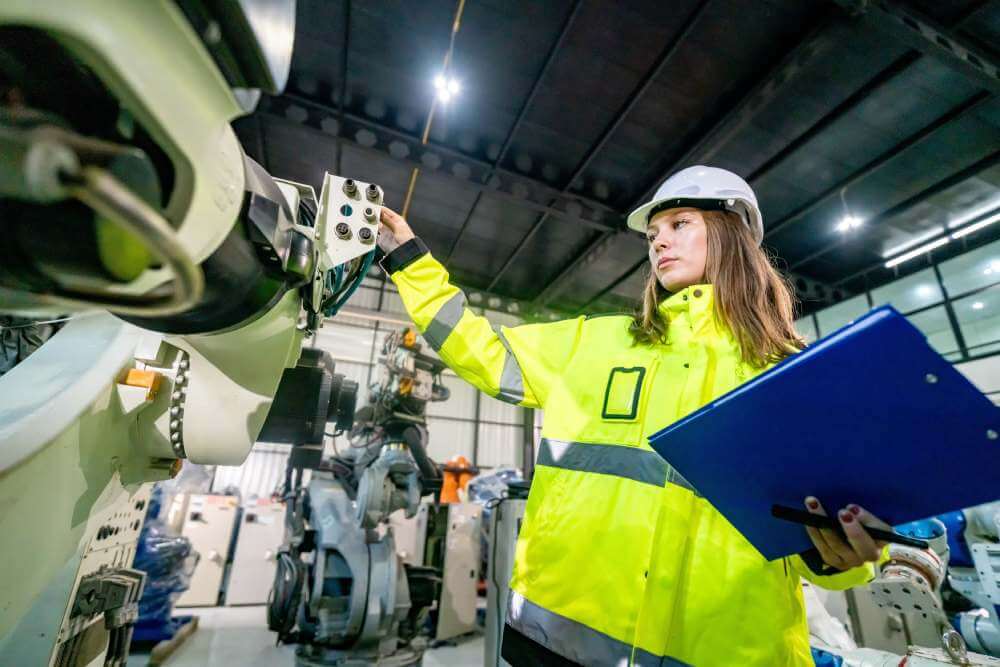
Your factory floor is likely covered in expensive, glowing red numbers.
When manufacturing executives decide to tackle their catastrophic downtime metrics, they instinctively purchase physical scoreboards and production monitoring tools.
They install these screens above the production line, proudly displaying their 65% Overall Equipment Effectiveness (OEE) score for every operator to see.
However, telling an operator that their machine is broken does absolutely nothing to restore the line's throughput.
When your production monitoring tool is completely disconnected from your maintenance execution software, you create a massive administrative gap where machines sit idle while humans argue.
To permanently protect your enterprise margins and systematically eliminate the "Six Big Losses," you must stop buying passive tracking devices and deploy a unified platform that automatically executes the cure.
What is the difference between Vorne XL, Evocon, and Fabrico?
Vorne XL is a hardware-centric production monitoring tool that utilizes physical LED scoreboards to track Takt time and basic OEE metrics on the shop floor. Evocon is a cloud-based OEE software dashboard that visualizes downtime events but relies entirely on manual operator inputs to categorize faults. Fabrico is a unified "System of Action" that natively combines direct PLC integration, Computer Vision root-cause analysis, and a field-ready mobile CMMS to automatically convert OEE speed losses into instant maintenance repairs.
Vorne XL: The Hardware Scoreboard Liability
Vorne XL has established a massive footprint in legacy manufacturing facilities because it offers a highly visible, physical piece of hardware.
If your sole operational goal is to show operators their real-time shift target versus their actual output, Vorne XL's glowing LED scoreboards are incredibly effective at pacing the line.
The fatal flaw of Vorne XL is what happens the exact second the machine stops running.
Because Vorne is fundamentally a hardware reporting tool, it is not a Computerized Maintenance Management System (CMMS).
When a critical packaging line jams, the Vorne scoreboard simply flashes red and begins counting the minutes of lost production capacity.
It does not cross-reference the machine's digital Bill of Materials (BOM), check your MRO spare parts inventory, or push a digital Standard Operating Procedure (SOP) to a mechanic's smartphone.
The machine operator is still forced to walk away from the line, hunt down a maintenance supervisor, and verbally request a repair, completely destroying your Mean Time To Repair (MTTR).
If your technology investment only tells you that you are bleeding cash, it is a liability, not an asset.
Evocon: The Disconnected Dashboard
Evocon attempts to solve the limitations of hardware scoreboards by delivering a highly visual, cloud-based OEE dashboard.
It excels at providing Continuous Improvement (CI) directors with clean Pareto charts and automated downtime tracking for boardroom presentations.
However, Evocon suffers from the "Human Filter" liability because it relies heavily on operators to manually categorize why the machine stopped.
When a machine faults, the Evocon system prompts the operator to select a downtime reason from a desktop terminal or tablet.
Because operators are frantic to restart the line and hit their quotas, they consistently select generic reasons like "Unknown Stop" or "Machine Jam," poisoning your data integrity.
Furthermore, Evocon is an OEE tool, not an execution engine.
When the operator logs the fault, Evocon does not seamlessly dispatch a mobile work order to a maintenance technician; the production data and the maintenance response remain trapped in two different software silos.
Fabrico: The Unified System of Action
To achieve world-class operational resilience, your diagnostic data must instantly trigger a mechanical cure.
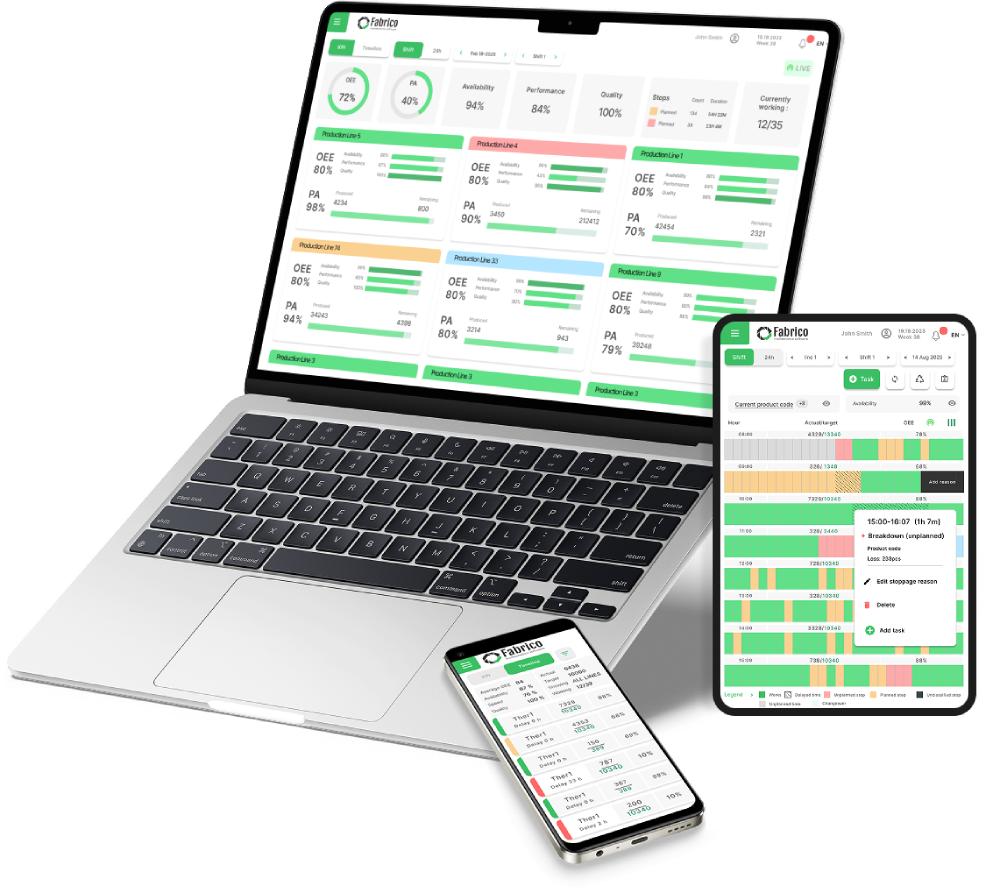
We built The Fabrico Framework on the absolute necessity of merging unvarnished OEE truth directly with a Field-Ready CMMS.
Fabrico acts as the central nervous system of your factory, completely bypassing the manual data entry that cripples legacy dashboards.
Fabrico does not manufacture heavy hardware scoreboards; instead, we connect directly to your existing machine PLCs or optical IoT sensors to capture exact cycle times.
When a machine experiences a micro-stop or a sudden speed loss, Fabrico does not just turn a dashboard red.
The system instantly generates a condition-directed work order and pushes a prioritized smart notification directly to the assigned mechanic's mobile device, ensuring the exact right person is dispatched the millisecond the fault occurs.
Eradicating Guesswork via Computer Vision
When a high-speed machine stops, operators and mechanics frequently argue over whether the root cause was mechanical failure or human error.
Fabrico completely eliminates this subjective finger-pointing using our proprietary Inefficiencies Zoom-In module.
By positioning industrial computer vision cameras above your critical automated cells, Fabrico captures time-stamped video footage synchronized perfectly with your live OEE timeline.
When the mechanic arrives at the broken machine, they do not ask the operator what happened.
They simply open their Fabrico mobile app, press play, and watch a high-definition video replay of the exact mechanical crash, allowing them to execute a flawless, "One-Trip" repair.
The AI Roadmap: Autonomous Capacity Optimization
Fabrico currently provides the most rigorous, action-oriented OEE and CMMS platform available to modern manufacturers.
However, we are actively engineering the next tier of intelligent industrial orchestration.
Currently on our product roadmap is the Fabrico Agent, a proprietary AI-driven optimization engine.
Once deployed, this AI Agent will autonomously analyze your live PLC cycle counts against your maintenance repair logs, mathematically predicting the exact hour your primary bottleneck machine will fail.
Additionally, our upcoming Fabrico Assistant (also on the roadmap) will serve as a generative AI copilot, allowing Plant Managers to instantly ask, "Which specific operator adjustment caused the highest frequency of micro-stops on Line 2 this week?"
By unifying your OEE and CMMS data inside Fabrico today, you are building the exact, clean master dataset required to power these autonomous AI capabilities tomorrow.
Comparison Matrix: Vorne XL vs Evocon vs Fabrico
| Feature / Capability |
Vorne XL |
Evocon |
Fabrico |
| Core Architecture |
Hardware LED Scoreboards. |
Cloud-Based OEE Dashboard. |
Unified OEE & Mobile CMMS Execution. |
| Fault Resolution |
Passive; counts downtime minutes. |
Passive; requires manual ticket creation. |
Active; auto-dispatches condition-directed WOs. |
| Diagnostic Evidence |
None; relies entirely on human observation. |
Relies on subjective operator data entry. |
Objective video replays via Computer Vision. |
| Maintenance Inventory |
No MRO or BOM tracking. |
No MRO or BOM tracking. |
Live MRO checks before dispatching mechanics. |
| Future AI Readiness |
Hardware cannot support deep machine learning. |
Disconnected CMMS data poisons AI models. |
Clean, seamlessly integrated data ready for AI Roadmap. |
Stop Watching Your Machines Break
You cannot optimize a high-speed manufacturing facility by staring at a glowing red light.
Your profitability depends entirely on your ability to instantly convert a production delay into a perfectly choreographed mechanical repair.
By deploying a unified System of Action, you eradicate the administrative friction that traps your data on dashboards and scoreboards.
Standardize your factory operations today, and arm your frontline workers with the digital tools required to actually fix the problem.


 Login
Login
 Blog
Blog